Buffalo on the Path: How to Pass Them Without Trouble
A water buffalo is standing in the middle of the path and it is not moving. Here is how to pass it calmly, and when to wait instead.
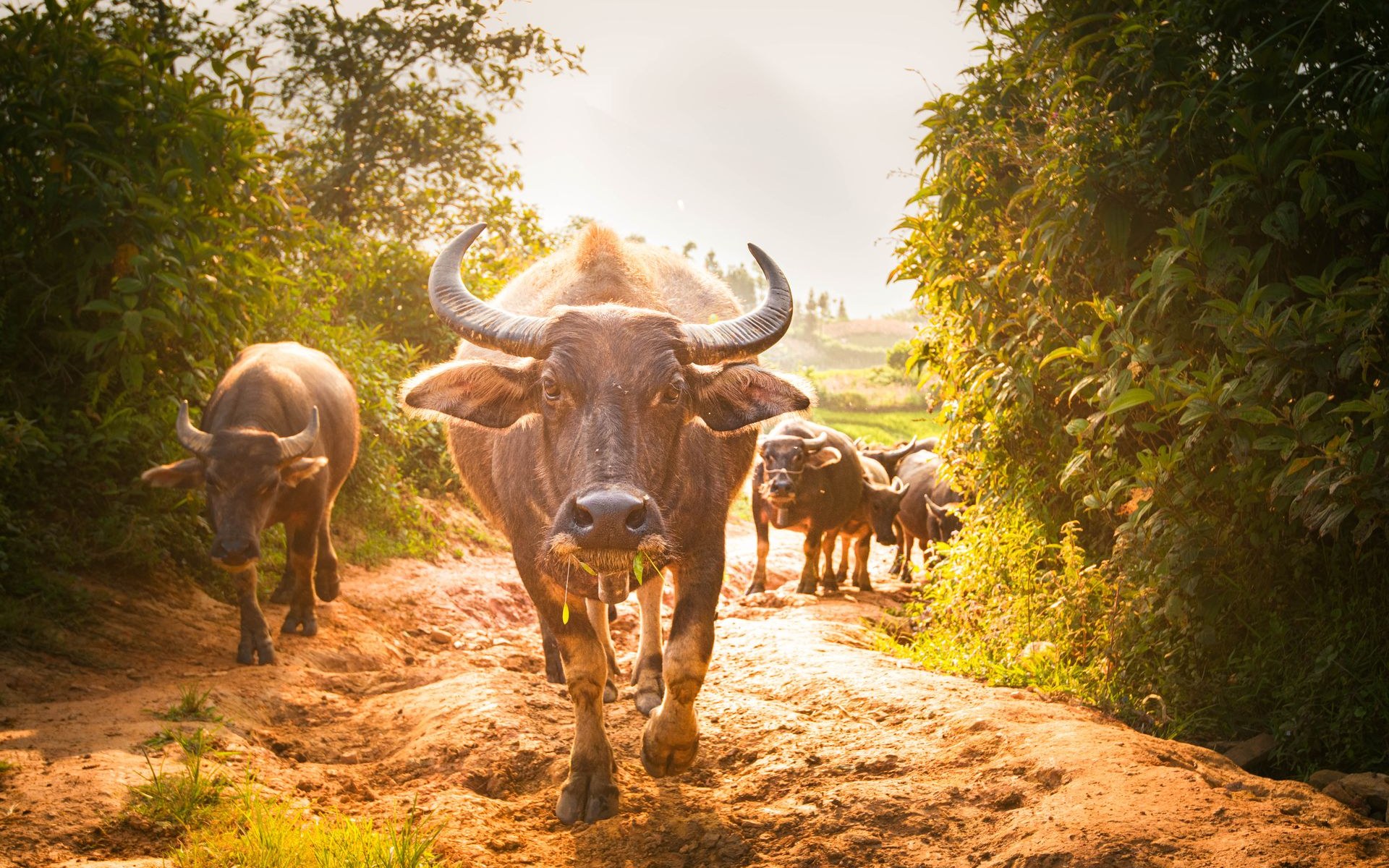
The path narrows between two terraces and there it is: a water buffalo, standing square in the middle of the track, chewing, staring at you. It weighs more than half a tonne. There is no way around it except a steep bank on one side and a flooded field on the other. Your guide stops. You stop. The buffalo does not move.
This is normal on a Sapa trek. Water buffalo work the rice fields all through the Muong Hoa valley, and they walk the same paths you do. They are not wild animals, but they are not pets either. Most encounters end with nothing more than a short wait, if you handle the first minute right.
Read the buffalo before you move
A calm buffalo keeps chewing, flicks its ears, and looks away from you. That one is used to people and will usually shift aside or let you pass wide.
A tense buffalo stops chewing, raises its head, and stares with its ears forward. A mother with a calf beside her is the one to take most seriously. Never walk between a mother and her calf, and never try to pass a buffalo that is pawing the ground or snorting. If it is lying in a muddy hollow, leave it alone. It is cooling off and does not want to be disturbed.
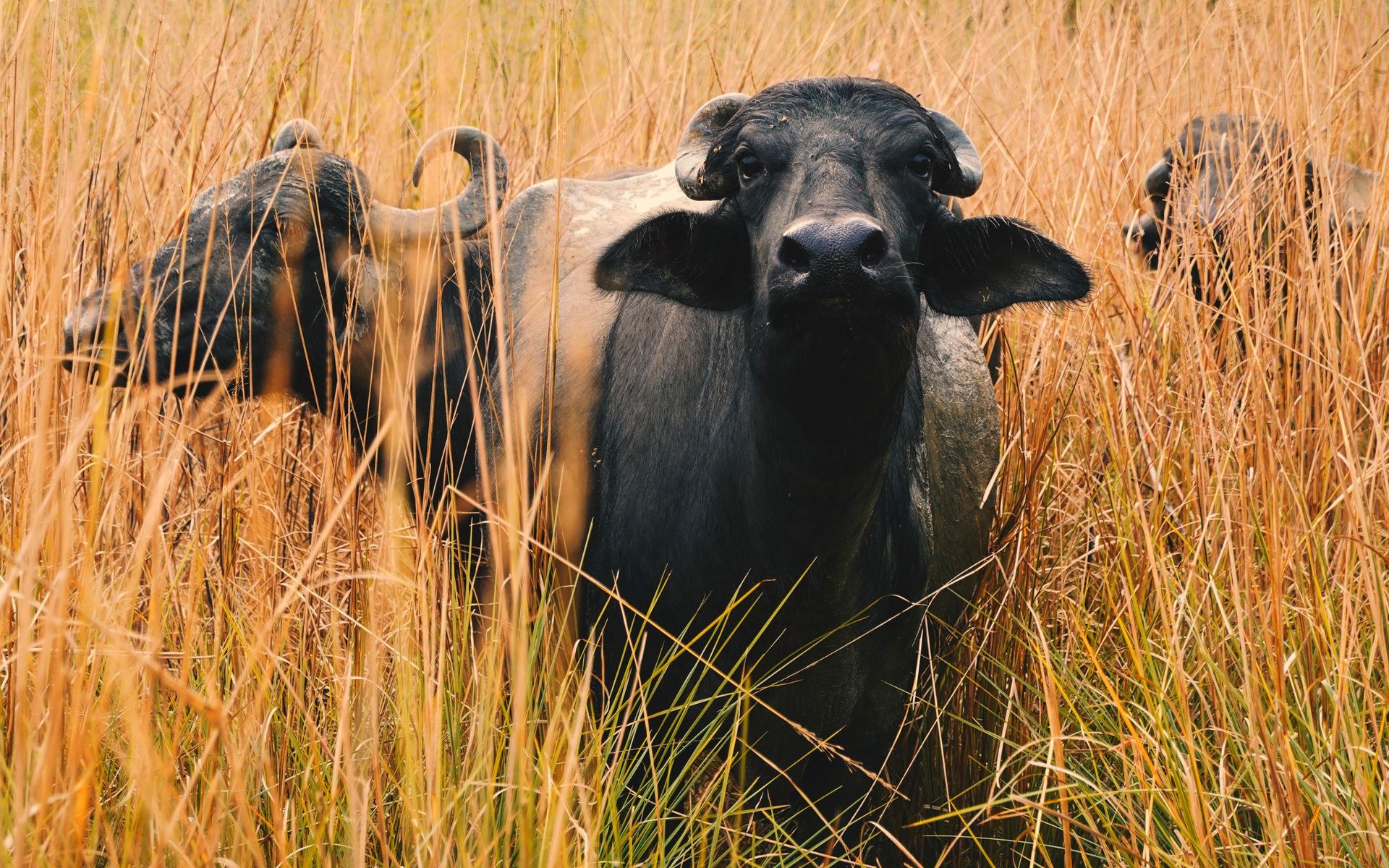
Source: brazil topno via Pexels. A water buffalo in tall grass in Sundargarh, Odisha, India, shown as an illustration of a buffalo at rest, not Sapa.
How to pass
Let your guide go first. They pass these animals every week and can read a buffalo faster than you can. Follow exactly where they walk.
Give it space. Stay at least five metres away and pass on the uphill side if you can, so the animal is below you. Move slowly and steadily. Do not run, wave your arms, or shout. Talk in a low voice, or stay quiet. Keep clear of the horns, which sweep wide, and walk past the rear end, not the head, when the path allows it.
If the path is too narrow to pass safely, wait. Stand still and give it a few minutes. Most buffalo move on by themselves once they finish chewing. Waiting five minutes costs nothing. Pushing past a tense animal costs the whole day.
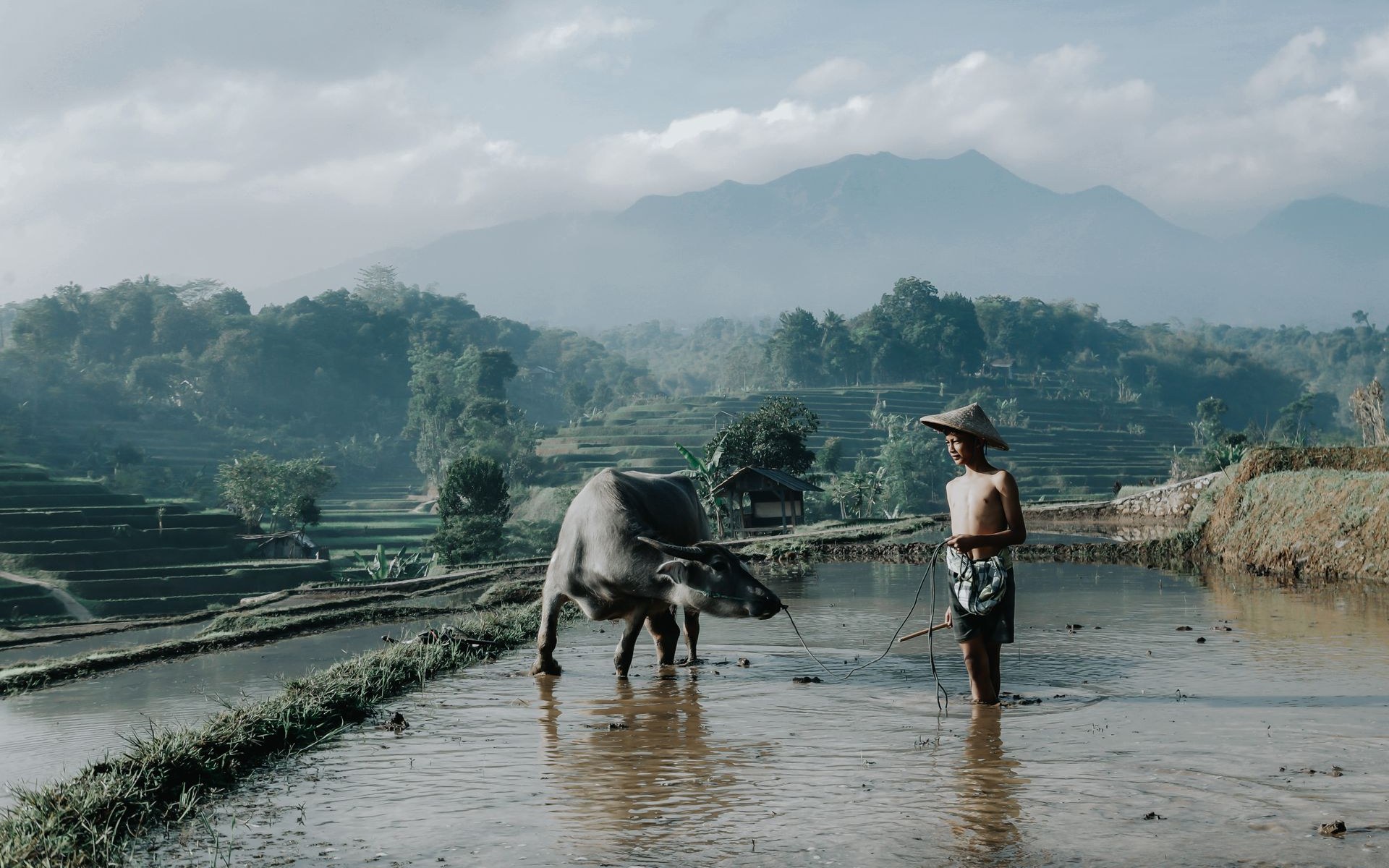
Source: Tuti Isnawati via Pexels. A farmer leading a water buffalo through terraced rice fields in Indonesia, shown as an illustration of buffalo at work in the fields, not Sapa.
What not to do
Do not feed a buffalo, and do not hold out your hand. Do not take a close photo with a flash, and do not stand in front of it for a selfie. A buffalo that feels cornered on a narrow terrace path has nowhere to go except through you.
Do not throw stones to move it along, and do not let children run ahead toward it. If a buffalo charges, which is rare, get off the path, get behind a terrace wall or a tree, and put something solid between you and the animal. Your guide will know the nearest safe spot.
Buffalo are part of the valley, not an obstacle in it. They plough the fields you are walking through, and the farmers who own them are often the same families who host you for the night. Pass them the way you would pass a neighbour's working animal: slowly, quietly, and with room.
The Y Linh Ho, Lao Chai and Ta Van trek follows valley paths where buffalo work the fields, with a local guide who knows every animal on the route, and the 2 day Ta Van homestay trek gives you two days to walk the valley at its own pace. Read the full Sapa trekking guide, then message the house on WhatsApp or Zalo.
Walk it with us
Every route in these guides ends at Cloud Valley. Sleep where the trail ends, not back in town.
Sapa Trekking Guide · 1 Day Valley Trek · 2 Day Homestay Trek
More guides
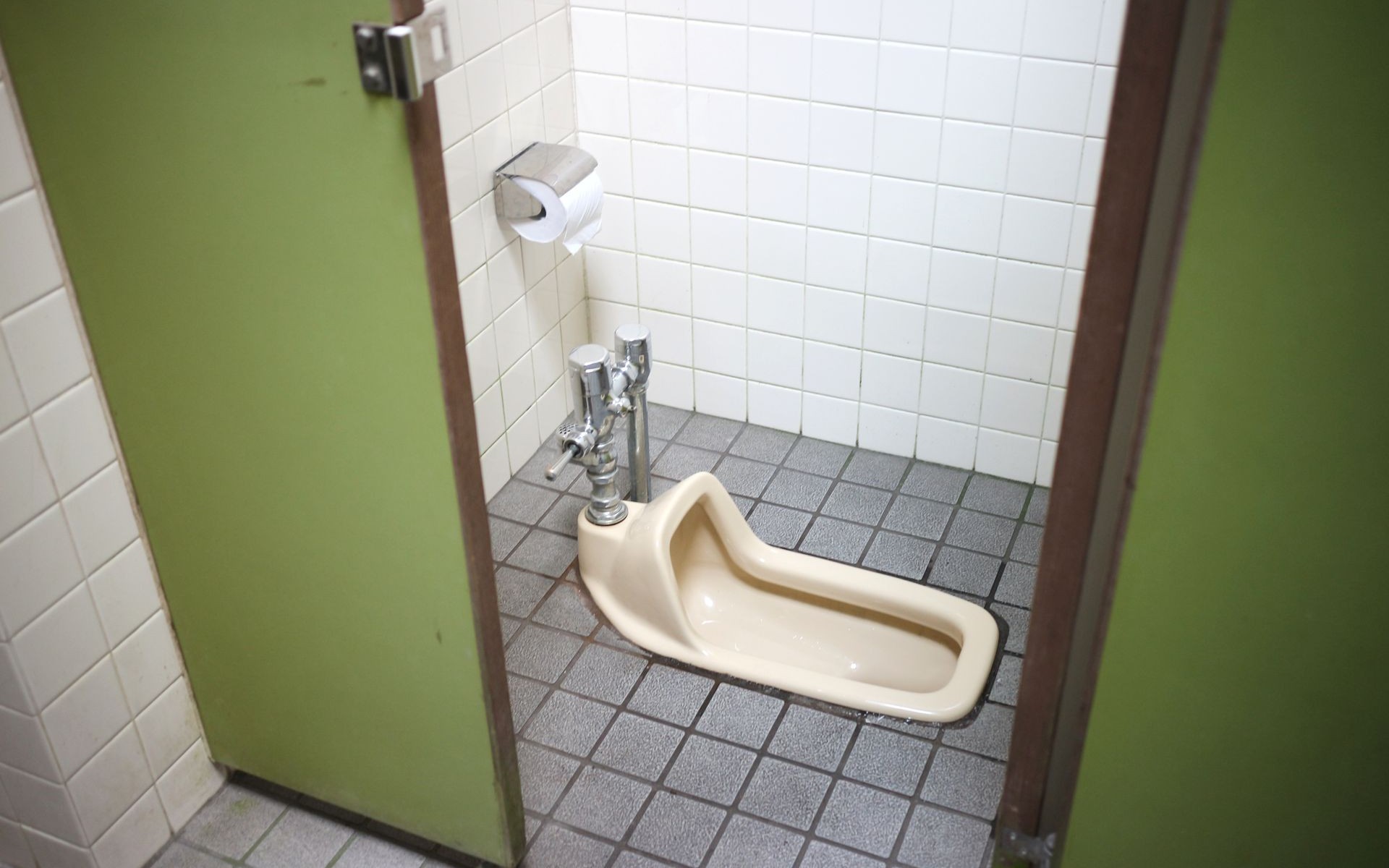
Squat Toilets and Shared Bathrooms: What Homestays Are Really Like
The toilet is the part of a Sapa homestay nobody photographs. Here is what the bathroom is actually like, and the three small things to pack so it never ruins your night.

Booking a Trek Online vs in Town: What Changes
You can book your Sapa trek from home weeks ahead, or walk into an office in Sapa town the day before. Both work. Here is what actually changes with each choice.
Your Luggage While You Trek: Storage Options That Actually Work
You cannot drag a rolling suitcase down muddy terrace steps. Here is where your big bag actually goes while you walk, and what to carry instead.