Children Selling Bracelets on the Trail: How to Respond Kindly
On the paths between Sapa villages, children will offer you handmade bracelets. It can feel awkward, and the kindest response is not always the obvious one. Here is what is really happening, and how to handle it well.
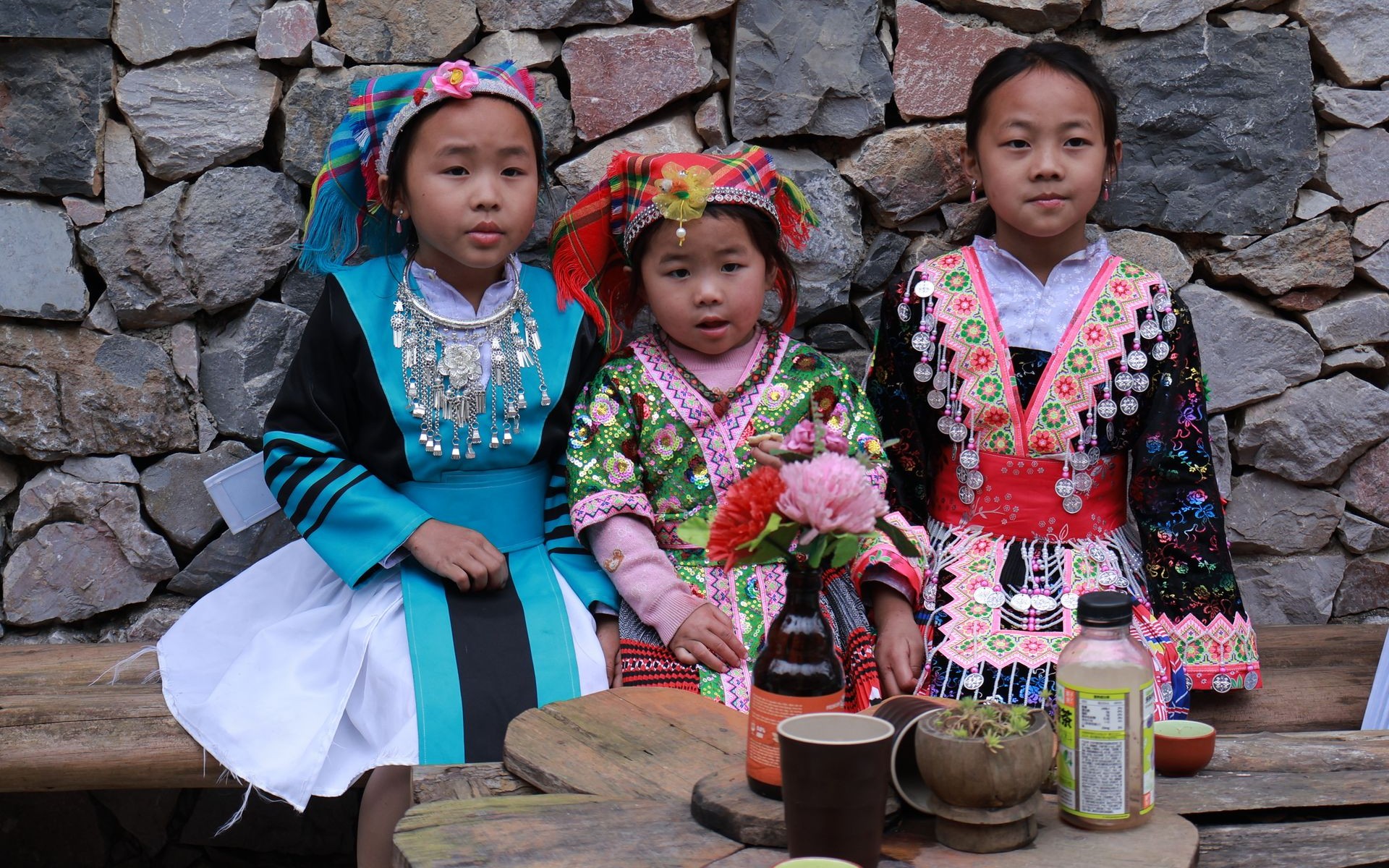
A child will walk up to you on the trail, hold out a bracelet, and ask you to buy it. It usually happens on the first hour out of Sapa town, or on the path down into Lao Chai. The child may be eight or nine, speaks a few words of English, and smiles while she waits for your answer.
Your first feeling will probably be discomfort. You did not come to Sapa to bargain with a child, and you do not want to be the tourist who walks past a kid without a word. Here is what is actually going on, and what to do with it.
Why the children are on the path
In the Hmong and Dao villages around Sapa, making and selling small handicrafts is part of family life. The bracelets, small bags, and embroidered cloths are usually made at home, often by the children's mothers and grandmothers. Selling them on the trail is one way a family earns cash, and the children learn English and trading by doing it.
That does not mean every child you meet should be on the trail. Some are there because school is out, and a few because they have been sent out to sell instead of going to class. You cannot tell which is which from a five-minute meeting, and you should not try to fix it in that five minutes either.
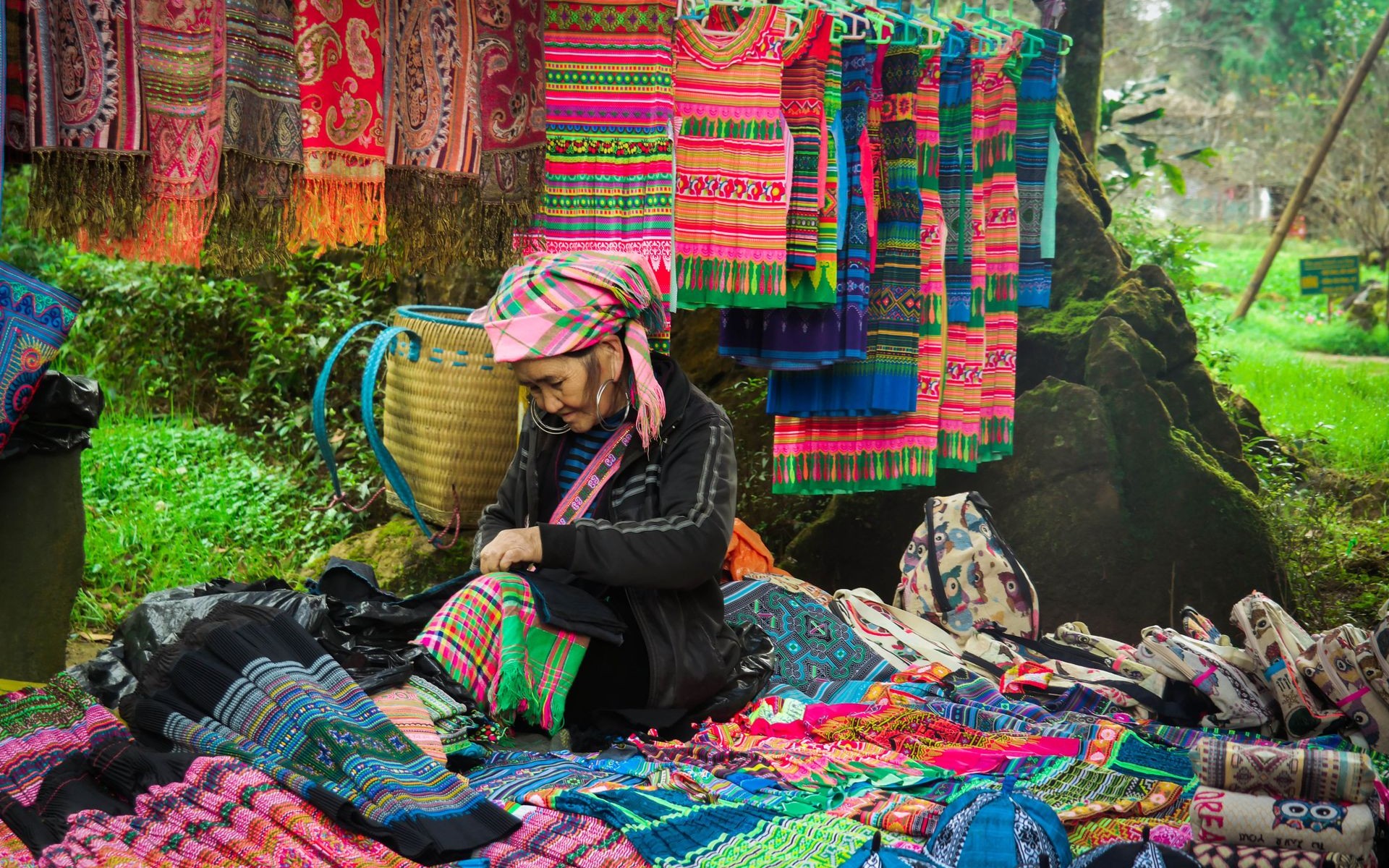
Source: Tuti Health via Pexels. A textile vendor at a market in Vietnam, shown as an illustration of the handmade goods sold on the trails, not Sapa.
The kindest thing is not to buy everything
It is tempting to buy a bracelet from every child you meet, to spread the money around. The problem is that it teaches the children that the trail pays better than the classroom. When a child earns more in an afternoon selling bracelets than her parents earn in a day, staying out of school starts to look like the smart choice.
A better rule is simple: buy one thing, once, from one seller, and only if you genuinely like it. A bracelet you will actually wear is a fair trade. Five bracelets bought out of guilt are not, and the children notice the difference.
If you do not want to buy, say so kindly and clearly. A smile and a simple "no, thank you" is enough. Do not ignore the child, and do not walk faster. Being ignored is the part that stings, not being told no.
What actually helps, if you want to help
If the moment stays with you, the help that lasts is not a bracelet purchase. It goes through the village, not through one child on a path. A donation to a village school or a community project reaches children who never stand on the trail at all. Your guide can tell you which local efforts are real.
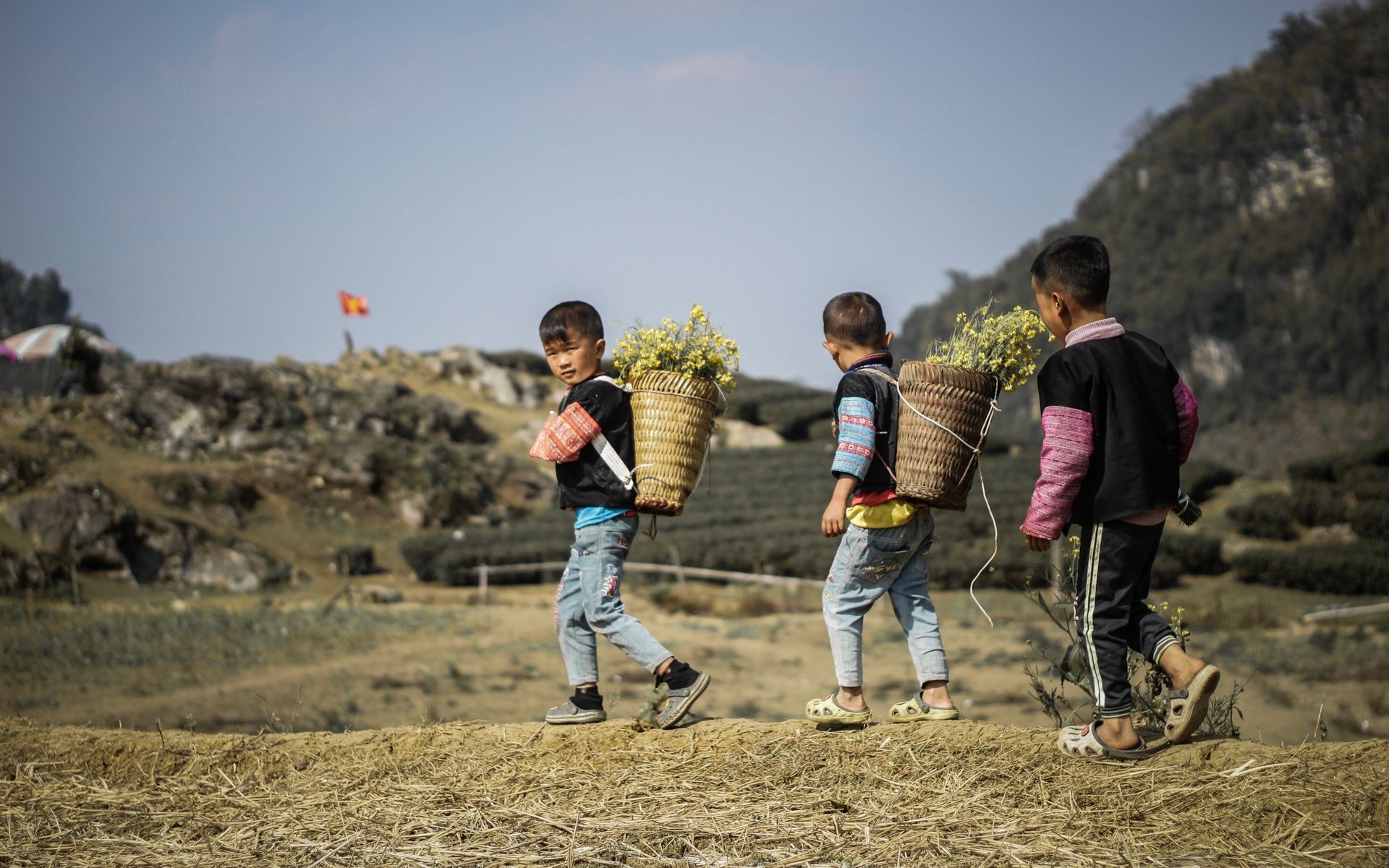
Source: Tuvictor via Pexels. Children carrying baskets in Moc Chau, Son La, shown as an illustration of village life, not Sapa.
You can also buy from the adults. The women selling textiles in the village and in Sapa market make the same work, and buying from them supports the same families without pulling a child out of school.
One more thing matters: do not photograph the children without asking, and do not hand out sweets or pens as a way of saying no. Sweets handed to every passing child train them to stop every stranger. If you want to give something, ask your guide first.
The 2 day Ta Van homestay trek is the walk this is written for: two days in the valley, one night in Ta Van. Read the full Sapa trekking guide, then message the house on WhatsApp or Zalo.
Walk it with us
Every route in these guides ends at Cloud Valley. Sleep where the trail ends, not back in town.
Sapa Trekking Guide · 1 Day Valley Trek · 2 Day Homestay Trek
More guides

Squat Toilets and Shared Bathrooms: What Homestays Are Really Like
The toilet is the part of a Sapa homestay nobody photographs. Here is what the bathroom is actually like, and the three small things to pack so it never ruins your night.

Booking a Trek Online vs in Town: What Changes
You can book your Sapa trek from home weeks ahead, or walk into an office in Sapa town the day before. Both work. Here is what actually changes with each choice.

Your Luggage While You Trek: Storage Options That Actually Work
You cannot drag a rolling suitcase down muddy terrace steps. Here is where your big bag actually goes while you walk, and what to carry instead.