Dogs in the Villages: How to Handle Unfamiliar Dogs on a Walk
A dog is barking at you from a doorway on a Sapa village path. Most village dogs are guarding a home, not hunting you. Here is how to read them and walk past calmly.
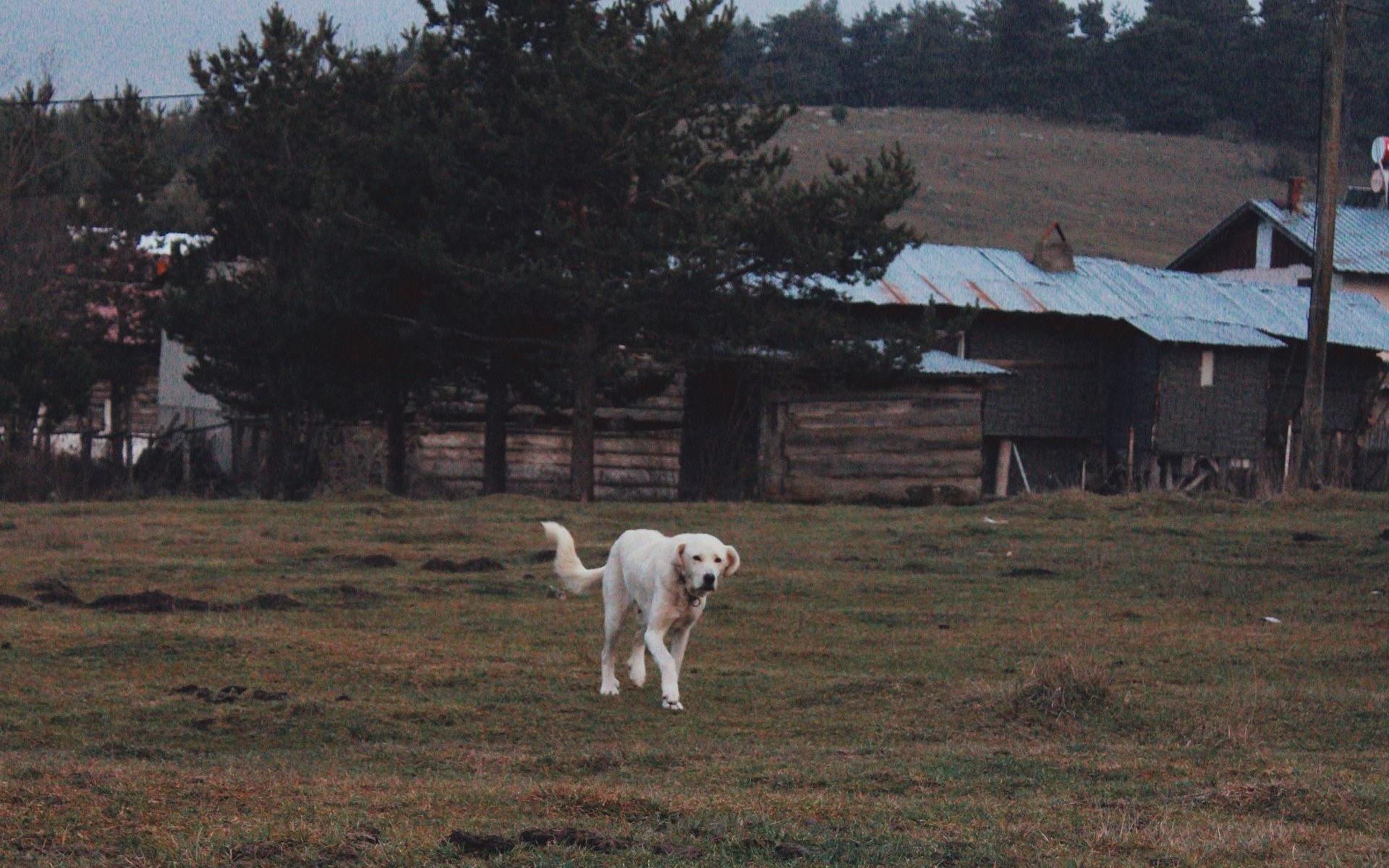
You are walking between two houses in Lao Chai when a dog charges out of a doorway, barking hard. It stops a few metres away and keeps barking. Your guide does not speed up. She keeps walking, and tells you to do the same.
That dog is not hunting you. It is doing its job. Nearly every house in the valley keeps a dog to bark at strangers who pass the gate. Once you know that, the encounter gets easier.
Most of them belong to someone
Most dogs on a Sapa trail are not strays. They belong to the house you are walking past, so the barking usually stops a few steps past the gate. The dog stays home. You keep walking.
A dog that follows you is usually curious, not aggressive. Let it trot along. It will turn back at the edge of its village.
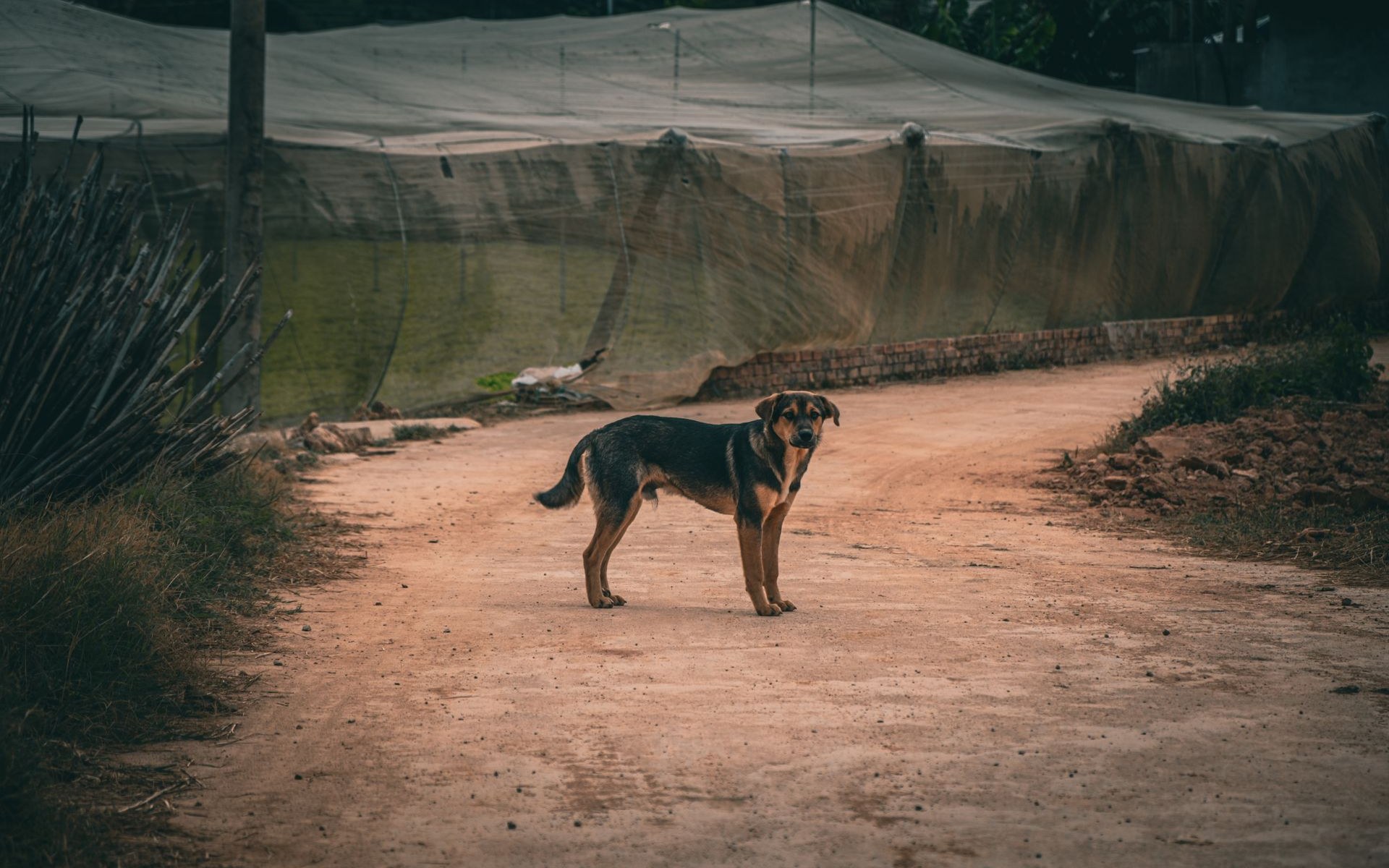
Source: Duy Nod via Pexels. A lone dog on a dirt path, tagged Vietnam countryside, shown as an illustration of a dog on a village path, no specific location claimed.
Read the dog before you move
A dog standing still with ears up and tail stiff is warning you off, and one with its hackles raised is serious. A mother with puppies nearby is the one to take most seriously. Give her a wide berth and never step between her and the pups.
A dog that yawns, looks away, or lies down is not interested in you. A dog that growls low while backing away is scared, not brave, and scared dogs bite when cornered. Never trap one against a wall or a terrace edge.
How to walk past
Let your guide go first. Your guide passes these dogs every week and knows the loud ones. Walk where your guide walks.
Slow down near a house with a dog, but do not stop and stare. Keep moving at a steady pace, look slightly away, and give it as much room as the path allows. Do not run. Running turns a guard dog into a chasing dog, and no one outruns a dog on its own path.
If a dog blocks the path, stop and wait. Stand still and let your guide handle it. Guides usually speak to the dog or call out to the owner, and the dog moves off.
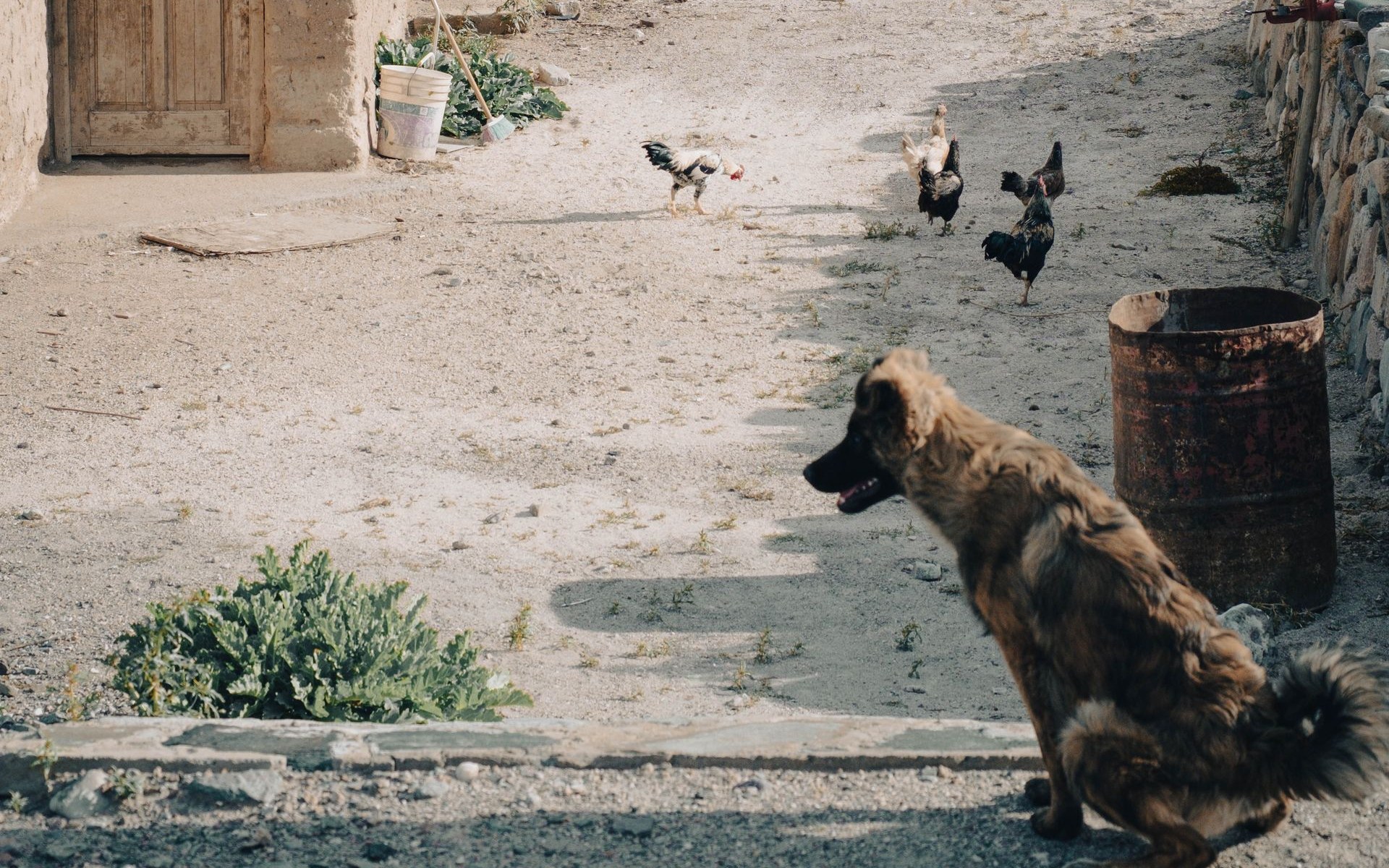
Source: DANIEL GOMEZ via Pexels. A dog in a village yard with chickens, shown as an illustration of a dog at home in a village yard, not Sapa.
What not to do
Do not feed a village dog, and do not hold out your hand for it to sniff. Food turns a one-time encounter into a dog that follows your group all day, and a hand near a nervous mouth is a bite waiting to happen.
Do not throw stones. A stone turns a barking dog into an angry one, and it is rude to the family that owns it. Do not photograph a barking dog up close, and keep children beside you, not running ahead.
If a dog bites
Bites are rare, but they happen, usually when someone runs or reaches out to a scared dog. If a dog bites you, tell your guide at once. Wash the wound with soap and clean water for several minutes, then get to Sapa town the same day for care and advice about a rabies shot.
The dogs are part of the villages, not a danger in them. Walk past them the way you would walk past a neighbour's guard dog: slowly, quietly, and with room.
The Y Linh Ho, Lao Chai and Ta Van trek passes villages where dogs guard every doorway. The 2 day Ta Van homestay trek gives you two days to walk the valley at its own pace. Read the full Sapa trekking guide, then message the house on WhatsApp or Zalo.
Walk it with us
Every route in these guides ends at Cloud Valley. Sleep where the trail ends, not back in town.
Sapa Trekking Guide · 1 Day Valley Trek · 2 Day Homestay Trek
More guides
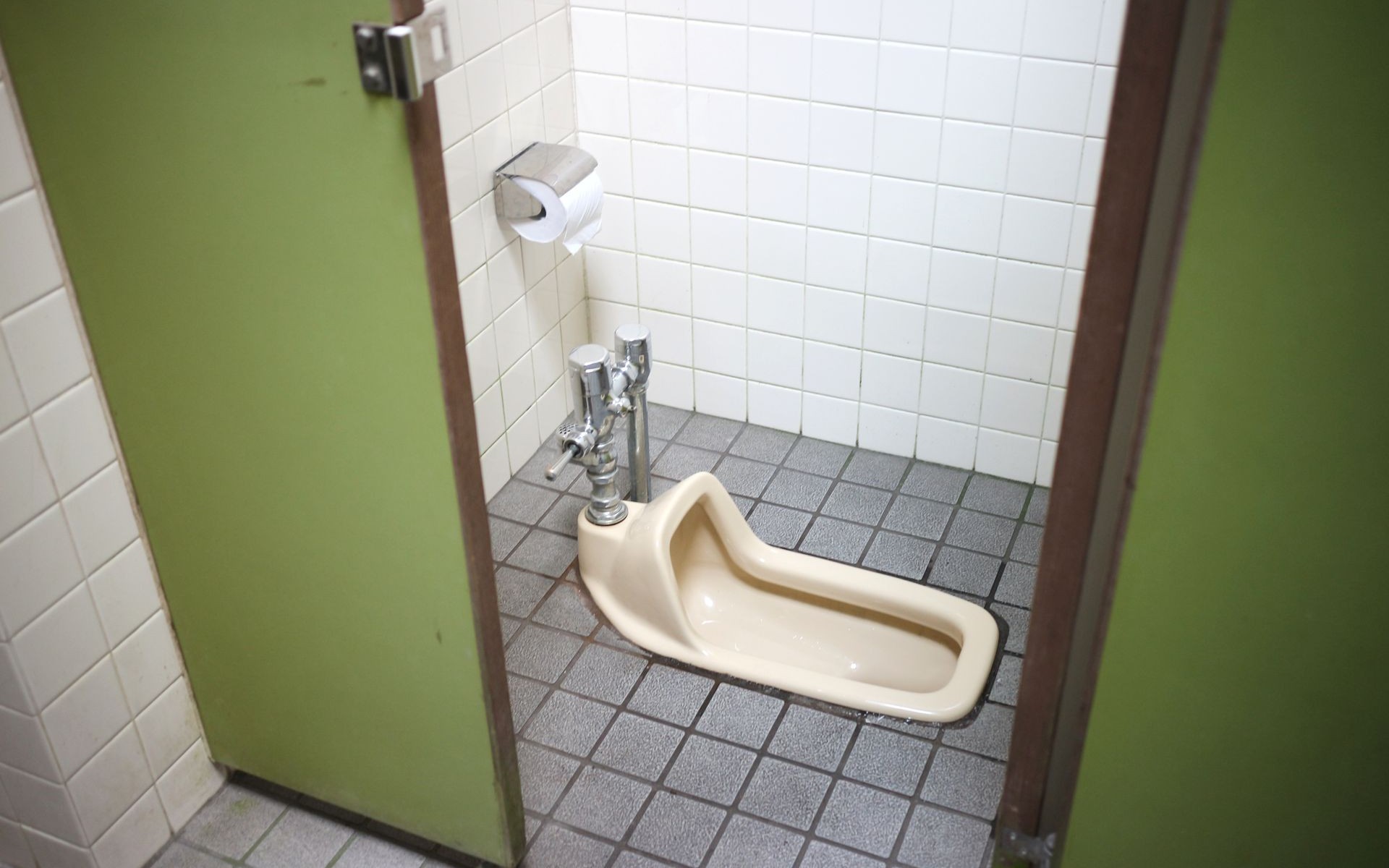
Squat Toilets and Shared Bathrooms: What Homestays Are Really Like
The toilet is the part of a Sapa homestay nobody photographs. Here is what the bathroom is actually like, and the three small things to pack so it never ruins your night.

Booking a Trek Online vs in Town: What Changes
You can book your Sapa trek from home weeks ahead, or walk into an office in Sapa town the day before. Both work. Here is what actually changes with each choice.
Your Luggage While You Trek: Storage Options That Actually Work
You cannot drag a rolling suitcase down muddy terrace steps. Here is where your big bag actually goes while you walk, and what to carry instead.