Knees on the Downhill: How to Descend Steep Terraces Without Pain
The climb up is hard work. The walk down is what hurts. Here is how to descend Sapa terrace steps without wrecking your knees, and when the pain means stop.
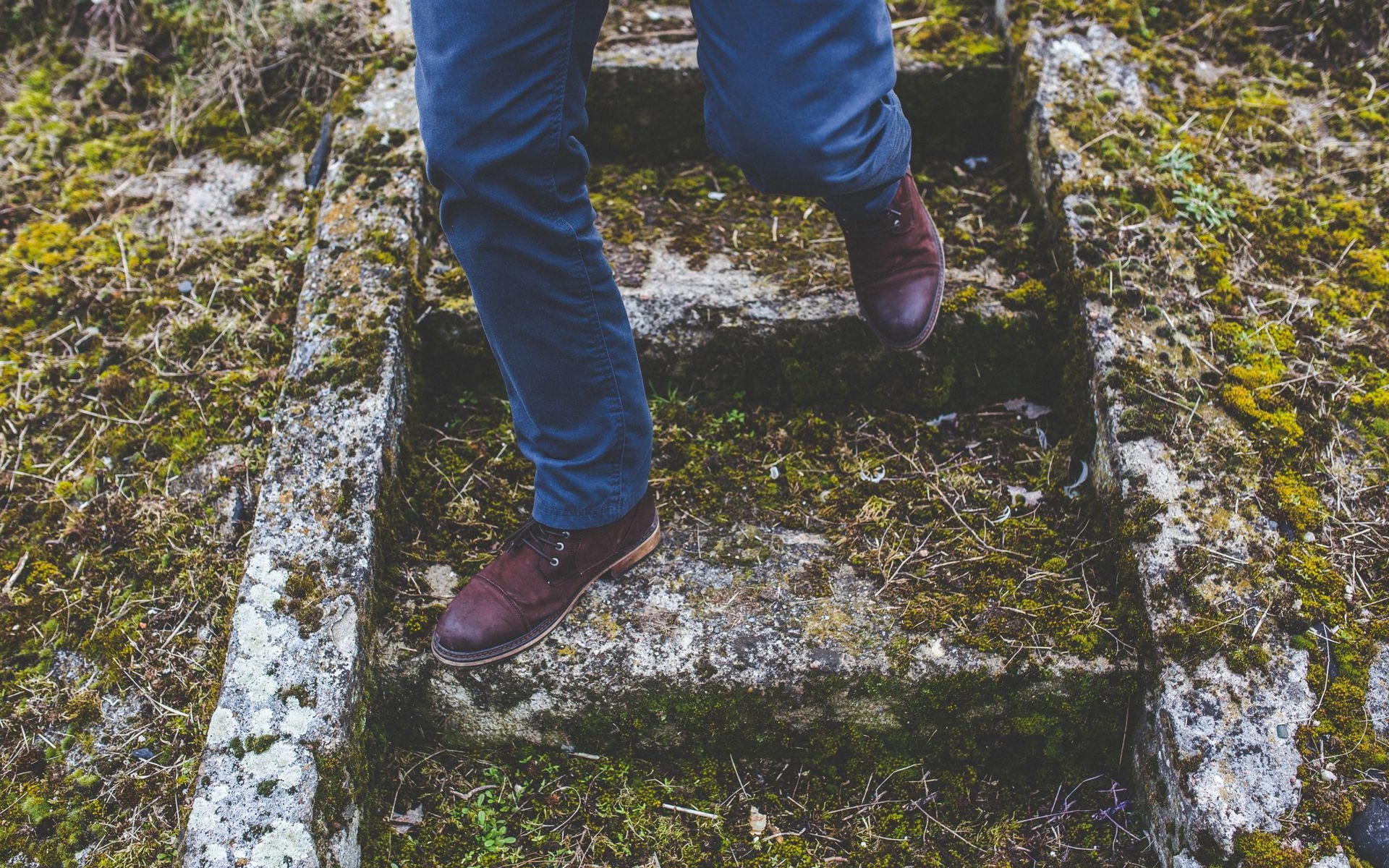
Going up a Sapa terrace is hard work. Coming down is what hurts. The steps are tall, uneven, and often wet, and every step down lands your whole weight on one bent knee. By the second descent of the day, most walkers feel it.
The pain is normal, and it is mostly avoidable. It comes from how you land, not from how fit you are.
Land soft, step short
The mistake is stepping down like walking down stairs at home: one long step, straight leg, heel striking hard. On a tall wet terrace step, that jars the knee with every landing.
Take short steps instead. Bend the knee of the leg you are standing on and lower yourself down, rather than dropping onto the lower foot. Land on the whole foot, not just the heel. Keep the knee pointing the same way as your toes, never let it cave inward.
Slow down on the steepest sections. A descent that takes ten minutes longer is a descent your knees will forgive.
Use poles, and use them properly
Trekking poles are worth their weight on a Sapa downhill. Plant both poles before you step down, take some weight through your arms, then lower yourself. The poles take a share of the load that would otherwise go straight into your knees.
Set them longer than you would for flat walking, so they reach the ground below you. If you have no poles, a stick from the path works. Ask your guide: most carry a spare.
Do not hold the poles and still take long fast steps. The poles help only if you slow down enough to use them.
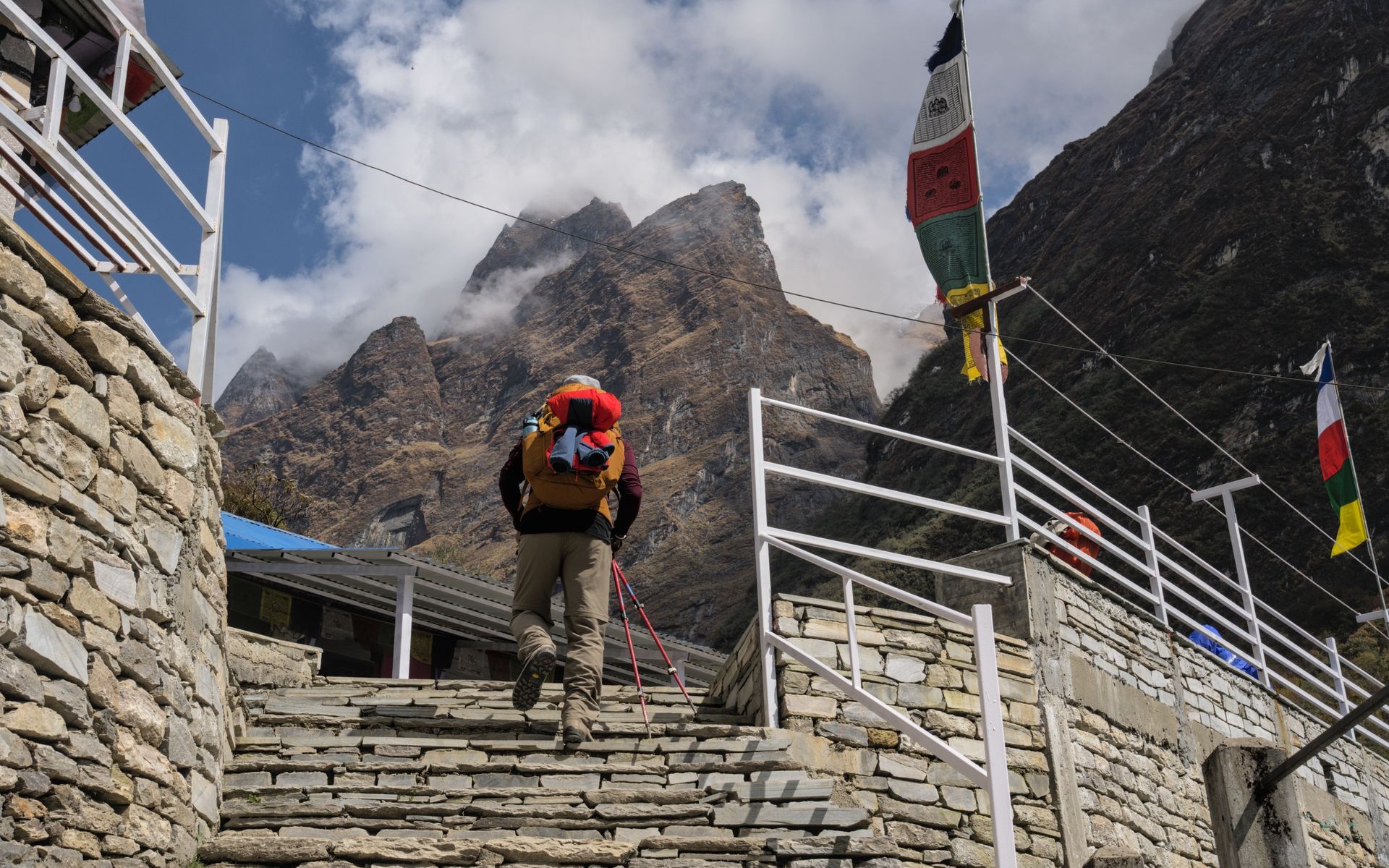
Source: Harsh Khandelwal via Pexels. A hiker with trekking poles on stone steps in Ghandruk, Nepal, shown as an illustration of pole use on steps, not Sapa.
When the pain starts
A dull ache behind the kneecap on the way down is common, and it usually eases when the slope flattens. Stop, straighten the leg, and let it rest for a minute. If the ache fades when you walk on flat ground, keep going, slowly.
Sharp pain, a knee that gives way, or swelling that appears during the walk is different. Tell your guide at once. Do not try to walk it off on a steep descent: a knee that buckles on a wet terrace step can turn into a fall.
If the pain is in one knee only, shorten your steps further and put more weight on the poles on that side. If both knees hurt, ask the guide for the flattest way down. There is usually a longer, gentler path, and it is worth the extra time.
Shoes, and the day before
Soft trainers with flat soles make descents worse: the foot slides forward inside the shoe and the toes jam, so you brake with your knees. Boots with a firm heel cup and good grip hold the foot still and let you control each step.
Warm up before the first descent. Walk the flat section at the top gently, bend and straighten each knee a few times, and let the joints loosen. Cold, stiff knees on the first steep drop are the ones that complain loudest.
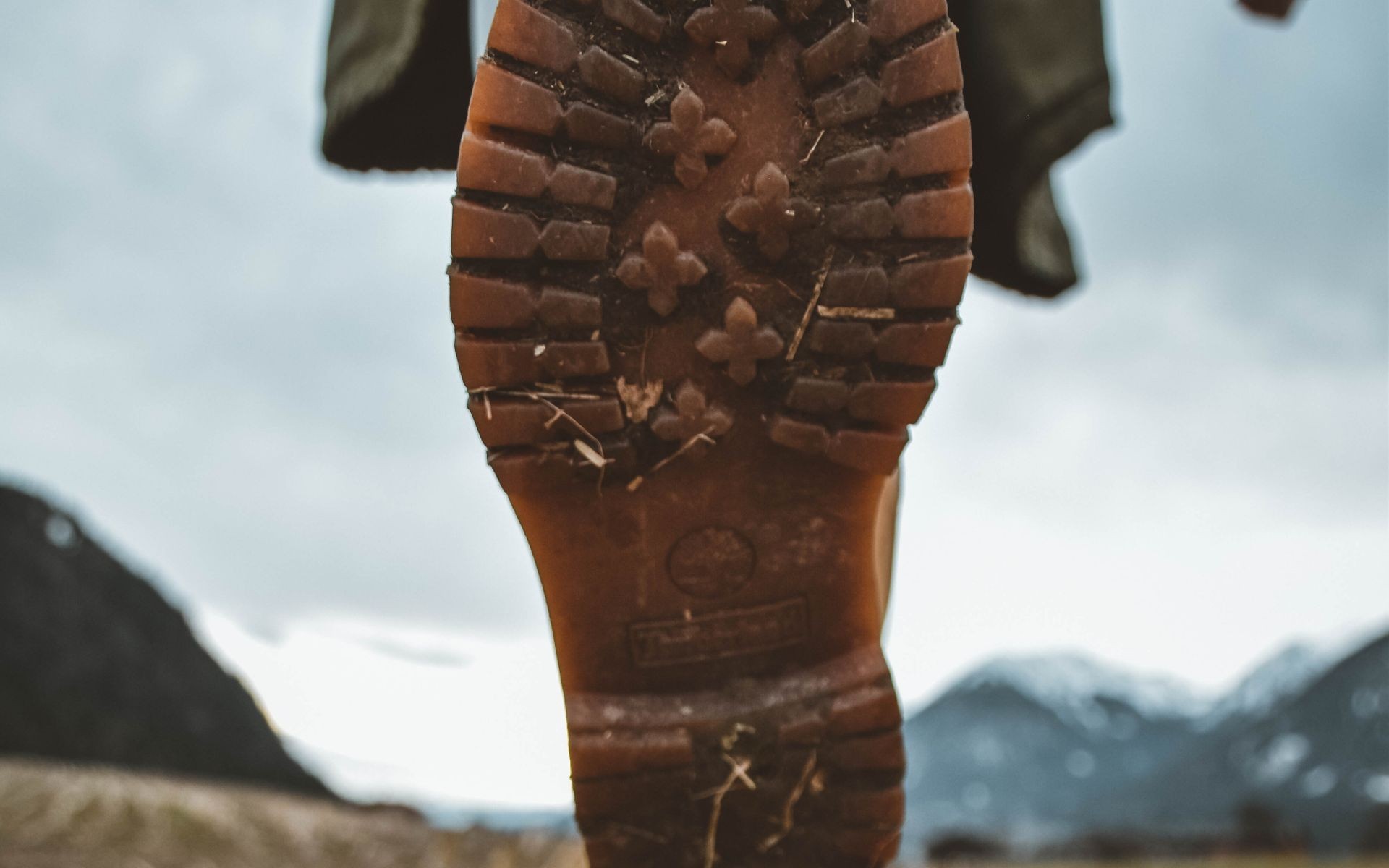
Source: Stephan Seeber via Pexels. Close-up of a hiking boot sole, shown as an illustration of the grip that holds your foot still on a descent; no location claimed.
Descend slowly, land soft, and let the poles carry their share.
The 2 day Ta Van homestay trek is the walk this is written for: two days, one night in Ta Van, with descents into the valley on both days. The 1 day Y Linh Ho, Lao Chai and Ta Van trek is the shorter version, with one long descent. Read the full Sapa trekking guide, then message the house on WhatsApp or Zalo.
Walk it with us
Every route in these guides ends at Cloud Valley. Sleep where the trail ends, not back in town.
Sapa Trekking Guide · 1 Day Valley Trek · 2 Day Homestay Trek
More guides
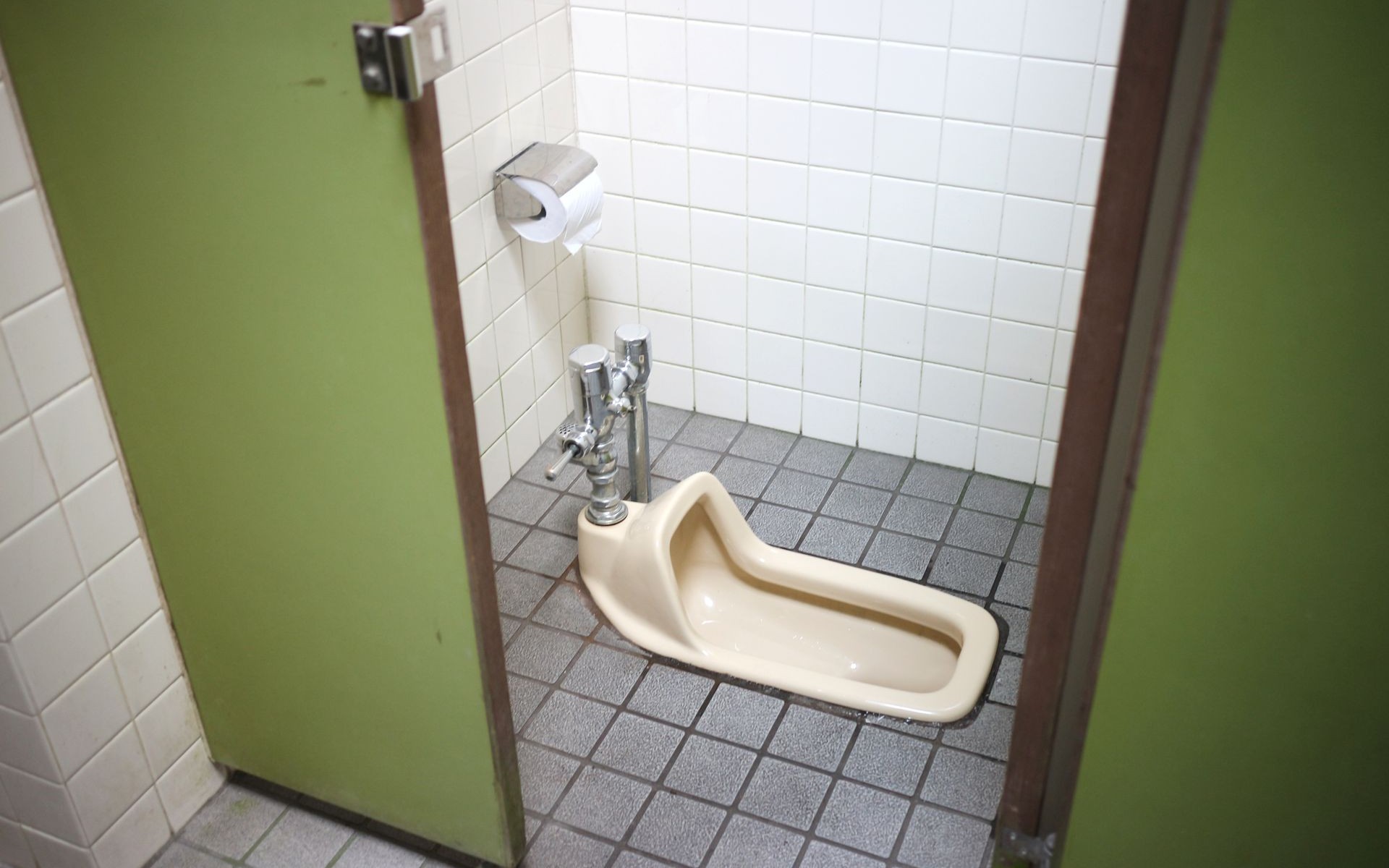
Squat Toilets and Shared Bathrooms: What Homestays Are Really Like
The toilet is the part of a Sapa homestay nobody photographs. Here is what the bathroom is actually like, and the three small things to pack so it never ruins your night.

Booking a Trek Online vs in Town: What Changes
You can book your Sapa trek from home weeks ahead, or walk into an office in Sapa town the day before. Both work. Here is what actually changes with each choice.

Your Luggage While You Trek: Storage Options That Actually Work
You cannot drag a rolling suitcase down muddy terrace steps. Here is where your big bag actually goes while you walk, and what to carry instead.