Slippery Clay Paths After Rain: How to Walk Them Without Falling
Rain turns Sapa's red clay paths into a slide. Short steps, flat feet, and a stick in your hand keep you upright. Here is how to walk them without falling.
Slippery Clay Paths After Rain: How to Walk Them Without Falling
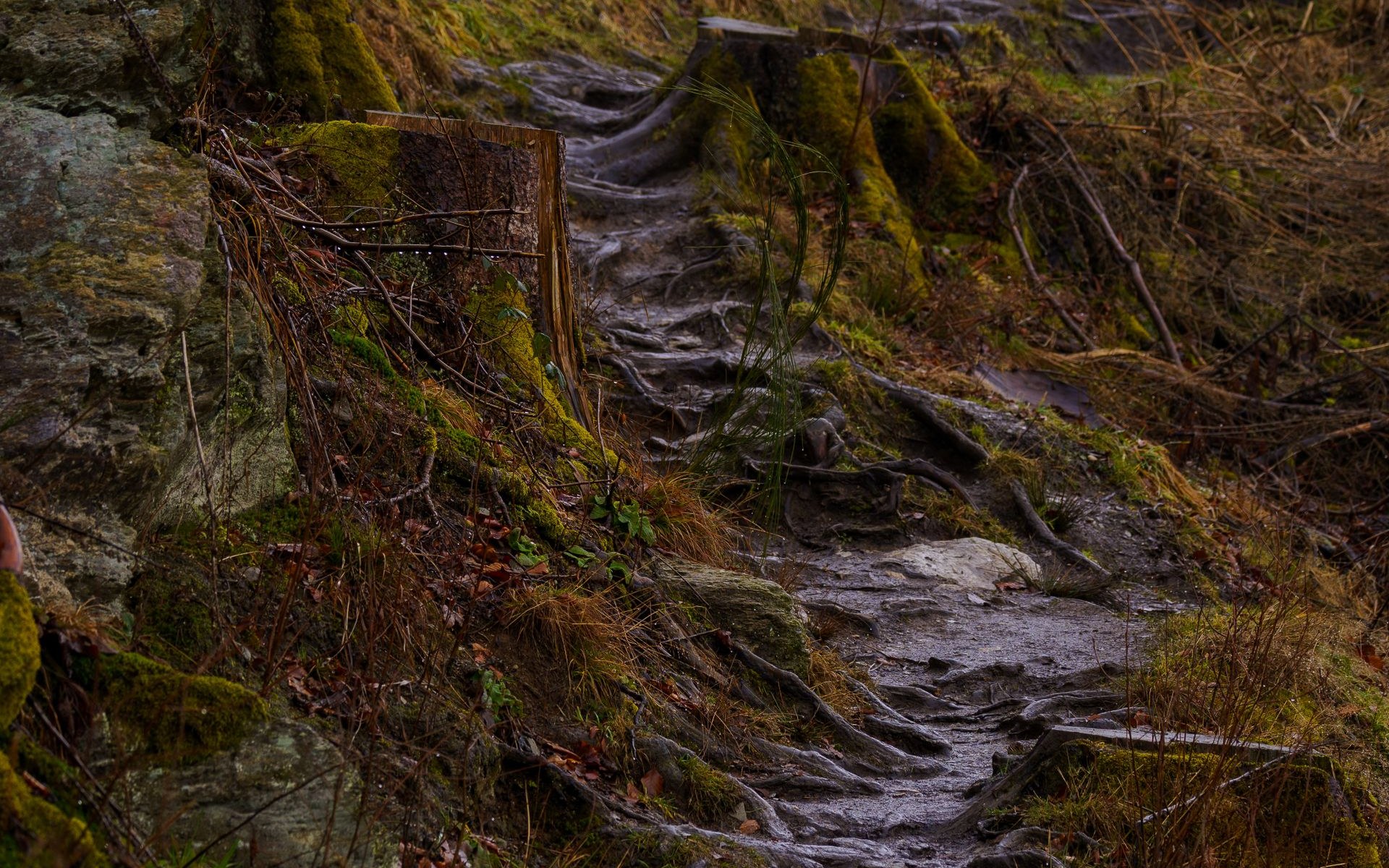
Cover photo: Maarten Ceulemans via Pexels, a muddy trail through a mossy forest in Malmedy, Belgium.
It rained overnight. The path out of the village looks solid enough, red earth packed hard underfoot. Then your boot slides sideways, with a flooded terrace two steps to your left. That is Sapa clay after rain. Dry, it grips like concrete. Wet, it turns to soap.
Clay is the main reason trekkers fall in Sapa. The paths between villages are bare red and yellow clay, and a thin film of water sits on top instead of soaking in. The danger is worst in the first hour after rain, and on paths along a terrace edge, where one slide can drop you a metre into muddy water.
Short steps, flat feet
Take short steps, about half your normal stride, and put your whole foot down flat before you shift your weight onto it. Do not land on your heel and roll forward. That rolling motion is what starts a slide.
Keep your knees slightly bent and your weight over your feet. If your foot starts to go, freeze. A big recovery step on clay usually turns one slide into two.
Stay off the shiny centre of the path. The middle is where everyone walks, so it is the most polished and the slickest. The rougher edges, where grass or small stones break the surface, give your soles something to grip. Follow your guide's line, not the worn groove.
A stick, and shoes that grip
A trekking pole, or a bamboo stick cut at the trailhead, changes everything on wet clay. Plant it ahead of you with every step, and let it take some of your weight when the ground gives way. Two poles are better than one on a long descent, but even a single stick stops most falls before they start.
Shoes matter more than anything you wear. Trainers with smooth soles are the worst choice for Sapa. You need deep lugs, because lugs cut through the wet film and bite into the clay underneath. If your soles are packed with mud, stop and scrape them clean on a stone. A clogged tread grips no better than a smooth sole.
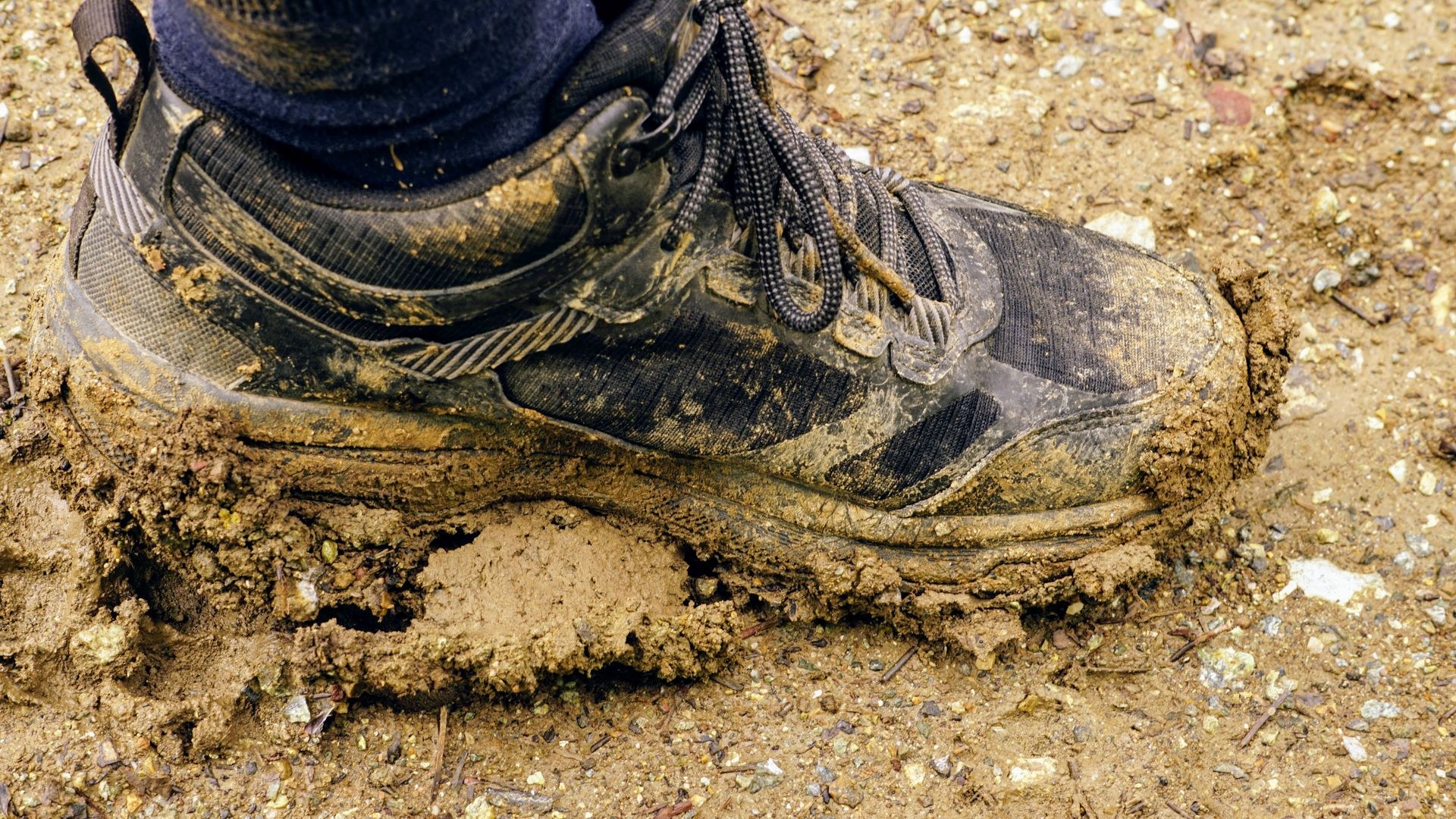
Source: Ekrem KÖSE via Pexels, a trekking shoe caked in mud on a dirt path. No location claimed on the source page.
Downhill is where it happens
Almost every fall on a Sapa trek happens going down, not up. Going down, gravity pulls you forward and your feet want to run ahead of you. On a wet clay descent, walk sideways across the slope in short zigzags instead of straight down, and keep your pole planted downhill of you, so it catches you if your feet go.
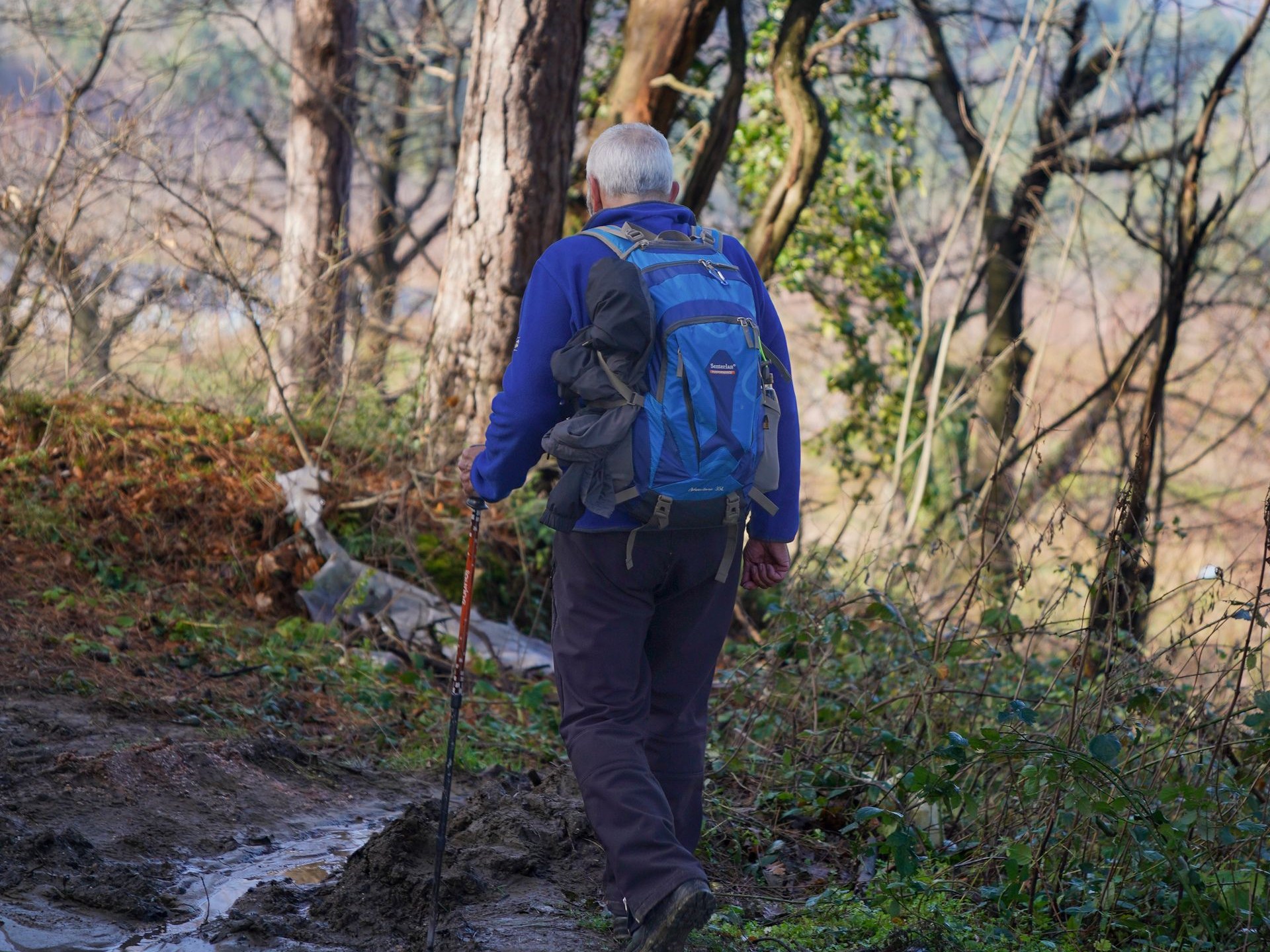
Source: Özgür Sürmeli via Pexels, a hiker with a trekking pole on a muddy forest trail in Bursa, Türkiye.
Never rush a descent to catch up with the group. Tell your guide you need a slower pace. If the path drops steeply and the clay is running with water, sit down and slide on your backside for the worst few metres. It looks undignified, and it beats a fall.
When to stop
Some paths are simply too bad to walk. If the clay has turned into a stream, or each step slides no matter how carefully you place it, say so. Your guide can find another route, wait for the sun to dry the path, or turn back.
Your next step
Rain is part of trekking in Sapa for most of the year, so an early start gives the paths the best chance to dry. Read our Sapa trekking pillar page, and see the classic 1-day Y Linh Ho, Lao Chai, Ta Van trek or the 2-day Ta Van homestay trek. Message Cloud Valley on WhatsApp or Zalo for a quote.
Walk it with us
Every route in these guides ends at Cloud Valley. Sleep where the trail ends, not back in town.
Sapa Trekking Guide · 1 Day Valley Trek · 2 Day Homestay Trek
More guides
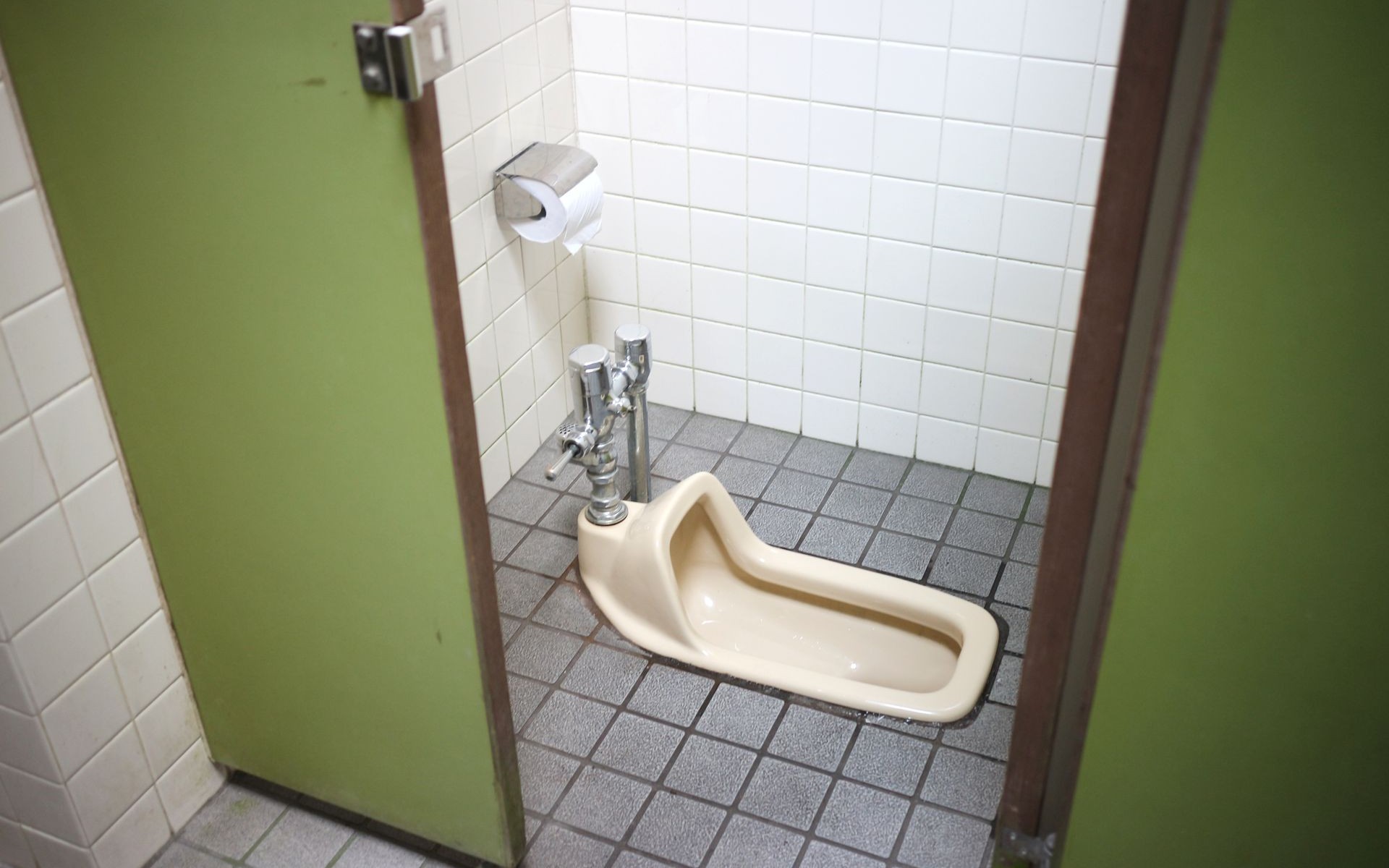
Squat Toilets and Shared Bathrooms: What Homestays Are Really Like
The toilet is the part of a Sapa homestay nobody photographs. Here is what the bathroom is actually like, and the three small things to pack so it never ruins your night.

Booking a Trek Online vs in Town: What Changes
You can book your Sapa trek from home weeks ahead, or walk into an office in Sapa town the day before. Both work. Here is what actually changes with each choice.

Your Luggage While You Trek: Storage Options That Actually Work
You cannot drag a rolling suitcase down muddy terrace steps. Here is where your big bag actually goes while you walk, and what to carry instead.