Sun on the Terraces: Sunburn and Heat on a Sapa Walk
Sapa feels cool in the morning, then the midday sun hits the open terraces hard. Put sunscreen on before you start, wear a hat, carry water, and plan your walking hours around the heat.
Sun on the Terraces: Sunburn and Heat on a Sapa Walk
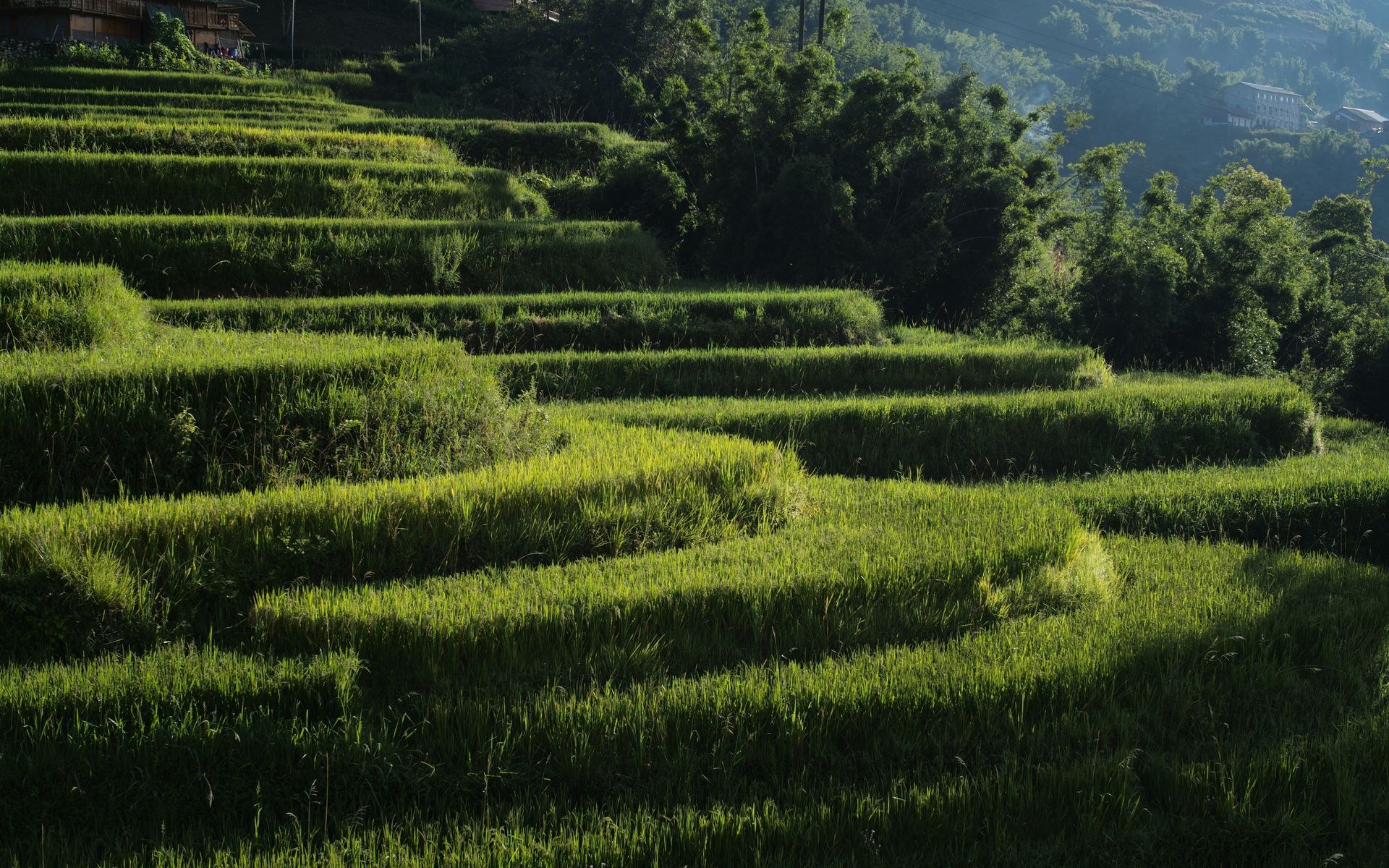
Cover photo: Lucas Tran via Pexels, green rice terraces in Lao Cai, Vietnam under sunlight.
You leave Sapa town in the cool morning air, in a fleece, and feel fine. By 11 AM you are walking across open terraces in full sun and your shoulders are burning. Sapa feels like a mountain escape, but the midday sun on the terraces can burn you in a single morning.
The problem is the ground itself. Terrace paths run across open hillsides with almost no tree cover, and the sun reflects off flooded fields below. Sapa town sits around 1,600 metres up, and at that height the sun is stronger than at sea level, even when the air feels cool. A cloudy morning is no protection. Thin cloud lets most of the sun through.
Put sunscreen on before you start, then again
Put sunscreen on before you leave the hotel, not when you first feel hot. By then the burn has already started. Use a high factor, cover your face, ears, neck, and the backs of your hands, and reapply at midday, especially after sweating on a climb. Fair skin can burn in under an hour in strong summer sun.
Carry the tube in your daypack, not in your main luggage. On a two-day trek, the second day is usually worse, because the first day's burn is still there.
A hat and long sleeves beat a bare head
A wide-brimmed hat or a cap with a neck flap is the cheapest protection you will carry. It shades your face and the top of your head, where a burn hurts most at night. Sunglasses matter too. The glare off flooded terraces is hard on the eyes all day, and squinting into it for hours leaves you with a headache by evening.
Wear light, loose long sleeves instead of a bare vest top. A thin long-sleeved shirt is cooler than bare skin in direct sun, and your shoulders are where most trekkers burn first.
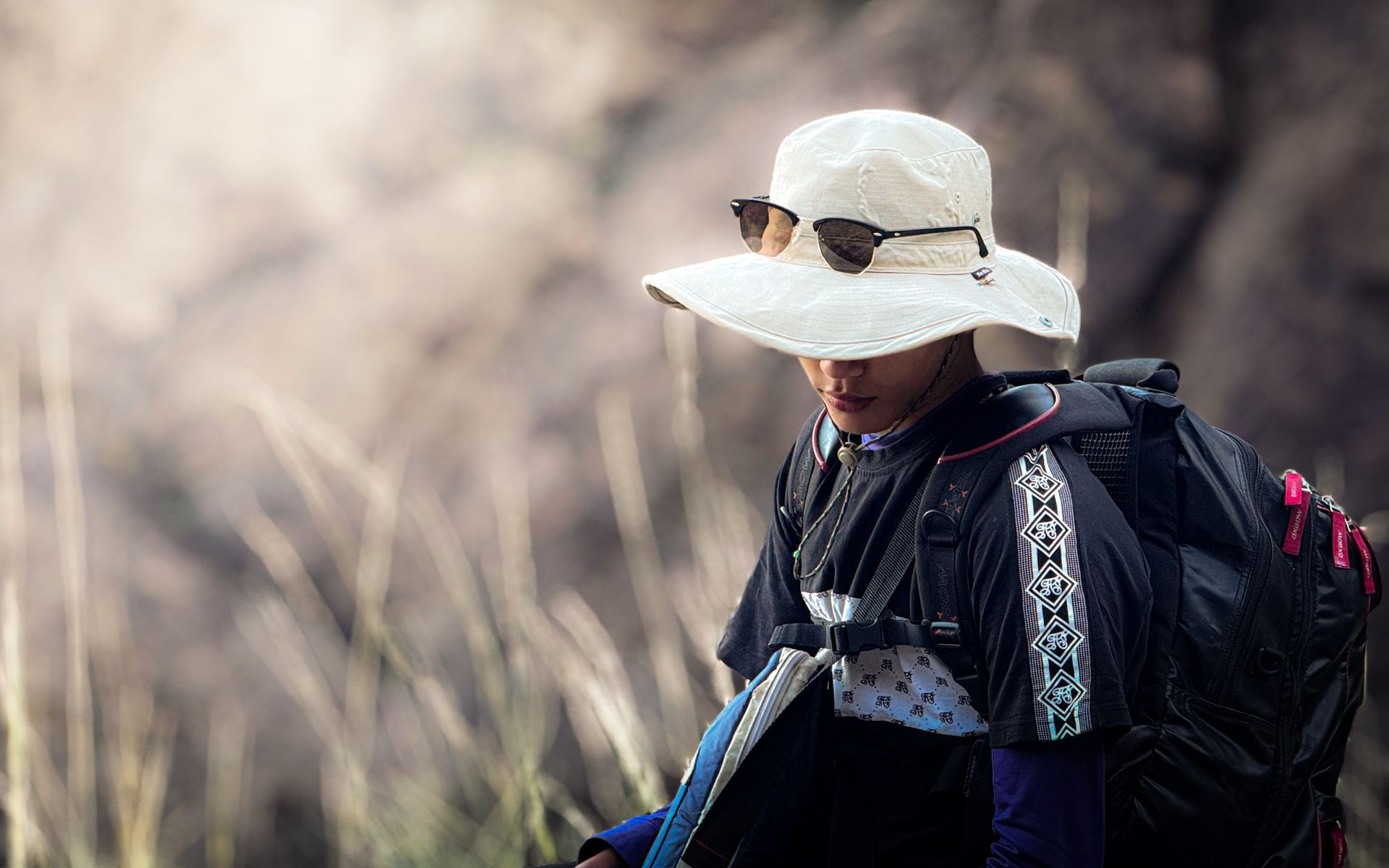
Source: Akram Ouahmane via Pexels, a young man in a sun hat and sunglasses hiking with a backpack. No location claimed on the source page.
Water, shade, and the midday hours
Heat is the second half of the problem. A long climb in full sun drains you faster than the same climb in the morning. Carry at least a litre of water per person, more on a hot day, and drink before you feel thirsty. Your guide will know where the next shop is, but do not count on buying water on every stretch of path.
Watch for the early signs of heat trouble: a growing headache, nausea, dizziness, or sweating that suddenly stops. If any of those appear, stop in the shade, drink water, and tell your guide. Sitting in the shade of a village house for twenty minutes keeps the rest of the day possible.
Plan your hours around the sun. Start early, walk the exposed terrace sections before midday, and save the shaded valley paths and village stops for the hottest hours.
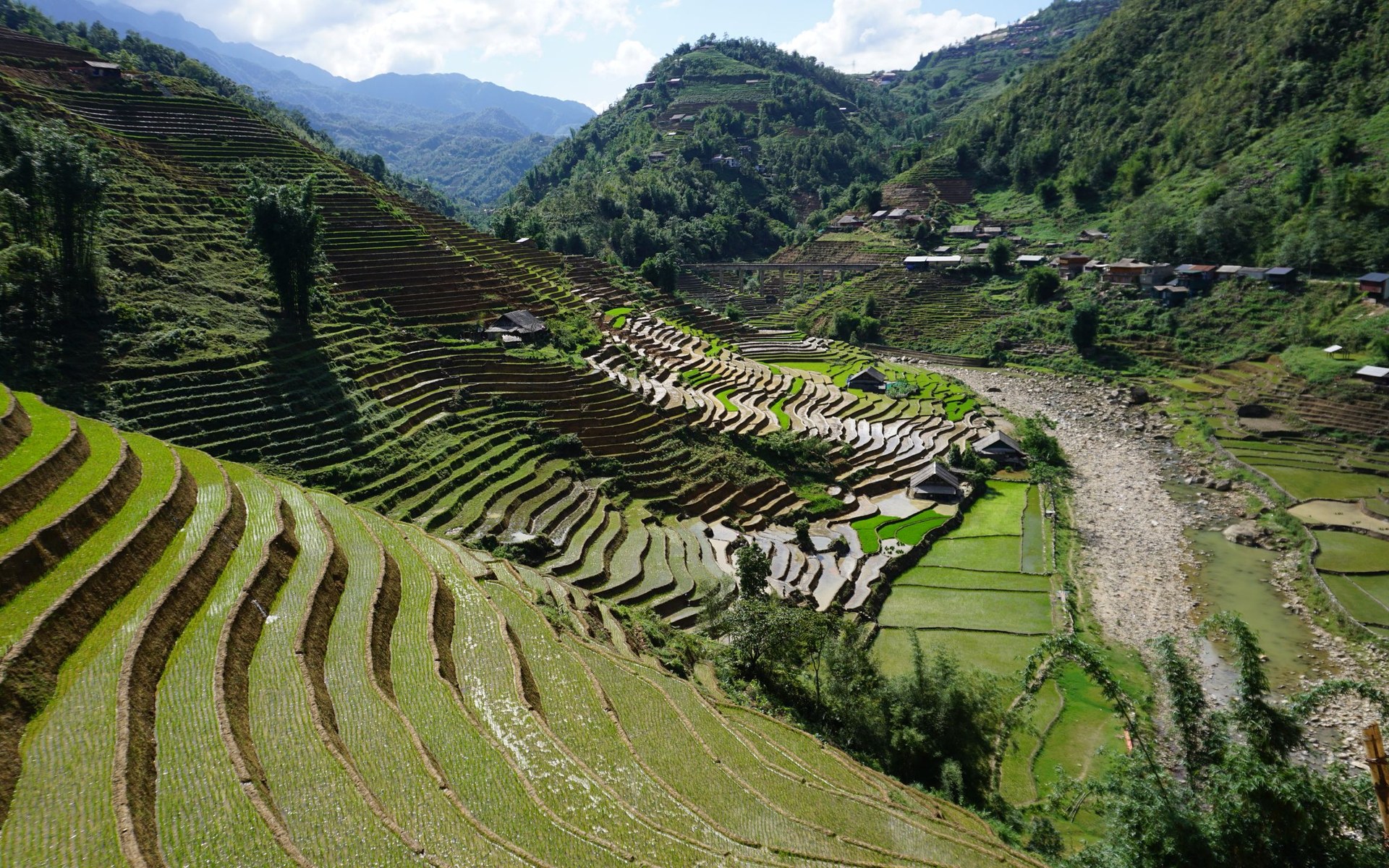
Source: Duong Nguyen via Pexels, rice terraces in Sa Pa, Lao Cai, Vietnam.
If you still get burned
Cool the skin with water, stay out of the sun for the rest of the day, and wear loose clothing over the burn. Do not peel the skin, and do not go back out the next morning without covering the burned area. A second day of sun on a fresh burn is what turns a sore evening into a ruined trek.
Your next step
Sunscreen before you start, a hat, long sleeves, enough water, and early hours will carry you through the hottest part of the day. Read our Sapa trekking pillar page, and see the classic 1-day Y Linh Ho, Lao Chai, Ta Van trek or the 2-day Ta Van homestay trek. Message Cloud Valley on WhatsApp or Zalo for a quote.
Walk it with us
Every route in these guides ends at Cloud Valley. Sleep where the trail ends, not back in town.
Sapa Trekking Guide · 1 Day Valley Trek · 2 Day Homestay Trek
More guides
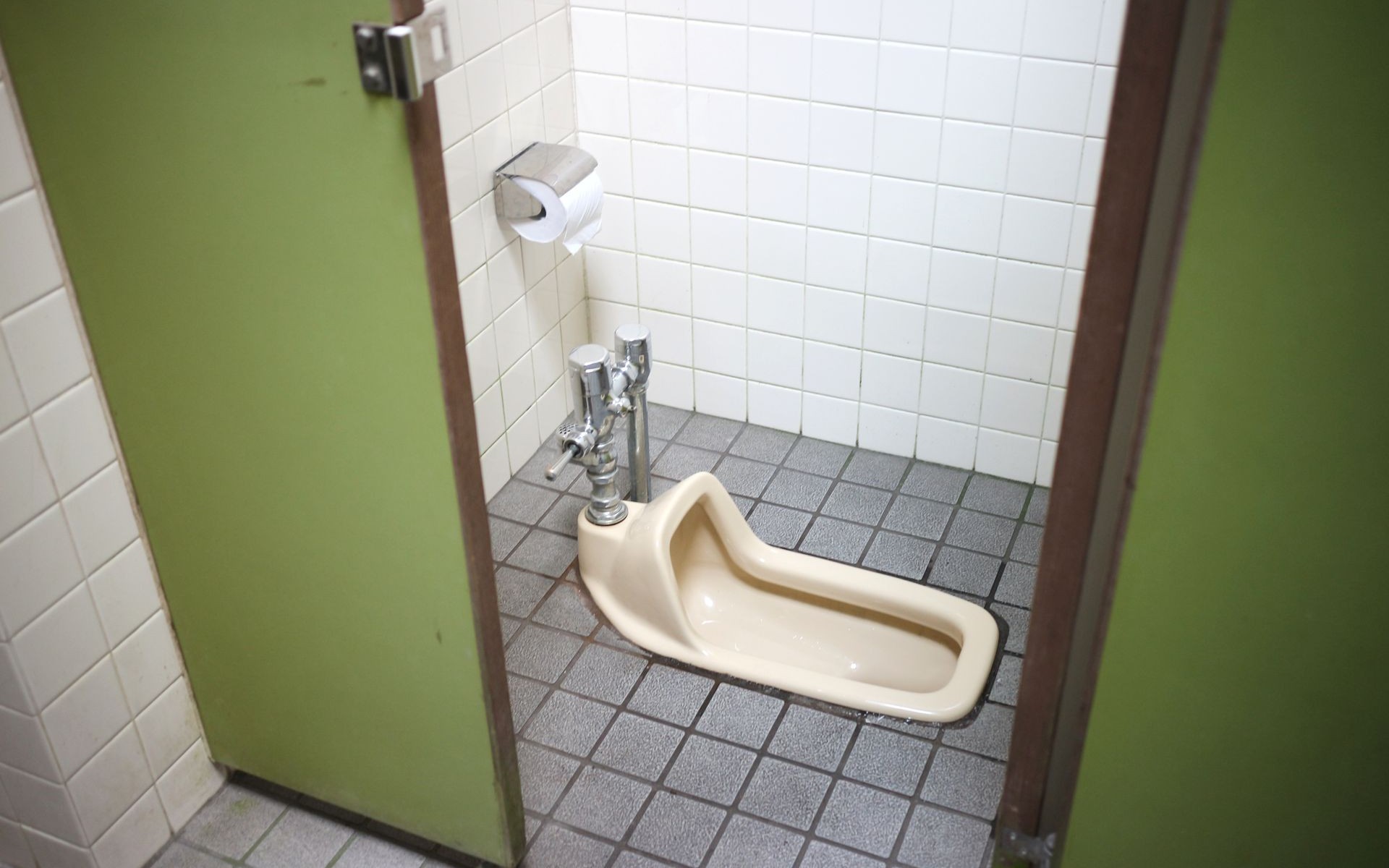
Squat Toilets and Shared Bathrooms: What Homestays Are Really Like
The toilet is the part of a Sapa homestay nobody photographs. Here is what the bathroom is actually like, and the three small things to pack so it never ruins your night.

Booking a Trek Online vs in Town: What Changes
You can book your Sapa trek from home weeks ahead, or walk into an office in Sapa town the day before. Both work. Here is what actually changes with each choice.
Your Luggage While You Trek: Storage Options That Actually Work
You cannot drag a rolling suitcase down muddy terrace steps. Here is where your big bag actually goes while you walk, and what to carry instead.