Ta Van Village Guide: Where the Classic Sapa Trek Ends
Ta Van is the village at the end of the classic Y Linh Ho, Lao Chai and Ta Van route. How the trail arrives, where to sleep, and what to walk the next morning.

Cover photo: Martyna.pedziach via Wikimedia Commons, CC BY-SA 4.0.

The trek ends here, not in town
Most Sapa treks start in Sapa town and end with a car ride back to it. The classic valley route works the other way. It walks down from the town into the Muong Hoa valley, through Y Linh Ho and Lao Chai, and finishes in Ta Van, a village of terraced fields and stilt houses about a half day's walk below town.
That ending changes the whole day. Instead of queuing for a bus with muddy boots, you walk into a village, drop your bag, shower, and sit down to dinner where you sleep. The next morning starts at the front door, not in a car park.
This guide covers what Ta Van is, how the trail arrives, where to sleep, and what to walk the next morning. For routes, seasons and prices in full, start with our Sapa Trekking Guide.
What Ta Van actually is

Source: Hanay via Wikimedia Commons, CC BY 3.0.

Ta Van sits on the valley floor where the Muong Hoa river runs, surrounded by rice terraces that climb the hills on both sides. It is home mostly to Giay families, who have farmed this valley for generations, with Hmong and Red Dao villages nearby along the same trail. Houses are a mix of traditional wooden stilt homes and newer brick buildings, and daily life still runs on farming: buffalo in the fields, rice in season, and children walking the same paths trekkers use.~
The village is small enough to walk end to end in about twenty minutes. There is no town center, no ATM, and no row of hotels. That is the point. Ta Van is a place people live, not a resort built for visitors, and an evening here feels very different from a night back in Sapa town.
How the classic route arrives
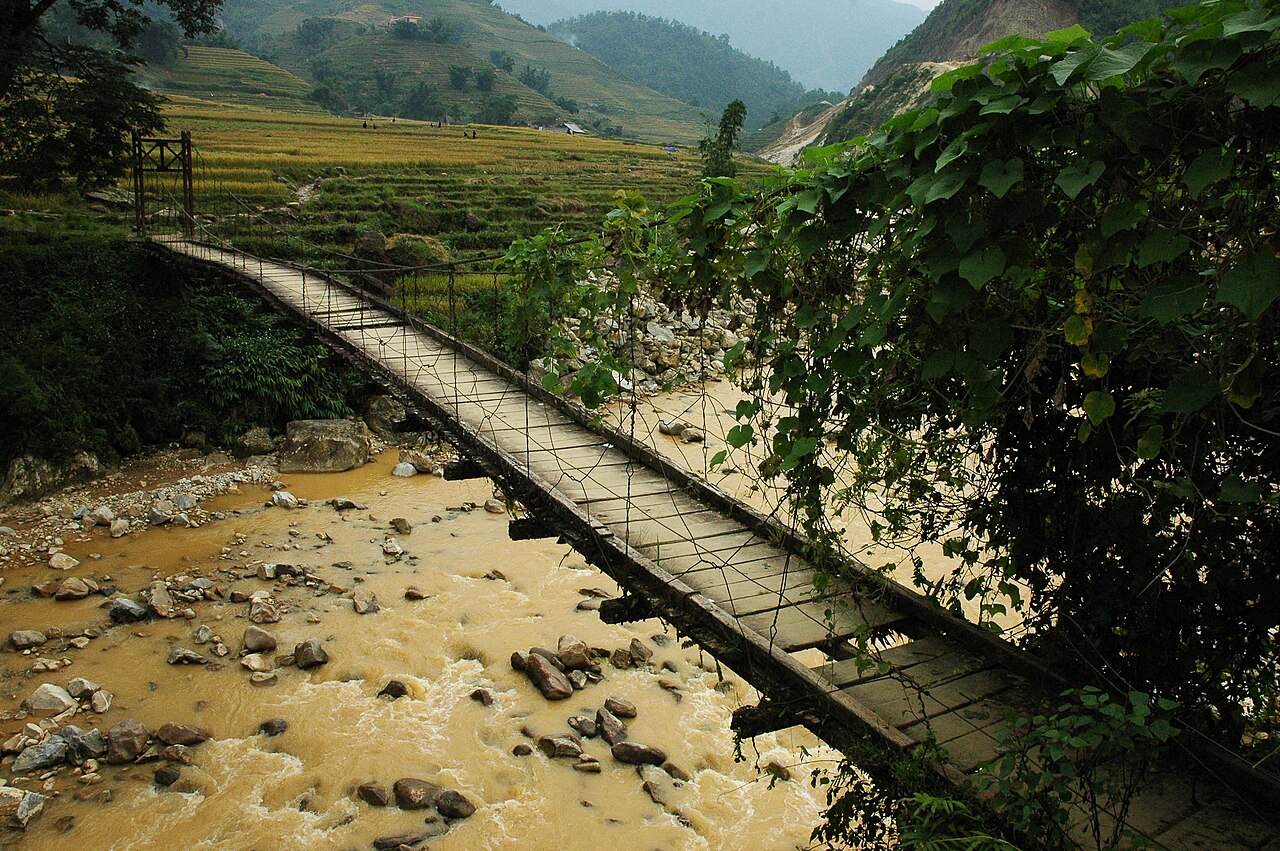
Source: Lori_NY via Wikimedia Commons, CC BY-SA 2.0.

The classic route is about 12 km and takes most walkers five to six hours with stops. It starts near Sapa town, drops through Y Linh Ho, follows the river to Lao Chai, then continues along the valley floor into Ta Van. The walking is downhill overall, but the path is uneven: stone steps, mud after rain, and narrow terrace edges where you walk single file.
Trekkers usually reach Ta Van in the mid to late afternoon. If you stay with us, your big bag travels ahead by road while you walk with a daypack, so it is already in your room when you arrive. The 1 day valley trek ends here, and the 2 day homestay trek sleeps here before walking on.
Where to sleep: in the village or back in town
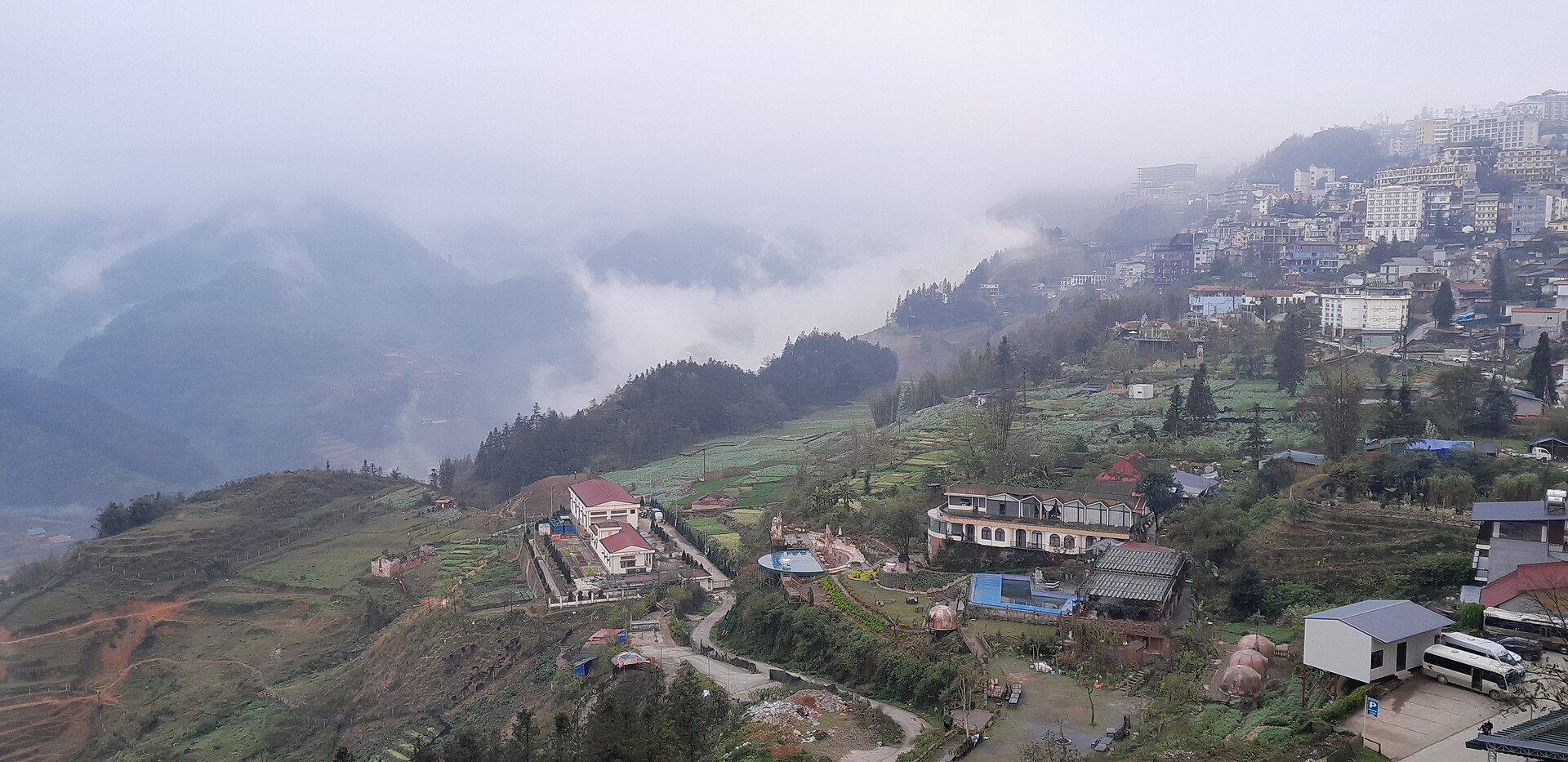
Source: JakobHosp via Wikimedia Commons, CC BY 4.0.

You have two honest options. A hotel in Sapa town means a car ride at the end of the day, a hot shower in town, and restaurants and shops in the evening. A homestay in Ta Van means you are already home: dinner with the family, a quiet night in the valley, and a morning that starts on the trail.
The tradeoff is comfort versus position. Town has more choice and more noise. The village has less choice and a much better morning. Trekkers who plan a second day of walking almost always prefer the village, because day two starts from the door instead of from a car ride back down.
The next morning: Giang Ta Chai and Su Pan
The best reason to sleep in Ta Van is what opens up the next day. From the village you can walk on to Giang Ta Chai, known for its bamboo forest and river, and on to Su Pan, without returning to Sapa town at all. It is a gentler day than day one, mostly flat along the valley, and it turns a one day walk into a real two day trek.
Ask the evening before and we pack breakfast for an early start. The trail to Giang Ta Chai is easy to follow from the village, but a local guide still helps: paths fork through fields, and the guide knows which fork stays on public paths and which one crosses someone's crop.
Good to know before you come
Best months. March to May and September to November are the classic windows: green terraces and stable weather. September to early October is harvest season, when the terraces turn gold. Summer brings rain and mud, and winter can be cold and foggy in the valley.
What to wear. Proper walking shoes with grip, not sneakers with flat soles. The stone steps are slippery when wet. Bring a light rain jacket in any season, and a warm layer for the evening: the valley cools fast after sunset.
Money and signal. Bring cash from Sapa town. There is no ATM in Ta Van, and card payments are rare. Phone signal is patchy in the valley, so download offline maps before you leave town.
Respect the village. Stay on the paths, ask before photographing people at close range, and keep voices down in the evening. You are walking through people's home, not a park.
Walk it with us
Ta Van is not a stop on the way somewhere else. It is the place the classic trek is heading to, and the best way to understand it is to sleep here and walk on the next morning. Tell us your dates and group size on WhatsApp and we will answer with a route, a real price, and a bed in Ta Van at the end of it.
Start with the Sapa Trekking Guide, or look at the 2 day homestay trek if you want the full two days.
Walk it with us
Every route in these guides ends at Cloud Valley. Sleep where the trail ends, not back in town.
Sapa Trekking Guide · 1 Day Valley Trek · 2 Day Homestay Trek
More guides

Squat Toilets and Shared Bathrooms: What Homestays Are Really Like
The toilet is the part of a Sapa homestay nobody photographs. Here is what the bathroom is actually like, and the three small things to pack so it never ruins your night.

Booking a Trek Online vs in Town: What Changes
You can book your Sapa trek from home weeks ahead, or walk into an office in Sapa town the day before. Both work. Here is what actually changes with each choice.

Your Luggage While You Trek: Storage Options That Actually Work
You cannot drag a rolling suitcase down muddy terrace steps. Here is where your big bag actually goes while you walk, and what to carry instead.