Gifts for Village Kids: What Helps and What Harms
A child runs up to you on a Sapa trail, smiling, hand out. Your hand goes to your pack. Before you give anything, here is what actually helps village kids, and what quietly harms them.
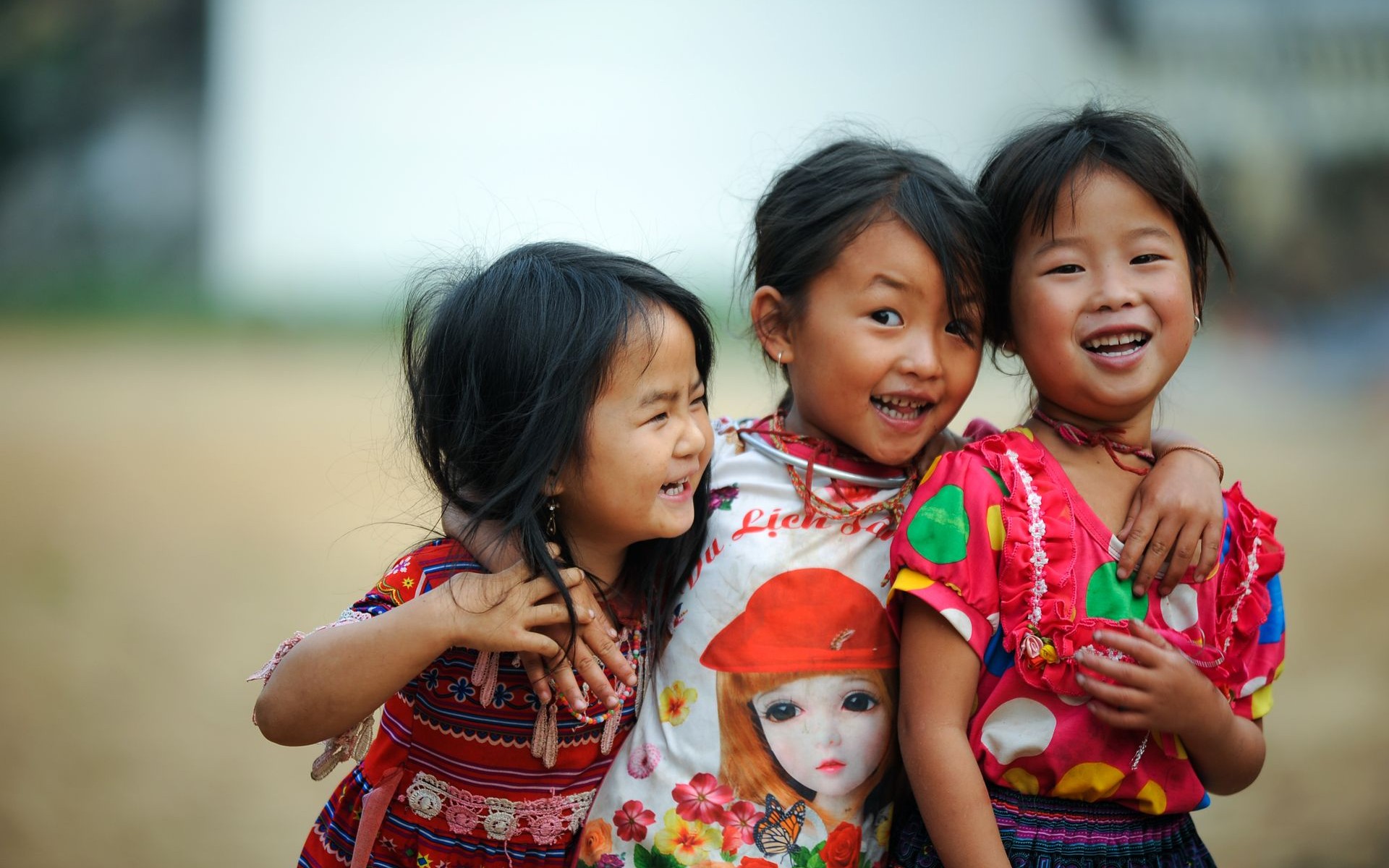
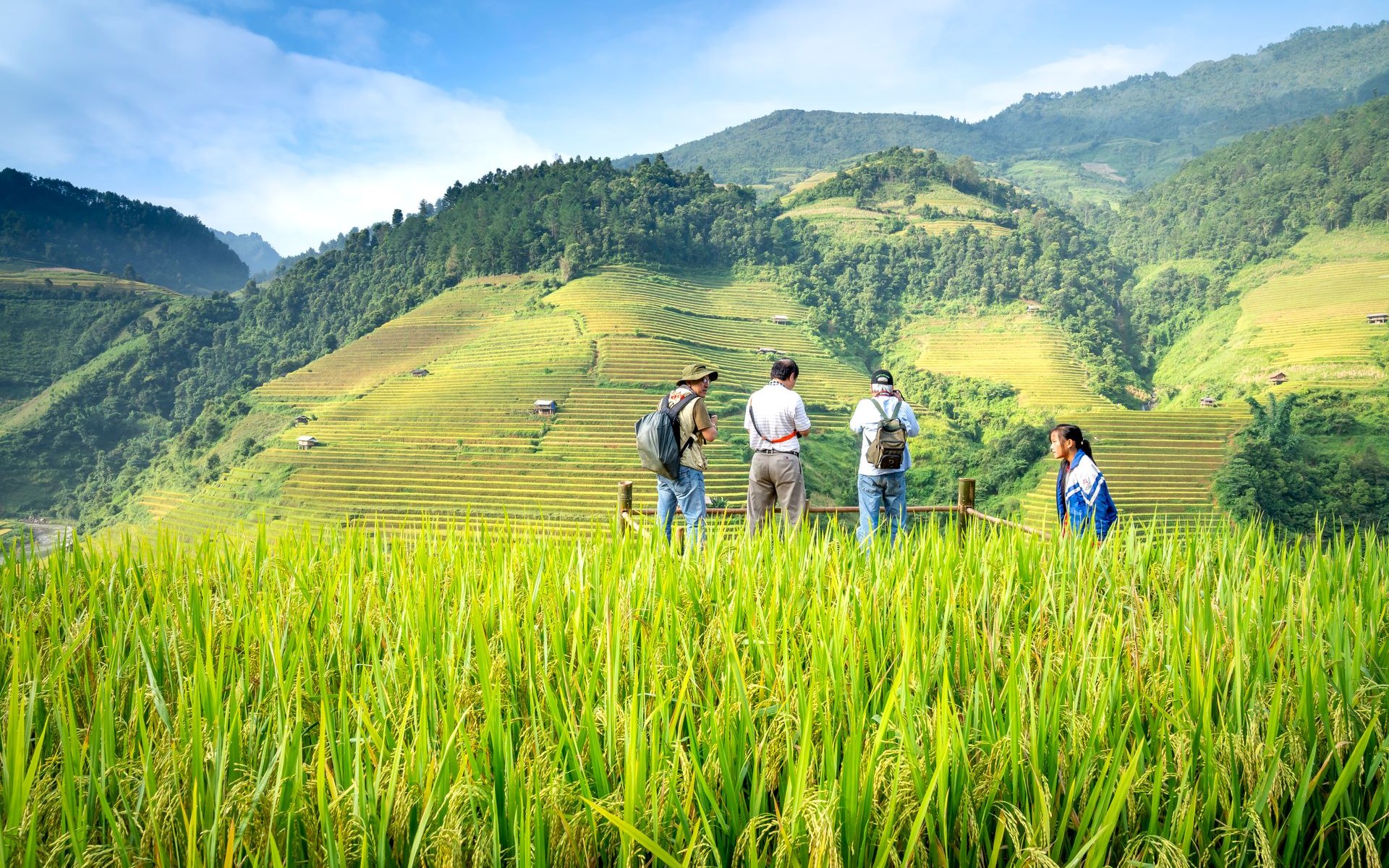
Cover photo: TUAN PHAN via Pexels.
You are halfway down a terrace path above Ta Van when a small girl runs up to you, smiling, hand out. She says hello in clear English, then holds out a bracelet. Or she just holds out her hand. Your hand goes to your pack. You have sweets in there, maybe some pens, maybe a few small banknotes. You want to be kind. You want to give something.
Stop for ten seconds before you do. In the Sapa valley, the kindest gift is rarely the one that feels kindest in the moment. Sweets and cash handed to a child on the trail feel generous, and they are the two gifts that cause the most trouble. A notebook given to a teacher, a warm pair of socks passed through your homestay host, a game played together on the path, these help far more, and they cost less.
The short answer
Do not hand sweets or cash to children on the trail. Do not hand out anything to a crowd of children at once. If you brought something useful, give it to an adult: your guide, your homestay host, or a teacher, and let them decide who needs it. School supplies, soap, and warm socks help. Sweets, cash, and plastic toys mostly harm. Buying a bracelet from a child is different from giving: that is trade, and paying a fair price for it is fine.
Why sweets and cash backfire
The problem is not one child and one sweet. The problem is what happens after you leave. A child who gets sweets from trekkers learns that the trail pays better than the classroom. In the villages around Sapa, children already miss school to sell bracelets and souvenirs to passing walkers, because a morning on the path can earn more than a morning in class. Every sweet and every banknote handed over on the trail makes that choice easier.
Cash is worse than sweets, because it teaches a child to beg. A child who is paid for holding out a hand will hold out a hand to the next group, and the next. The boldest children get the most, and the shy ones get nothing, which teaches the whole group that pushing and crowding works. Your guide has seen this over years: the villages where trekkers hand out money have the most children chasing groups down the path, and every conversation there starts with an outstretched hand.
Sweets bring a smaller, more direct harm. Village children have little access to a dentist, and a diet of sweets from passing trekkers rots teeth that nobody will fix. A bag of candy feels like nothing to you. Across a season of trekkers, it is a steady supply of sugar to children with no dental care.
What actually helps
The gifts that help are boring, practical, and given to adults. Notebooks, pencils, pens, and erasers are the best things you can carry. They are light, they are cheap in Sapa town, and every child in the valley uses them at school. Buy them in Sapa town the evening before your trek, not at home.
Warm socks help too, especially from November to February, when mornings in the valley are cold and many children walk to school in thin shoes. Plain soap helps: a bar of soap is a luxury in a house with no shop nearby. They solve a real need instead of creating a new one.
Give these things to your guide, or to your homestay host, and ask them to pass them on. They know which family has a child starting school, which household is short of basics, and who would be embarrassed to be singled out in front of neighbours. A gift that arrives through a trusted adult lands as help. The same gift handed to a child on the path lands as a transaction, and the next trekker pays for it.
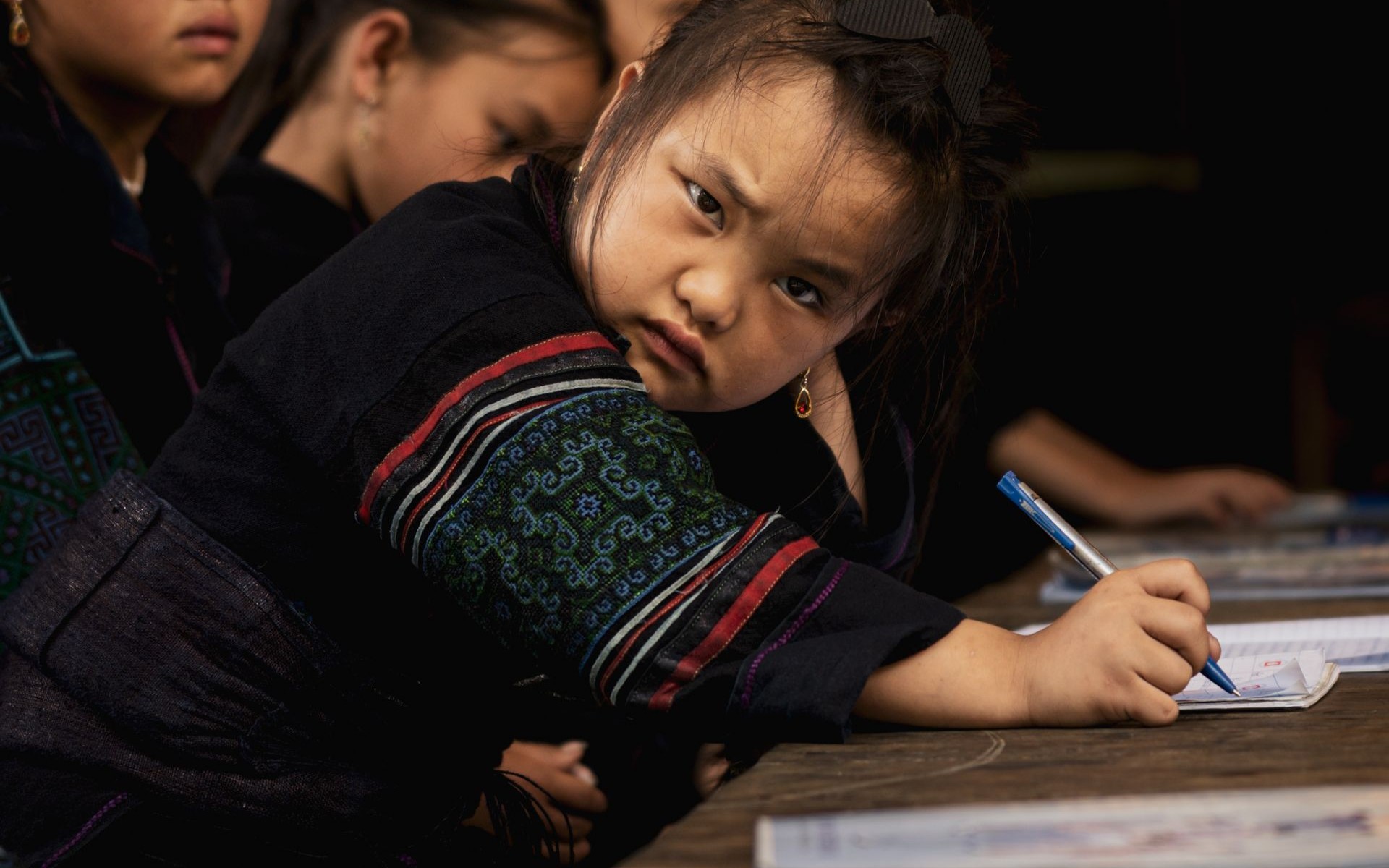
Source: JUAN PABLO PAZ via Pexels. Children studying at a rustic classroom table in Lao Cai, Vietnam.
Buying is not giving
Children selling bracelets on the trail are working, and buying from them is fine. It is the one exchange on the path where the child sets the terms: she made something, she names a price, you pay it or you do not. Pay a fair price without hard haggling: the bracelet costs little to you and means a real amount to her family. If you do not want a bracelet, a smile and a polite no thank you, không, cảm ơn, is enough. You do not owe a purchase, and she does not owe you a smile for refusing.
If you want a photo of a child, ask first, and show them the photo afterwards. Children love seeing themselves on a phone screen, and that costs you nothing.
The best gift costs nothing
Ask your guide what the children on your route actually like, and the answer is usually play, not things. A few minutes of a clapping game or a song are the moments children remember, and they remember you as a person, not as a source of sweets. Learn two phrases before you walk: xin chào, hello, and cảm ơn, thank you. A child who hears you try their language will laugh with you, not at you, and that laugh is worth more than a pocket full of candy.
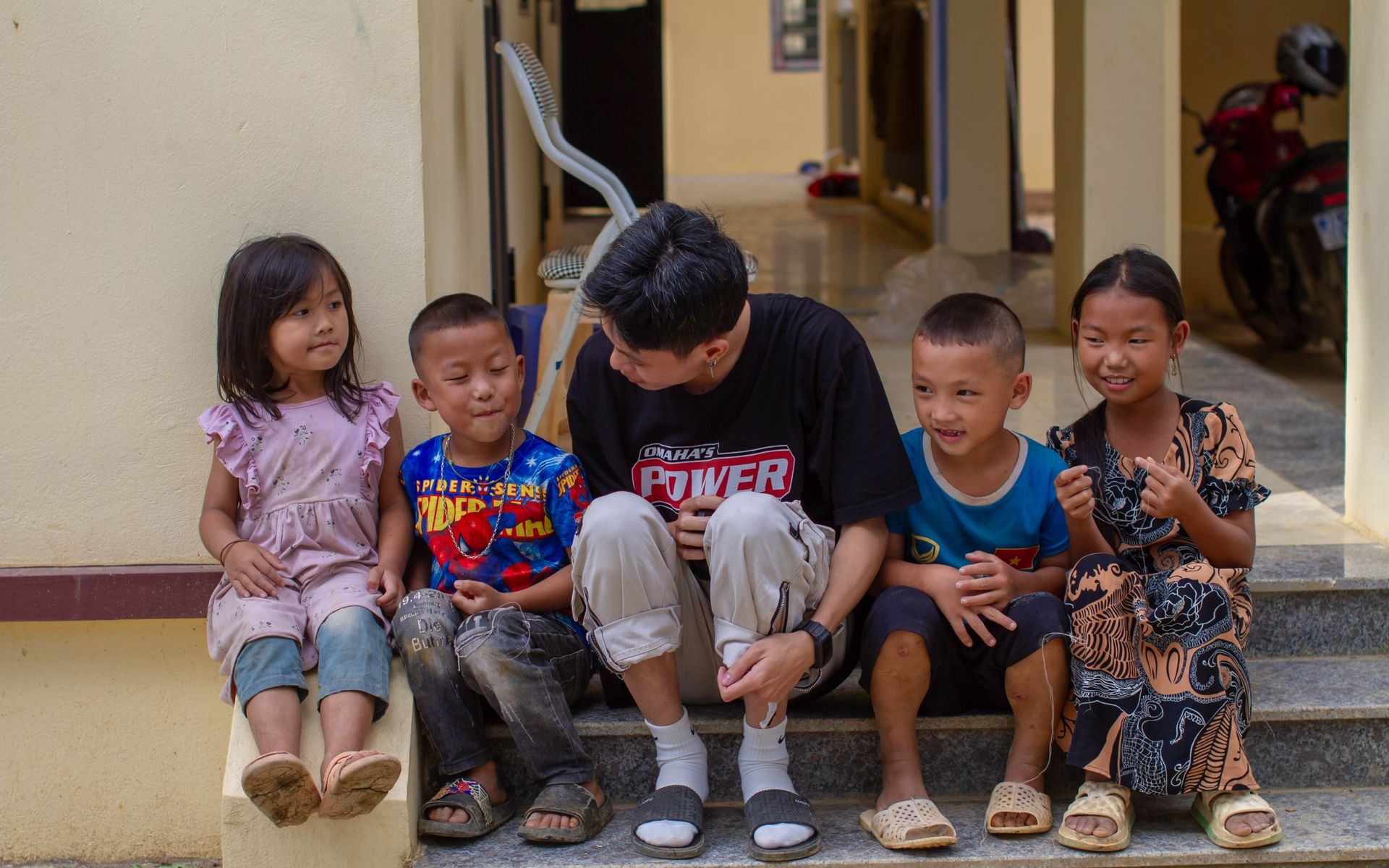
Source: 50k.jpe via Pexels. Children sitting with an adult on outdoor steps, no location claimed.
If you want your money to do more, ask your guide about the village school. Some schools welcome supplies given through the teacher. A donation made through a guide or a homestay host, to a named person, for a named purpose, reaches the children who need it. Money handed to a child on a path reaches whoever shouts loudest.
What to pack, and what to leave behind
If you want to bring gifts, keep it small and practical. A dozen pencils and a few notebooks weigh almost nothing and fit in a side pocket. A few bars of soap and a handful of warm socks fit in the same space. Buy them in Sapa town if you can, the evening before you walk. Leave the sweets at home. Leave the cash for the bracelet sellers, the porters, and your guide, the adults who earn it. Leave the plastic toys and balloons: they break in a day and become litter on a terrace.
The next step
You do not need to arrive with a bag full of gifts to be welcome in a Sapa village. You need to arrive with respect, a few words of Vietnamese, and the patience to let your guide show you how things work there. The children will find you soon enough, on the path or at the homestay door. When they do, greet them, play with them, and if you brought notebooks, hand them to your guide at the end of the day. For a walk where a local guide handles all of this for you, see the 2-day Ta Van homestay trek, and read the Sapa trekking guide for the full picture.
Walk it with us
Every route in these guides ends at Cloud Valley. Sleep where the trail ends, not back in town.
Sapa Trekking Guide · 1 Day Valley Trek · 2 Day Homestay Trek
More guides
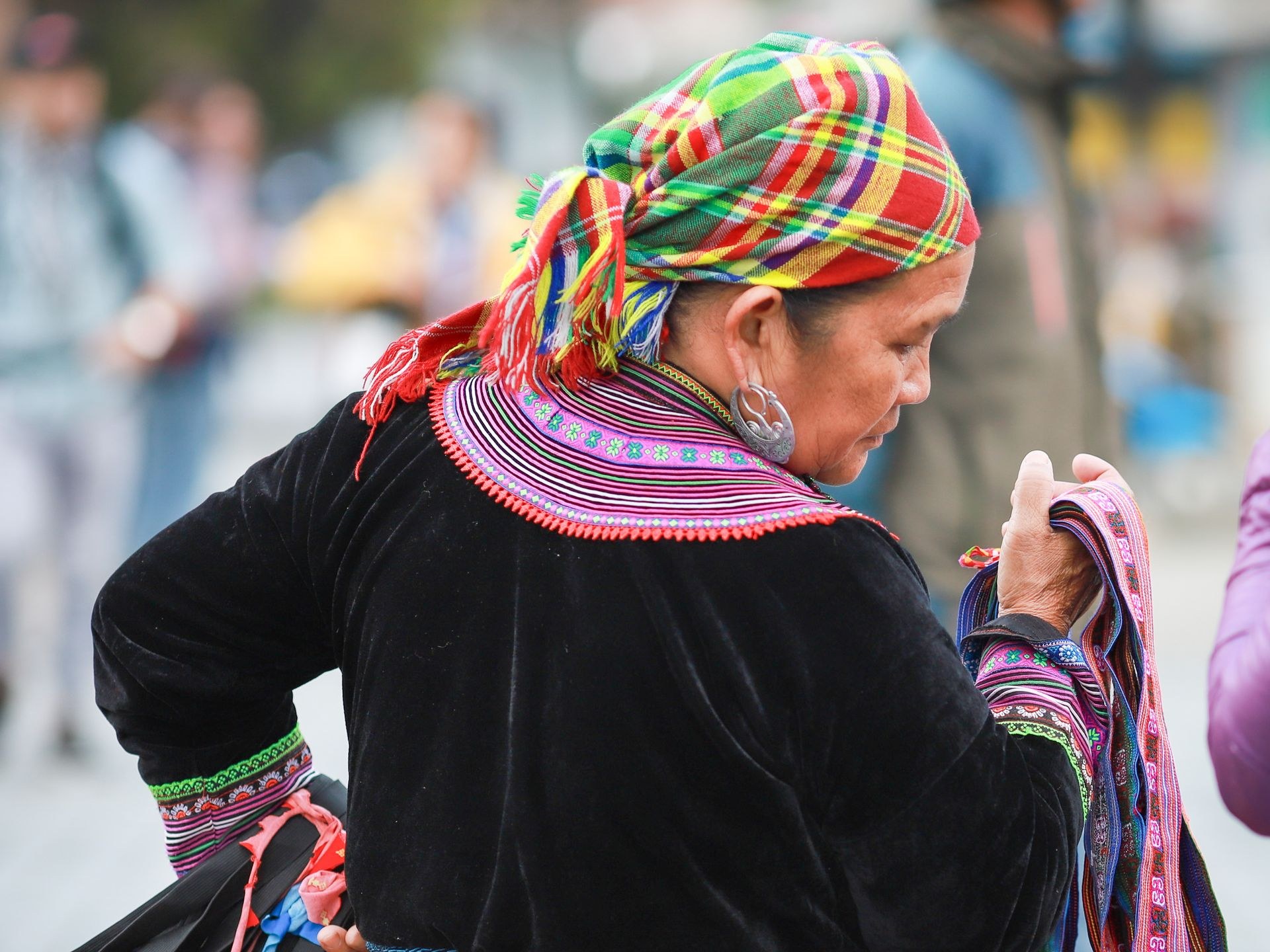
Haggling in Sapa Market: How to Do It Without Offending
A vendor in Sapa market names a price for a woven bag, and you have no idea whether it is fair. Haggling is expected here, but there is a kind way to do it and a way that leaves everyone unhappy. Here is the kind way.
Language on the Trail: The Few Phrases That Open Doors
Your guide stops to chat with a farmer, everyone laughs, and you stand there smiling and understanding nothing. Ten Vietnamese phrases change the whole walk.
Visiting a Village Home: Manners That Actually Matter
Your guide opens a wooden door and says, come in, this is my cousin's house. Here is what to do with your shoes, where to sit, what to eat, and the one corner of the room you must never touch.