Haggling in Sapa Market: How to Do It Without Offending
A vendor in Sapa market names a price for a woven bag, and you have no idea whether it is fair. Haggling is expected here, but there is a kind way to do it and a way that leaves everyone unhappy. Here is the kind way.

Cover photo: Son Hoa Nguyen via Pexels.
You are standing at a market stall in Sapa town, holding an indigo bag woven by hand, and the vendor names a price. It sounds high, but you have nothing to compare it with. You do not want to pay too much, and you do not want to insult the woman who made it.
Here is the short answer. Haggling is expected at market stalls and with street vendors in Sapa, and nobody is offended by polite negotiation. Offer around half to two thirds of the first price, meet in the middle, and accept the result with a smile. The exchange should take two or three minutes and end with both sides happy.
What you can haggle over, and what you cannot
Not everything in Sapa is negotiable. Market stalls, street vendors, and the women selling textiles on the trail expect you to bargain. The first price is an opening, not a final answer, and a vendor who names a high price is starting a conversation, not trying to cheat you.
Fixed prices stay fixed. Restaurants with a printed menu, hotels, shops with price tags, and transport with a posted fare are not places to haggle. Neither is a trek: a guided walk has a set cost that covers your guide, your food, and your homestay, and bargaining it down means someone along that chain gets paid less.
The line is simple. If the price is spoken, it can move. If the price is printed, it cannot.
How to haggle, step by step
Start by showing real interest. Pick the thing up, look at it properly, ask how it was made. A vendor who sees you care about the work bargains differently.
When she names a price, do not react. Do not laugh, do not gasp, and do not call it expensive in a shocked voice. A calm smile and a counter offer work far better. Offer about half to two thirds of the first price, said warmly. She will come down, you will go up a little, and after two or three rounds you will land in the middle.
Keep your voice friendly the whole time. Haggling in Sapa is a social exchange, not a contest. A joke helps, and so do a few words: bao nhiêu tiền means how much, đắt quá means too expensive, said with a smile, and giảm giá được không means can you lower the price. You do not need to be fluent. Trying is the point.
Pay in cash, in small notes. Market vendors rarely have change for a large banknote, so bring small denominations from town and count your change before you walk away.
The walk away test
The most useful move is also the simplest. If the price will not come down to a number you are happy with, thank the vendor, put the item down gently, and walk away slowly. This is not rude. Vendors understand it perfectly.
She may call you back with a lower price, in which case you have found the real price. Or she may let you go, in which case that really was her bottom line, and you can come back later and pay it if you still want the item. Either way, nobody lost face.
What you must never do is haggle a vendor down to a price and then refuse to buy. That is the one move that genuinely offends. Once you have agreed a number, the deal is made. If you are not sure you want the item, do not start negotiating. Start bargaining only when you are ready to pay the price you offer.
The mistakes that offend
The first mistake is the extreme lowball. Offering a tenth of the asking price tells the vendor you think her work is worth almost nothing. A handmade bag took days to weave and dye, and the price reflects that work, not just the cloth.
The second mistake is haggling hard over a tiny amount. If the difference between your offer and hers is the price of a coffee back home, pay her price and move on. Squeezing the last few thousand dong out of a sale is the fastest way to turn a friendly exchange into a sour one.
The third mistake is turning the bargain into a performance. Comparing prices loudly between stalls or holding up one vendor's goods to bargain down another embarrasses the people you are dealing with. Vendors talk to each other, and the way you treat one stall is the way the whole market will treat you.
The fourth mistake is forgetting who you are bargaining with. The women selling textiles in Sapa market are often the same women who wove them, carrying the cloth down from their village that morning. This is someone's craft and income, not a souvenir factory. A fair price paid with a smile is worth more to both sides than a bargain won through pressure.
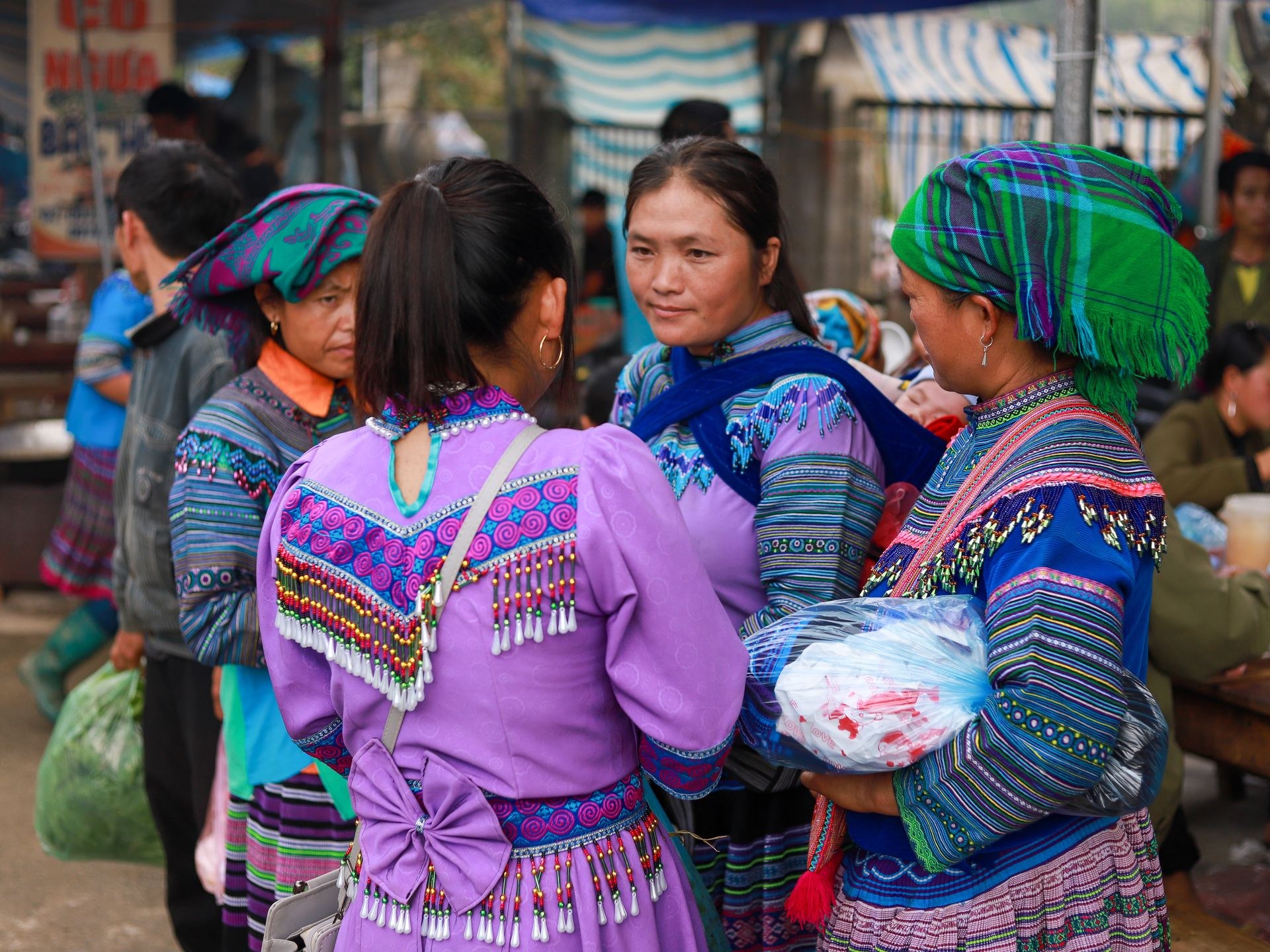
Source: Son Hoa Nguyen via Pexels. Hmong women in traditional attire at a market in Lao Cai, Vietnam.
What the money actually buys
A handwoven textile in Sapa is not a factory product. The cotton or hemp is grown, spun, woven on a wooden loom, and dyed with indigo by hand, a process that takes days for a single piece, and no two pieces are alike.
That is why prices vary so much between stalls, and why the cheapest item is not always the best buy. A very cheap textile is often machine made elsewhere and brought in for tourists, while a handwoven piece costs more because it took a real person real days to make. If you want to know whether a piece is handmade, ask. A vendor who made it herself will happily tell you how long it took.
Buy what you love, not what is cheapest. A bag or a scarf you will actually use is worth a fair price, and a bargain you never touch again is wasted money at any price.
A few phrases, and one different rule for children
You do not need Vietnamese to shop in Sapa market. Most vendors speak enough English to name a price and bargain a little. But a few words change the tone of the whole exchange, and when you agree, cảm ơn, thank you, said properly, closes the sale the right way.
If you are buying from children selling bracelets on the trail rather than in the market, the rules are different. Read Children Selling Bracelets on the Trail: How to Respond Kindly before you go. A child seller is working, not running a stall, and paying a fair price without hard haggling is the kind way to handle it.
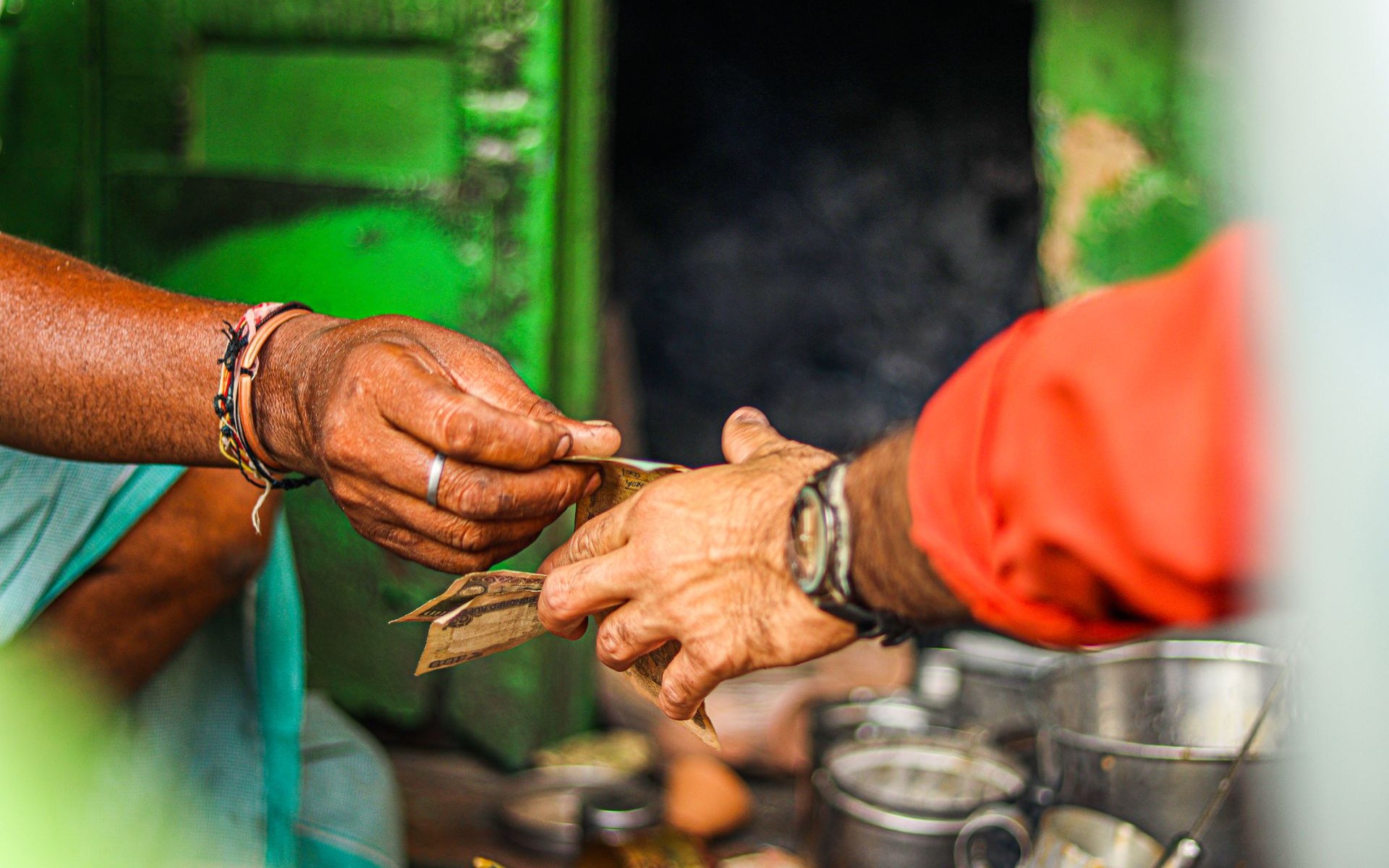
Source: Swastik Arora via Pexels. Hands exchanging paper money at a market stall, no location claimed.
The next step
Haggling well is a small skill, and it makes the whole market experience better. You pay a fair price, the vendor earns a fair living, and you walk away with something made by hand and a story to go with it. Visit the market in Sapa town the evening before your trek, when the stalls are full, and buy your textiles then rather than rushing on the trail.
For a walk where a local guide shows you the villages the cloth comes from, see the 2-day Ta Van homestay trek, and read the Sapa trekking guide for the full picture.
Walk it with us
Every route in these guides ends at Cloud Valley. Sleep where the trail ends, not back in town.
Sapa Trekking Guide · 1 Day Valley Trek · 2 Day Homestay Trek
More guides

Gifts for Village Kids: What Helps and What Harms
A child runs up to you on a Sapa trail, smiling, hand out. Your hand goes to your pack. Before you give anything, here is what actually helps village kids, and what quietly harms them.

Language on the Trail: The Few Phrases That Open Doors
Your guide stops to chat with a farmer, everyone laughs, and you stand there smiling and understanding nothing. Ten Vietnamese phrases change the whole walk.

Visiting a Village Home: Manners That Actually Matter
Your guide opens a wooden door and says, come in, this is my cousin's house. Here is what to do with your shoes, where to sit, what to eat, and the one corner of the room you must never touch.