Language on the Trail: The Few Phrases That Open Doors
Your guide stops to chat with a farmer, everyone laughs, and you stand there smiling and understanding nothing. Ten Vietnamese phrases change the whole walk.
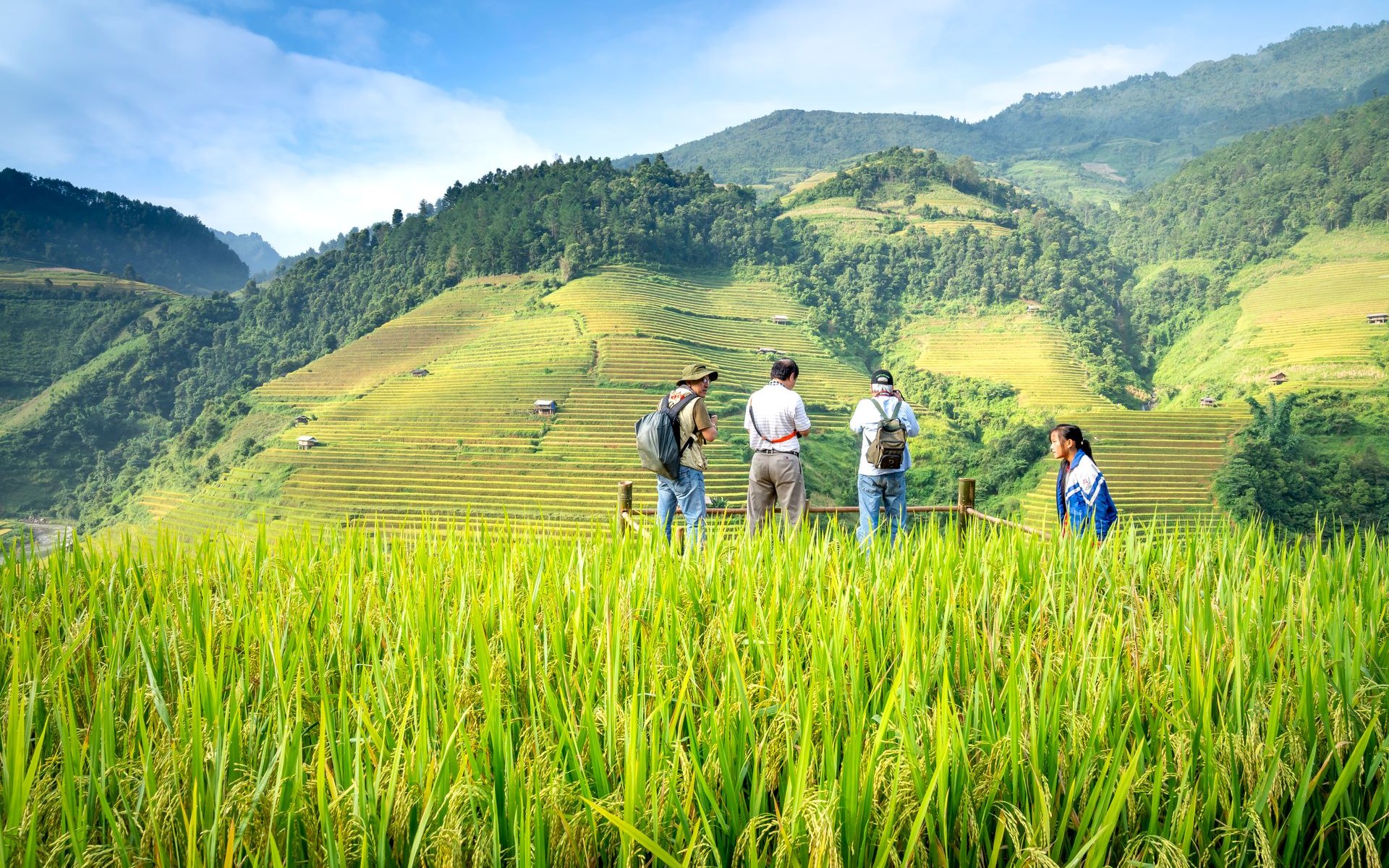
Cover photo: Quang Nguyen Vinh via Pexels.
Your guide stops on the path to talk to a farmer carrying firewood. They exchange a few fast sentences, both of them laugh, and the farmer waves at you and says something you do not understand. You smile, you nod, and you keep walking. Nothing went wrong, but you missed the whole moment. A few words of Vietnamese turn these exchanges from background noise into the best part of the day. You do not need to be fluent. You need about ten phrases, said badly and with a smile.
The short answer
Learn xin chào (hello), cảm ơn (thank you), xin lỗi (sorry, or excuse me), tôi tên là (my name is), bạn khỏe không (how are you), đẹp quá (so beautiful), ngon quá (so delicious), bao nhiêu tiền (how much), and tôi không hiểu (I do not understand). Say them on the trail, at the homestay table, and in the market, and people will meet you halfway. The effort matters far more than the accent.
Who speaks what on the trail
Most Sapa guides are Hmong, and Hmong is the language they speak at home. Vietnamese is the language of school, town, and the market, so most adults in the villages speak it as a second language. English is the language of the trail: your guide speaks it, many children pick it up from trekkers, and shopkeepers in Sapa town manage it well enough for a sale. Older villagers, the people sitting by the path shelling corn or watching the buffalo, often speak little Vietnamese and no English at all. That is exactly where a greeting in Vietnamese earns you a smile that English never would.
Do not expect your guide to translate everything. A good guide translates the important things, the route, the meal, the plan for the night. The small talk with a farmer, the joke with a child, the greeting at a doorway, those pass in a few seconds, and nobody stops the walk to translate them. A few phrases of your own let you join those moments instead of watching them.
Saying it badly is the point
Vietnamese is a tonal language, which sounds frightening until you try it. The same syllable can mean different things depending on whether your voice rises, falls, or stays flat. In practice, on a Sapa trail, this matters far less than the textbooks suggest. Context does most of the work. When you point at a bowl of soup and say ngon quá with the wrong tone, nobody thinks you said something else. They hear a foreigner trying to say the food is delicious, and they are pleased.
Say the words slowly, one syllable at a time, and keep your voice calm. The most common mistake is to speak louder when you are not understood. Volume does not fix tones. Repetition does. Say it again, slower, and smile.
The phrases that open doors
Start with the greetings, because you will use them fifty times a day. Xin chào works everywhere, with everyone, at any hour. Add bạn khỏe không when someone greets you back, and you have a conversation, even if it lasts only four words. Cảm ơn, thank you, is the phrase you will use most of all. Say it to your guide at every rest stop, to the cook who hands you a bowl, to the child who points out the path. Xin lỗi covers sorry and excuse me, for when you step in front of someone on a narrow terrace wall or bump a basket in the market.
Two phrases do more work than any others. Đẹp quá, so beautiful, said while looking at the terraces, tells a farmer that you see what she sees every day. Ngon quá, so delicious, said at the homestay table, tells the cook that her work mattered. Say it after the first bite, not at the end of the meal. These two phrases, used honestly, turn you from a customer into a guest.
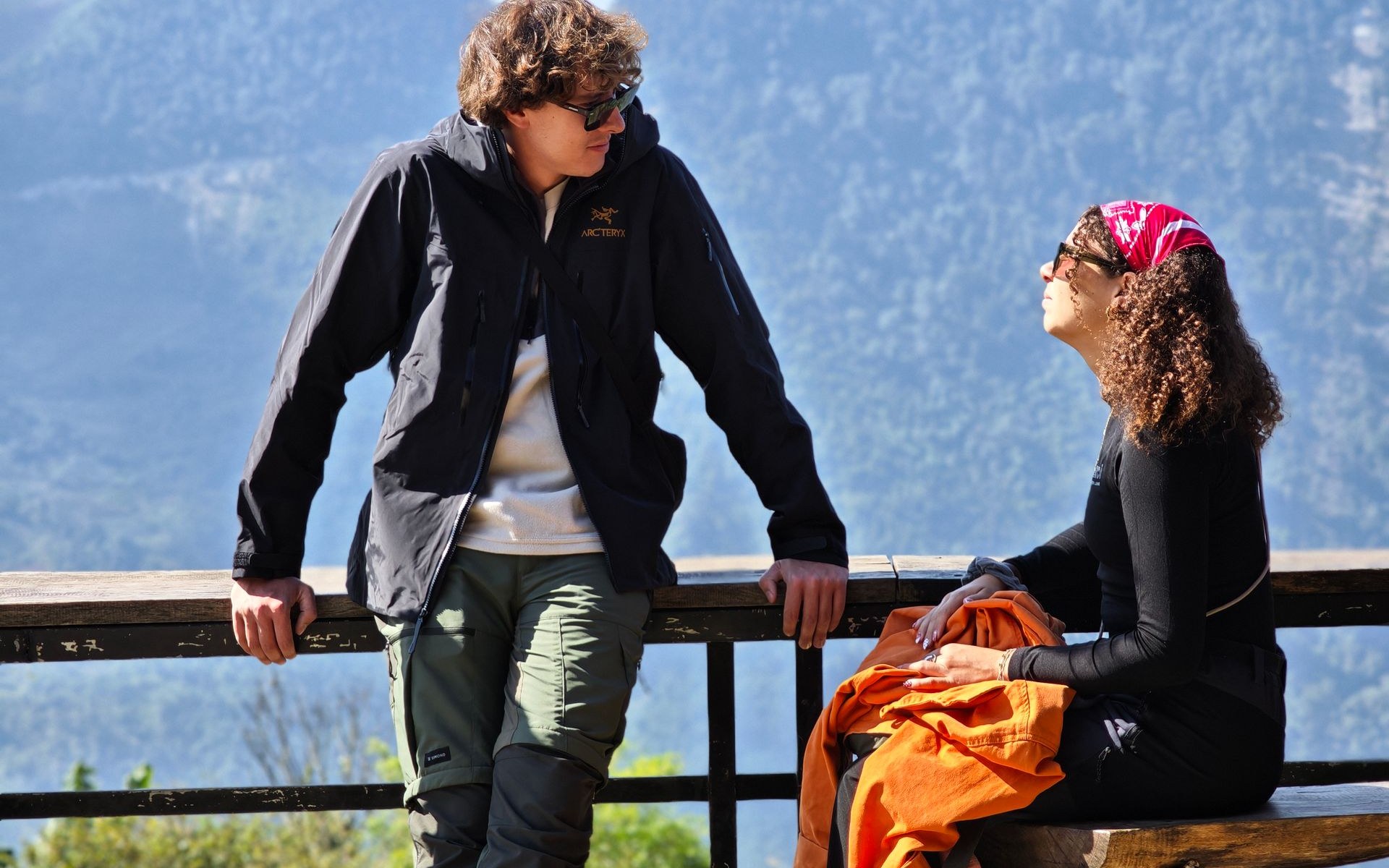
Source: Vietnam Hidden Light via Pexels. Two travellers talking at a mountain viewpoint, no location claimed.
Asking, buying, and saying no politely
Bao nhiêu tiền, how much, is the phrase for the market and for the motorbike at the trailhead, and it is better than pointing at a price tag and waiting. Ask it before you agree to anything, and you have started a negotiation instead of an argument. If a child offers you a bracelet, cho tôi xem, let me look, buys you time without promising a sale, and không, cảm ơn, no thank you, said with a smile, ends it kindly.
For photographs, the phrase to learn is cho tôi chụp ảnh được không, may I take a photo. Say it, wait for the nod, then take the photo. Most people say yes, and the ones who say no will respect that you asked. Pointing a camera at a stranger without a word is the fastest way to turn a friendly village into a cold one.
Food, allergies, and the phrases that keep you safe
If there is something you cannot eat, the time to say it is before the meal, not at the table. Tôi không ăn thịt means I do not eat meat. Tôi không ăn hải sản means I do not eat seafood. For an allergy, tôi bị dị ứng, followed by the food, is the phrase that matters, and you should also write it down in Vietnamese on your phone and show it to your guide before you reach the homestay, so the guide can warn the kitchen quietly.
Learn the numbers from one to ten as well. They help in the market, they help when a guide says the walk is two more hours, and they help when someone holds up fingers and you want to answer in kind. You do not need to count to a hundred. One to ten covers almost every number you will hear on a two-day walk.
Your phone is a phrasebook, not a translator
Download Vietnamese for offline use in your translation app before you leave Sapa town, because the signal dies halfway down into the valley and the app will not help you there. Use it to look up a word, or to show a sentence on screen to your guide. Do not hold it between you and a villager like a wall. Type the sentence, show the screen, then put the phone away and talk to the person.

Source: Ivan S via Pexels. Three friends looking at a smartphone together in a forest, no location claimed.
The next step
You will not learn Vietnamese on a two-day trek, and nobody expects you to. What you can do is arrive with ten phrases and a willingness to sound foolish for five minutes, and the valley will open up in a way that a silent walk never does. The farmers, the children, and the families you pass are not scenery. They are the reason the walk is worth doing, and a greeting in their language is how you say so. For a walk where a local guide does the talking and teaches you the phrases as you go, see the 2-day Ta Van homestay trek, and read the Sapa trekking guide for the full picture.
Walk it with us
Every route in these guides ends at Cloud Valley. Sleep where the trail ends, not back in town.
Sapa Trekking Guide · 1 Day Valley Trek · 2 Day Homestay Trek
More guides
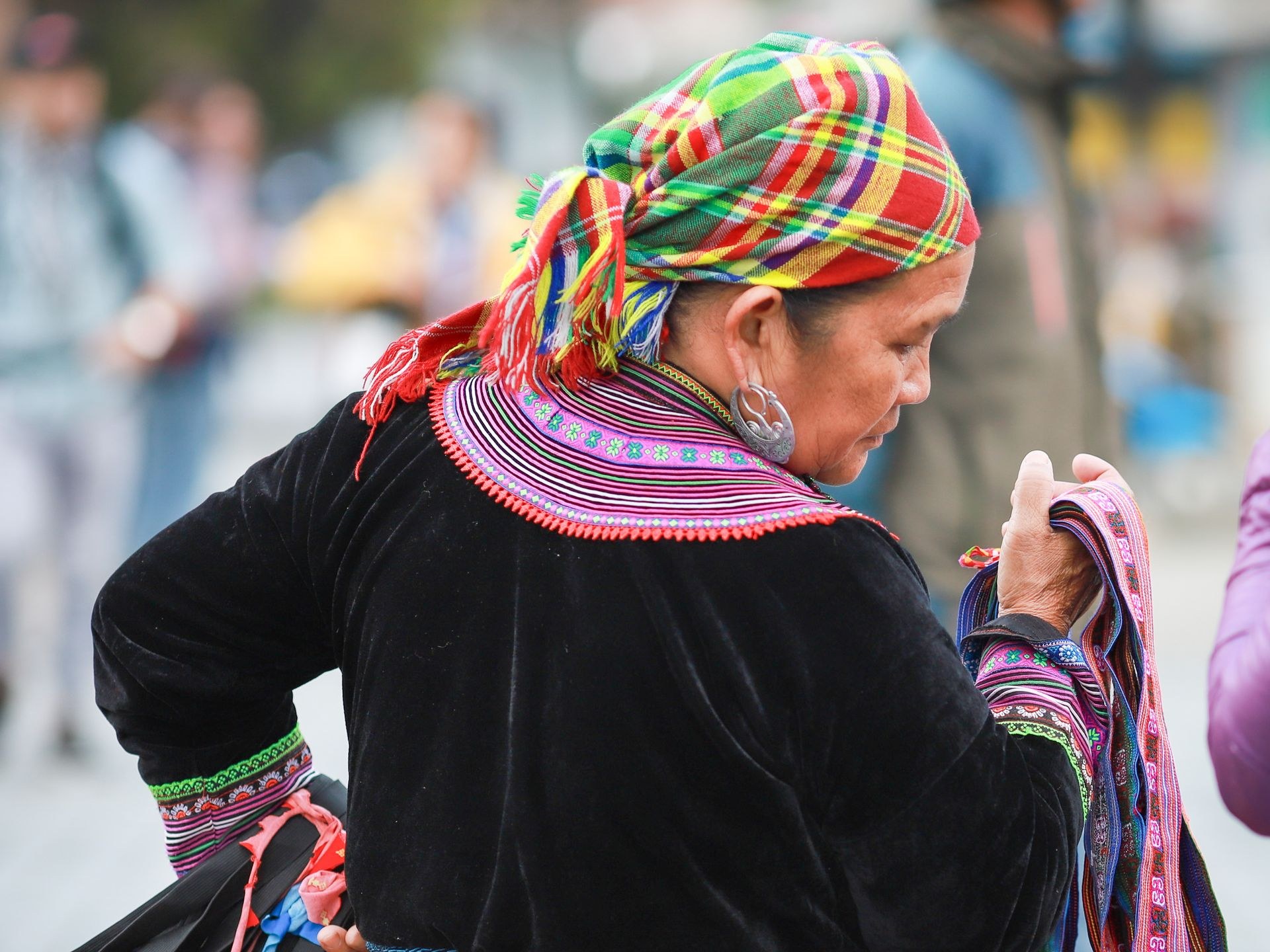
Haggling in Sapa Market: How to Do It Without Offending
A vendor in Sapa market names a price for a woven bag, and you have no idea whether it is fair. Haggling is expected here, but there is a kind way to do it and a way that leaves everyone unhappy. Here is the kind way.

Gifts for Village Kids: What Helps and What Harms
A child runs up to you on a Sapa trail, smiling, hand out. Your hand goes to your pack. Before you give anything, here is what actually helps village kids, and what quietly harms them.
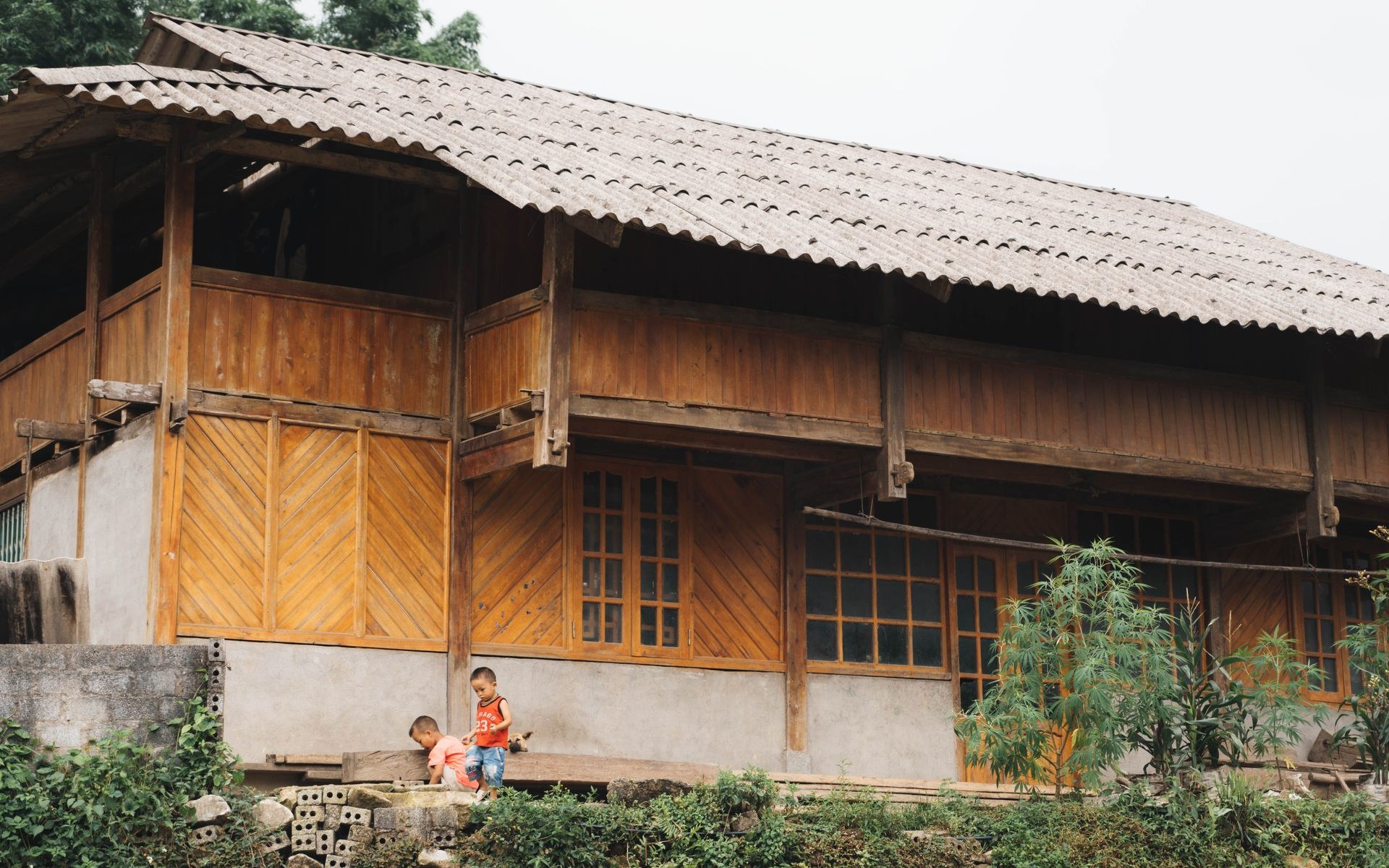
Visiting a Village Home: Manners That Actually Matter
Your guide opens a wooden door and says, come in, this is my cousin's house. Here is what to do with your shoes, where to sit, what to eat, and the one corner of the room you must never touch.