Homestay Food: What You Will Eat, and What to Say If You Cannot Eat It
Dinner in a Ta Van homestay has no menu. The family cooks what they eat, the dishes go in the middle of the table, and everyone shares. Here is what to expect, and how to speak up before the trek if there is something you cannot eat.
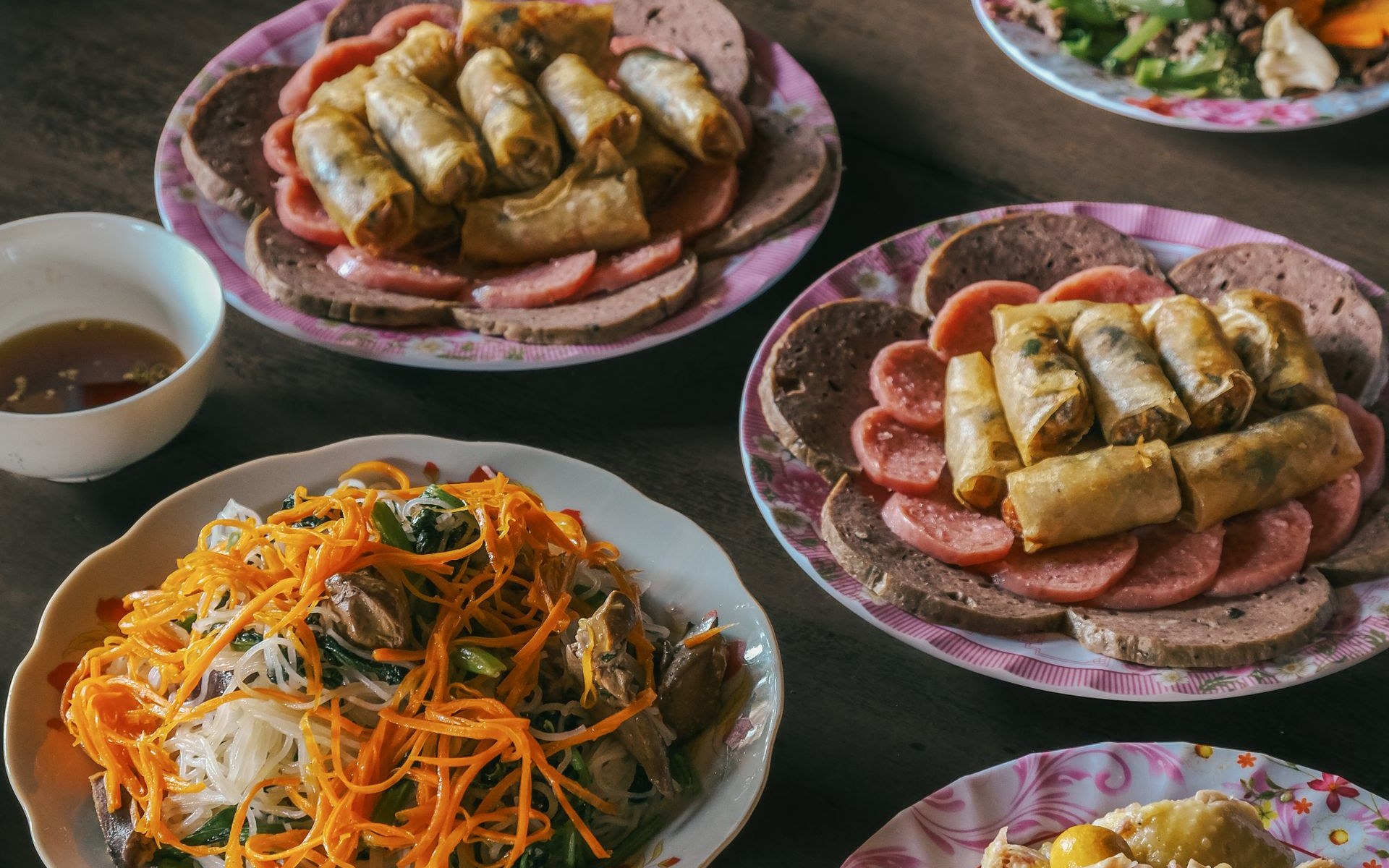
Source: Phong Vo via Pexels (https://www.pexels.com/photo/delicious-vietnamese-meals-on-plates-on-table-19347048/). A spread of Vietnamese dishes in Binh Long, Binh Phuoc, Vietnam, captioned as Binh Long, never as Ta Van.
Dinner in a Ta Van homestay has no menu. You sit down, the family brings out the food they cooked for themselves, and the dishes go in the middle of the table for everyone to share. Nobody asks what you would like. Here is what the meal is actually like, and what to do if there is something you cannot eat.
What lands on the table
Rice first, always. A big bowl of steamed rice sits in the middle, and everyone takes from it through the meal. Around it, four or five shared dishes: a soup, a stir-fried green vegetable, a meat dish, often pork or chicken, and tofu or egg. Fresh herbs come on the side, and a small bowl of fish sauce for dipping. The food is home cooking, not restaurant cooking: simpler, less sweet, and seasoned the way the family likes it.
You eat with chopsticks from the shared dishes, taking small amounts at a time. Try a little of everything, and ask for more rice when you want it. Breakfast the next morning is simpler, usually noodle soup or sticky rice, eaten quickly before the walk starts.
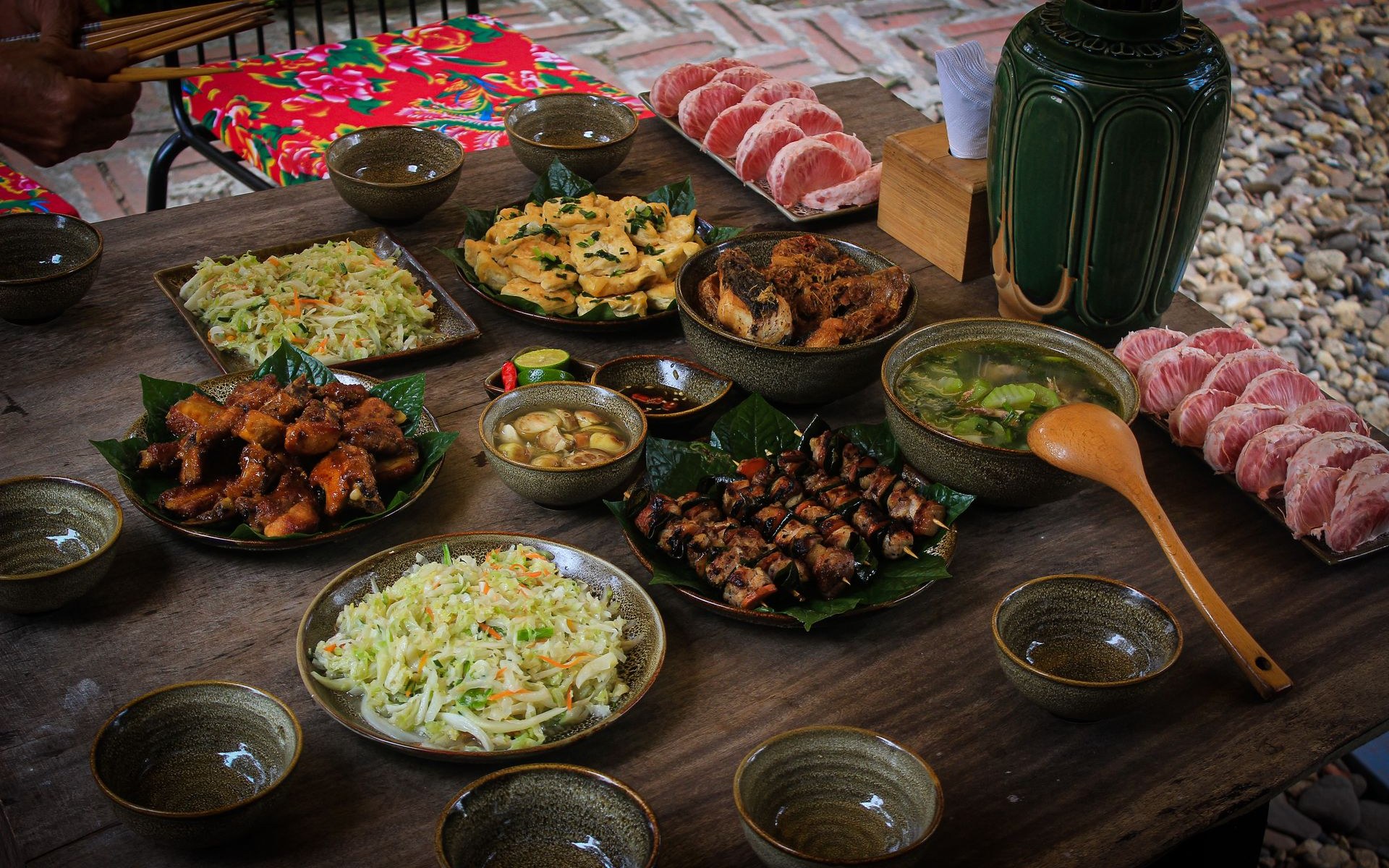
Source: Hong Nhung via Pexels. A spread of Vietnamese dishes on an outdoor wooden table, no location claimed.
How the meal works
Meals happen on the floor or at a low table, shoes off, everyone sitting close. Wait for your host to start before you pick up your chopsticks. Do not stick your chopsticks upright in your rice bowl: it looks like the incense at a funeral. Do not take the last piece from a shared dish without offering it around first.
Rice wine may be offered in tiny cups. Accept one, then say no to the next, and nobody will mind. Refusing the first cup outright can feel rude to an older host, so a small sip and a smile is the gentlest way through it.
If you cannot eat something, say so before the trek
This is the part that matters most. Tell your guide before the trek starts, not at the table when the food is already cooked. Your guide speaks Vietnamese and can tell the family in advance, so the kitchen can cook something you can eat. Told at the table, the same request becomes an awkward problem: the food is already made, and the family has nothing else to offer you.
Vegetarian, vegan, an allergy, a food you cannot eat for religious reasons: all fine, as long as the kitchen knows before it cooks. Be specific: "no meat" and "no pork" are different requests, and "no peanuts" matters more than "I do not like peanuts", because an allergy changes how the kitchen works. If your allergy is serious, say so plainly and carry your own medicine on the trail.
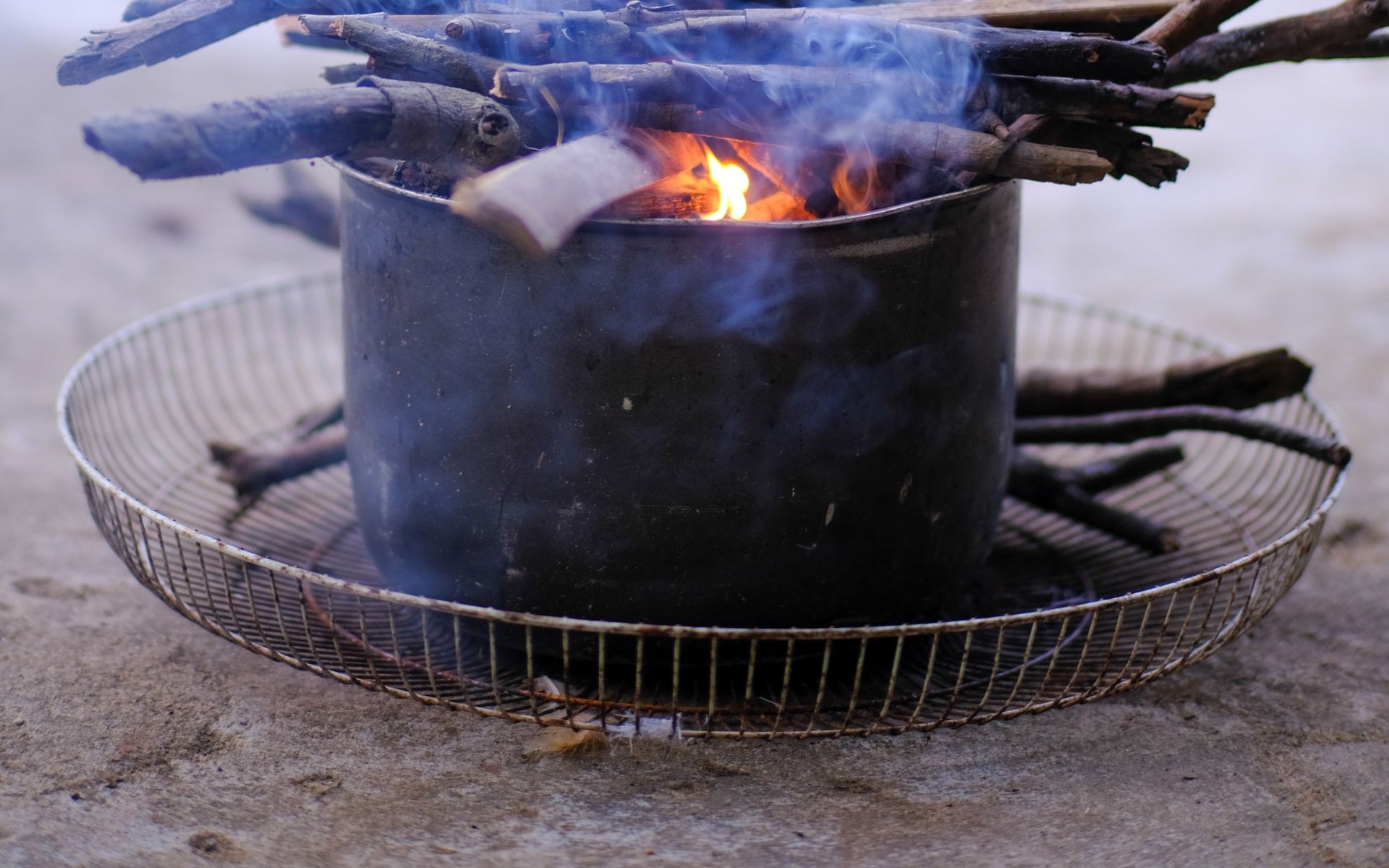
Source: nhavantuonglai via Pexels. A traditional outdoor cooking setup in Hue, Vietnam, captioned as Hue, never as Ta Van.
What to do at the table
Even with advance warning, a dish you cannot eat may still appear. Do not make a scene: take rice and the dishes you can eat, thank the host, and eat well. If you are still hungry after, tell your guide quietly, and the kitchen will usually find you something extra.
Bring a few snacks as a backup, especially if your diet is strict: nuts, dried fruit, or energy bars in your daypack cover the one night the kitchen gets it wrong.
The honest verdict
Homestay food is simple, shared, and cooked by the people you are staying with. You will not choose it, and you will probably like it more than the meals you did choose. Tell your guide about your diet before the trek, eat what you can at the table, and the meal becomes one of the best parts of the night.
Next step
Eat dinner with a family in Ta Van on the two day trek, and tell your guide about your diet before you walk: Two days walking, one night in Ta Van. Or compare the routes first: Sapa Trekking Guide: Routes, Seasons and a Homestay Finish.
Walk it with us
Every route in these guides ends at Cloud Valley. Sleep where the trail ends, not back in town.
Sapa Trekking Guide · 1 Day Valley Trek · 2 Day Homestay Trek
More guides
Haggling in Sapa Market: How to Do It Without Offending
A vendor in Sapa market names a price for a woven bag, and you have no idea whether it is fair. Haggling is expected here, but there is a kind way to do it and a way that leaves everyone unhappy. Here is the kind way.

Gifts for Village Kids: What Helps and What Harms
A child runs up to you on a Sapa trail, smiling, hand out. Your hand goes to your pack. Before you give anything, here is what actually helps village kids, and what quietly harms them.
Language on the Trail: The Few Phrases That Open Doors
Your guide stops to chat with a farmer, everyone laughs, and you stand there smiling and understanding nothing. Ten Vietnamese phrases change the whole walk.