Photographing People in the Villages: When to Ask, When Not To
The light is perfect, a woman in indigo is carrying firewood past a terrace wall, and your camera is already up. Here is when to take the photo, when to ask first, and when to lower the camera.
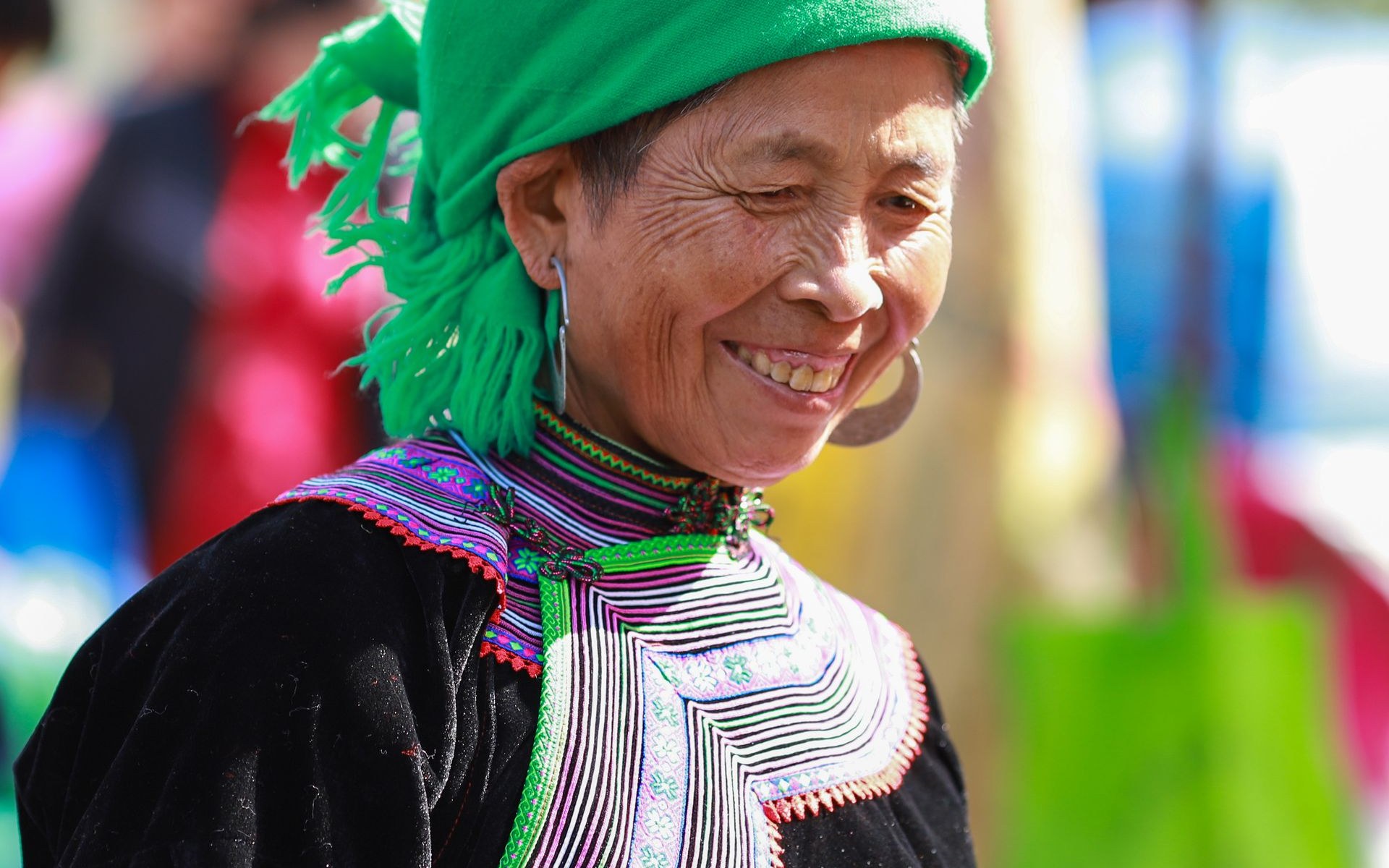
Cover photo: Son Hoa Nguyen via Pexels.
You are halfway down a terrace path above Ta Van when the light turns perfect. A woman in dark indigo cloth is carrying a bundle of firewood past a stone wall, a child is chasing a chicken across the yard, and your camera is already in your hand. This is the moment every trekker in Sapa wants to keep. It is also the moment when most photo mistakes happen, because the people in front of you are not scenery. They are at home, at work, and in the middle of their day.
The short answer
Ask before you photograph a person up close, always. A smile, a raised camera, and a questioning look is enough, and a nod means yes. If someone turns away or shakes their head, lower the camera and walk on.
Portraits always need a yes
A portrait is a photo where one person fills the frame: their face, their clothes, their hands at work. Always ask first, even if the person is in a public place and even if your guide says it is fine. Your guide is not the person in the photo, and their permission does not replace the subject's. Hold the camera up where they can see it, point at it, then point at them, and wait. Most people in the valley will agree, often with a laugh, and some will pose with a friend or straighten their headscarf first. A few will say no. Thank them anyway and move on. The photo you do not take costs you nothing.
When a photo without asking is fine
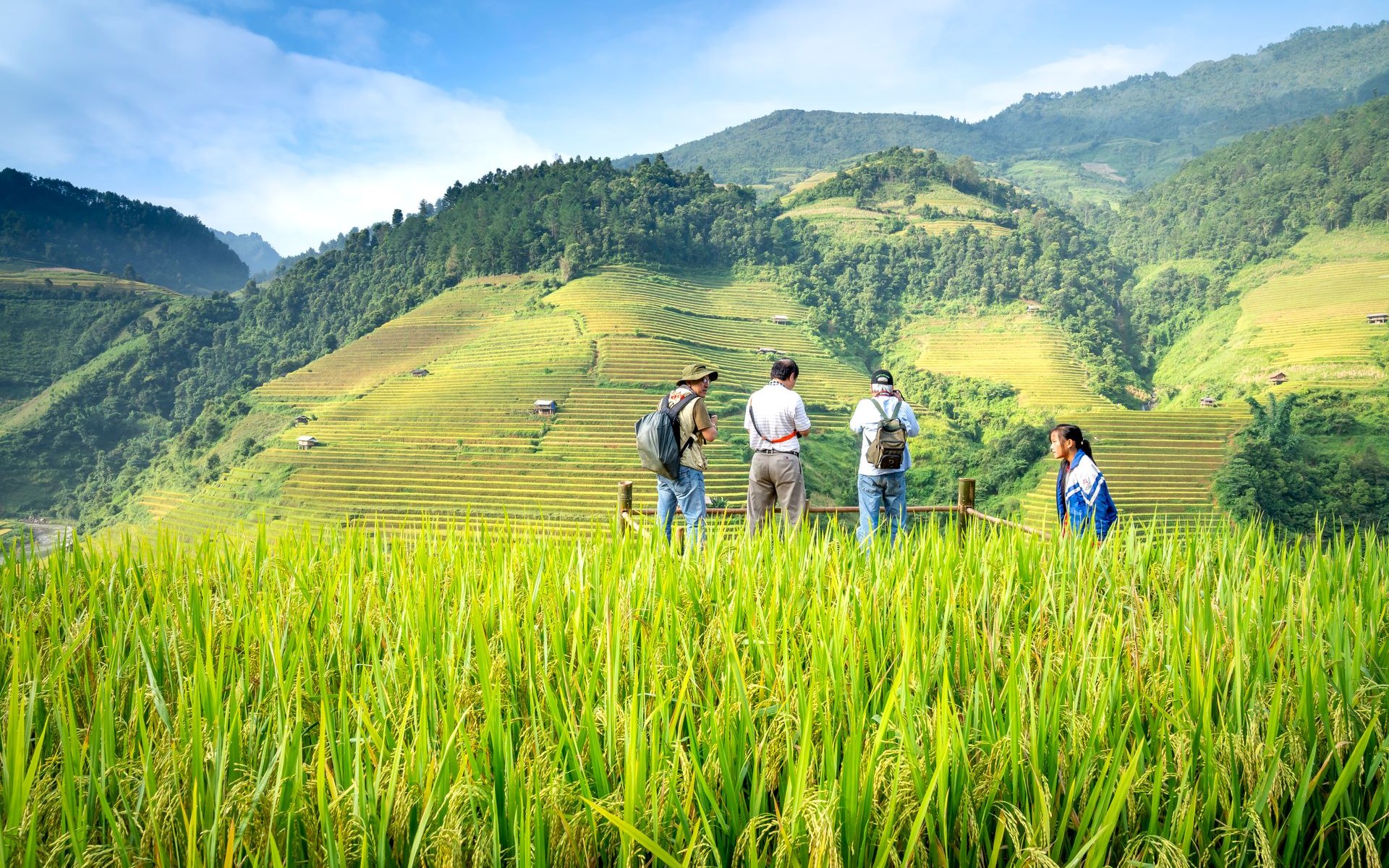
Not every photo with a person in it needs permission. A wide landscape where people are small figures on a path, a busy market scene shot from across the square, a festival crowd from the edge of the gathering: these are photos of a place, and the people in them are part of the place. Keep it wide, keep your distance, and do not single one person out with a long lens and then claim it was a landscape. If you zoom in until one face fills the frame, you are back to a portrait, and the rule above applies.
Your guide is a special case. Guides expect to be photographed, and most are happy to be in your pictures. Ask once at the start of the day, and if they agree, you can photograph them freely for the rest of the walk.
How to ask with no shared language
You do not need Vietnamese to ask well. Walk up close enough to be seen, smile, raise your camera slightly, and point at it, then at the person, with your eyebrows up. That gesture is understood everywhere in the valley. Wait for the answer. A nod, a smile, a wave to come closer: yes. A turned shoulder, a hand up, a step back: no. Do not keep the camera raised while you wait, because a camera pointed at someone's face while they decide feels like pressure, not a question. Lower it, ask, and only raise it again after the yes.
A few words help. "Cho tôi chụp ảnh nhé" means "may I take a photo", and most people will smile at the attempt even if the pronunciation is rough. Your guide can ask for you, and on a guided walk that is often the smoothest way: the guide knows the family and can translate the answer properly.
Children need extra care
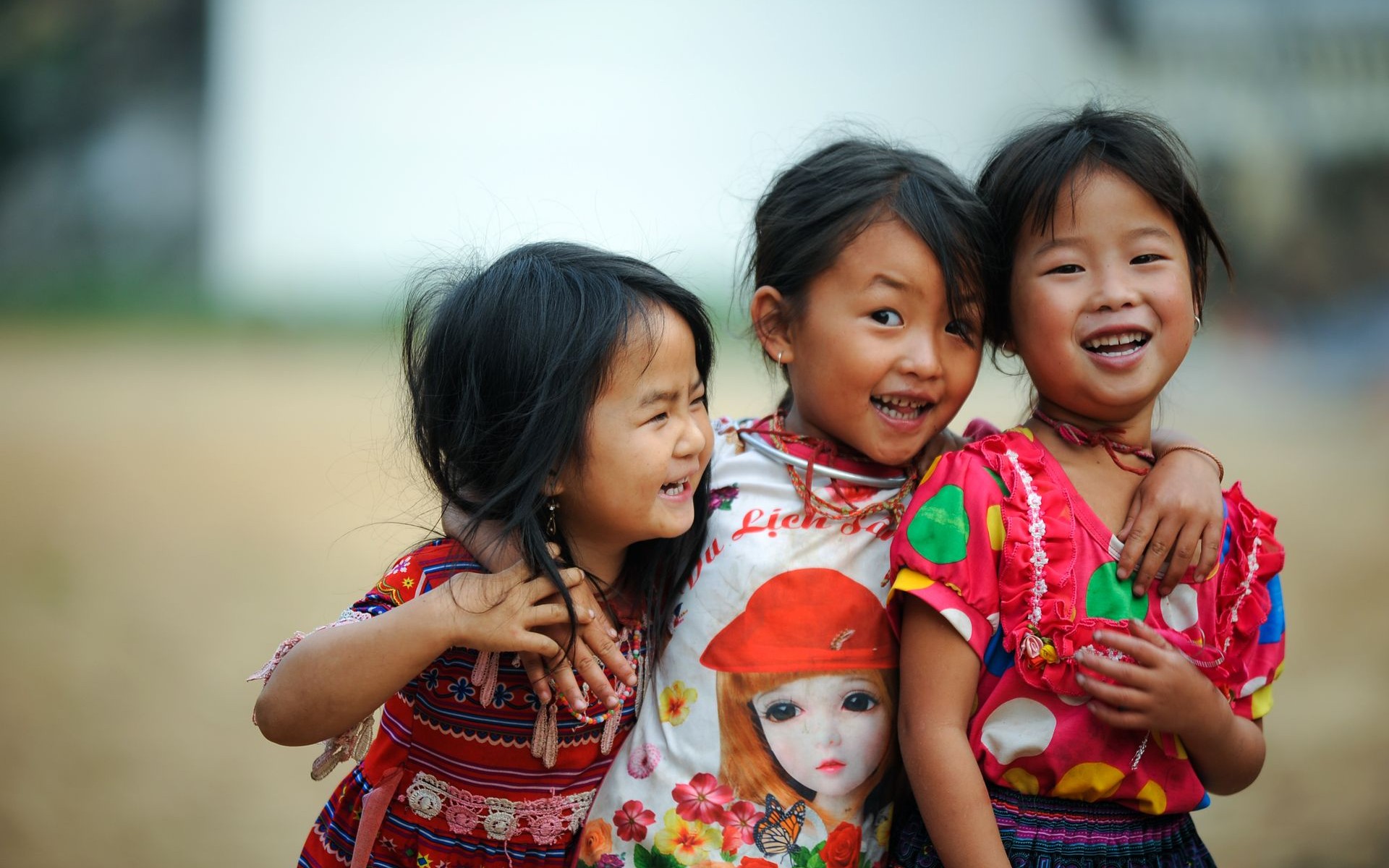
Children on the trail will often run up to you, pose, and ask for their photo to be taken. That is a yes, and it is fine to take it, then show them the picture on your screen. They love seeing themselves, and showing the photo turns a one-way act into a small shared moment. What is not fine is photographing children who are alone, away from their family, without any adult knowing, or photographing a child who has turned away or hidden behind a parent. Never follow a child with a camera to get a better angle. And never post a photo of an identifiable child online without the parent's permission.
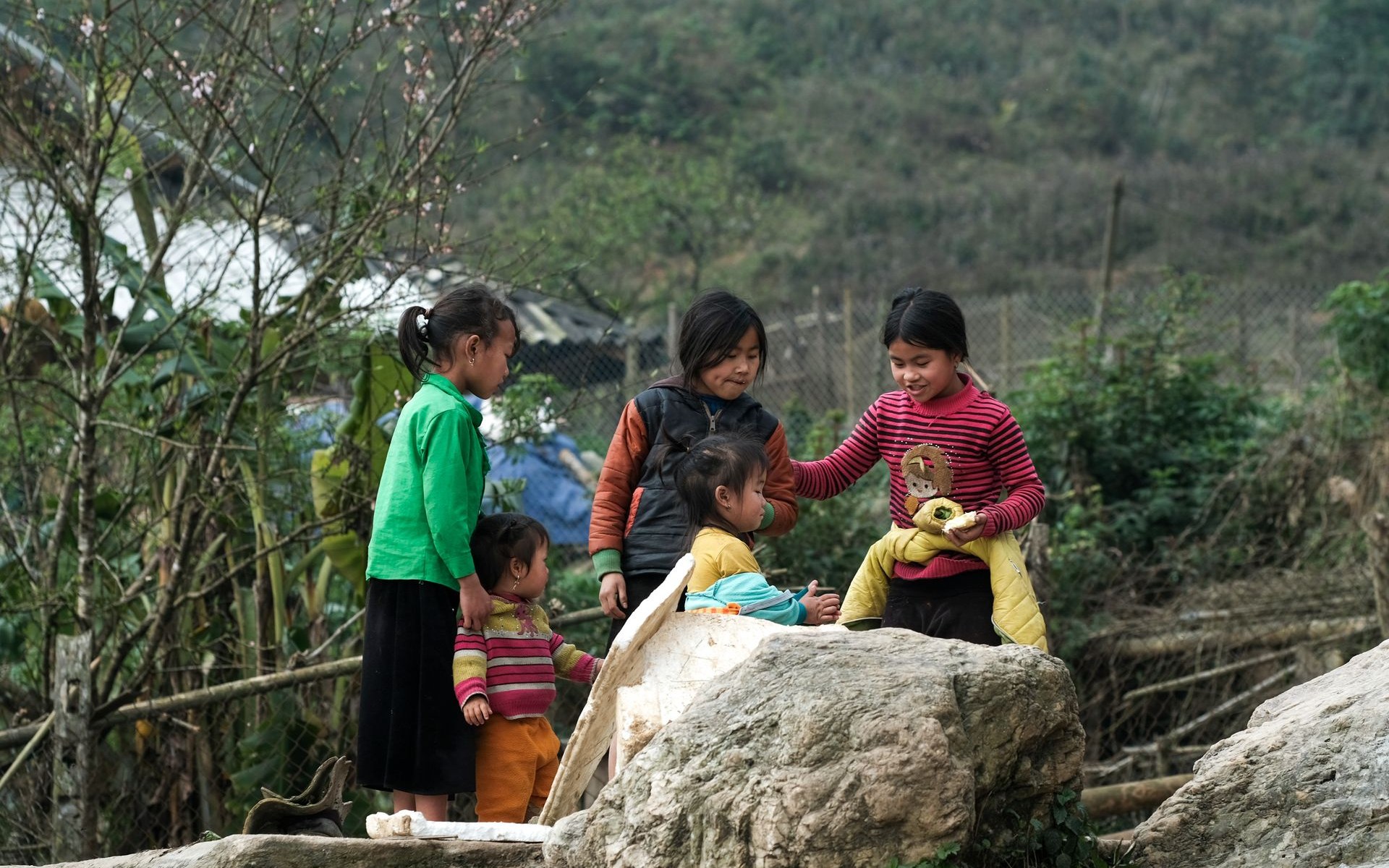
Source: Son Hoa Nguyen via Pexels. Children playing in Lao Cai, never as Ta Van.
Ceremonies, funerals, and prayer: do not photograph
If you come across a funeral, a ceremony, or people praying, put the camera away. This is not a moment for you, and no permission you could ask for makes it one. Your guide will tell you to keep walking, and you should, quietly, without stopping to watch. The same applies to anyone washing, bathing, or changing clothes near a stream or a house: turn away, keep walking, and never raise the camera.
What about paying for a photo?
Sometimes someone will ask for money before you take their photo, or hold out a hand after you take it. This happens most often in Sapa town and at busy viewpoints, less often in the quieter villages. There is no single right answer. A small payment for a posed portrait is a fair exchange when someone has clearly offered to pose for it. But paying for every photo teaches the next visitor that every photo has a price, and it turns neighbours into performers. A better exchange, when it fits, is to buy something: a bracelet from the woman who posed, a snack from the stall behind her. You get your photo, she gets a sale, and nothing about the exchange feels like a transaction for her face.
Show people their photo
The simplest good habit costs you ten seconds. After you take a portrait, turn the camera around and show the person the picture. People in the valley rarely see a good photo of themselves, and the reaction is almost always delight. If you promised to send it, keep the promise: ask your guide for the family's contact, or leave the photo with your guide to pass on.
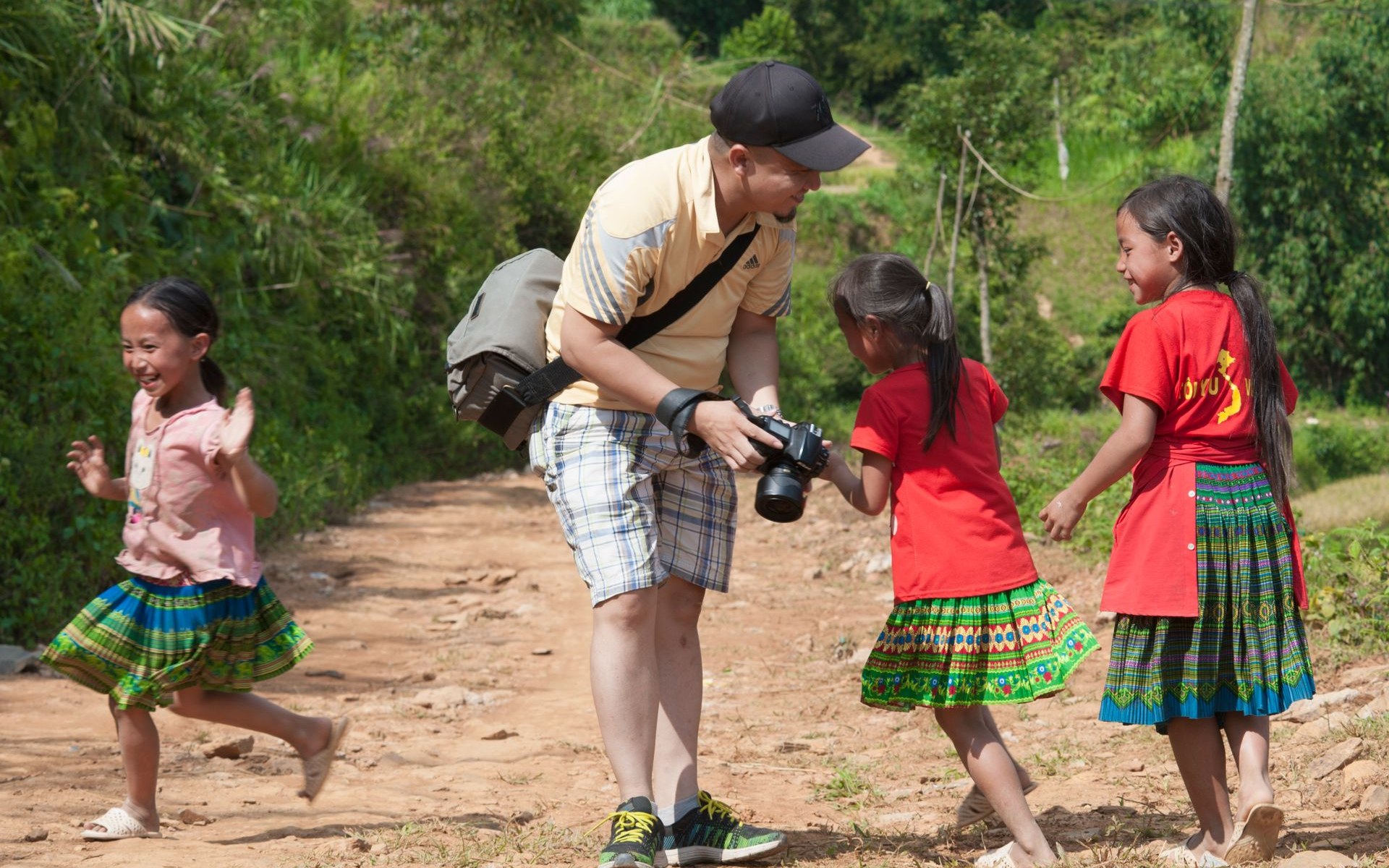
Source: Ama Journey via Pexels. A photographer with children in Vietnam, no location claimed.
If you already took one you should not have
It happens. You raised the camera on instinct, the shutter clicked, and the person in front of you is clearly unhappy. Do not argue, do not explain, and do not keep walking with the photo. Delete it in front of them, show them the empty screen, and apologise. Deleting a photo costs you one frame.
The next step
The best village photos are the ones taken slowly, after a conversation, with permission, and often with the subject laughing at your terrible Vietnamese. Walk the valley with a guide who knows the families and ask before every portrait. For a walk that ends with a night in a village homestay, see the 2-day Ta Van homestay trek, and read the Sapa trekking guide for the full picture of the routes, the seasons, and what to pack.
Walk it with us
Every route in these guides ends at Cloud Valley. Sleep where the trail ends, not back in town.
Sapa Trekking Guide · 1 Day Valley Trek · 2 Day Homestay Trek
More guides
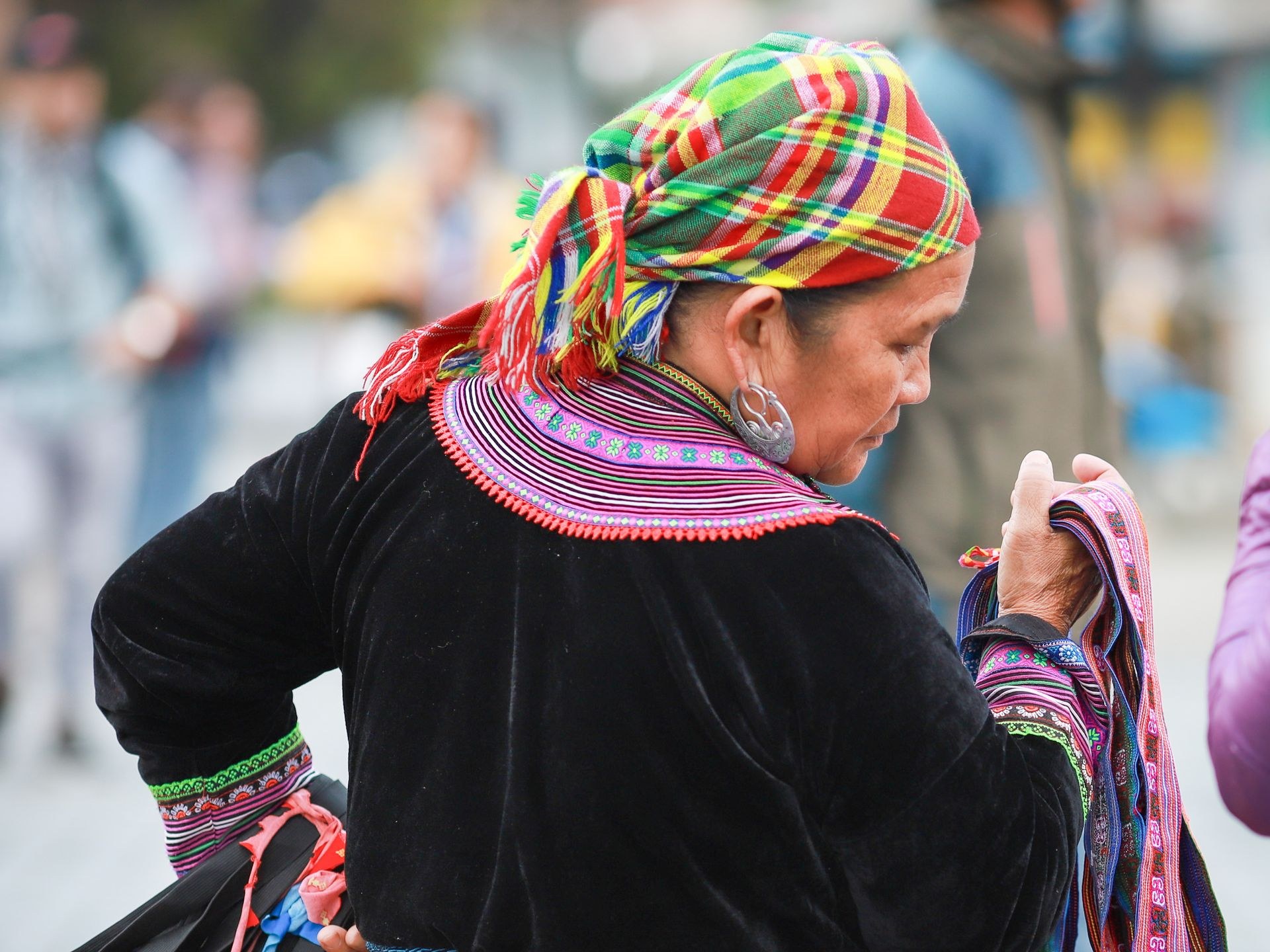
Haggling in Sapa Market: How to Do It Without Offending
A vendor in Sapa market names a price for a woven bag, and you have no idea whether it is fair. Haggling is expected here, but there is a kind way to do it and a way that leaves everyone unhappy. Here is the kind way.
Gifts for Village Kids: What Helps and What Harms
A child runs up to you on a Sapa trail, smiling, hand out. Your hand goes to your pack. Before you give anything, here is what actually helps village kids, and what quietly harms them.
Language on the Trail: The Few Phrases That Open Doors
Your guide stops to chat with a farmer, everyone laughs, and you stand there smiling and understanding nothing. Ten Vietnamese phrases change the whole walk.